
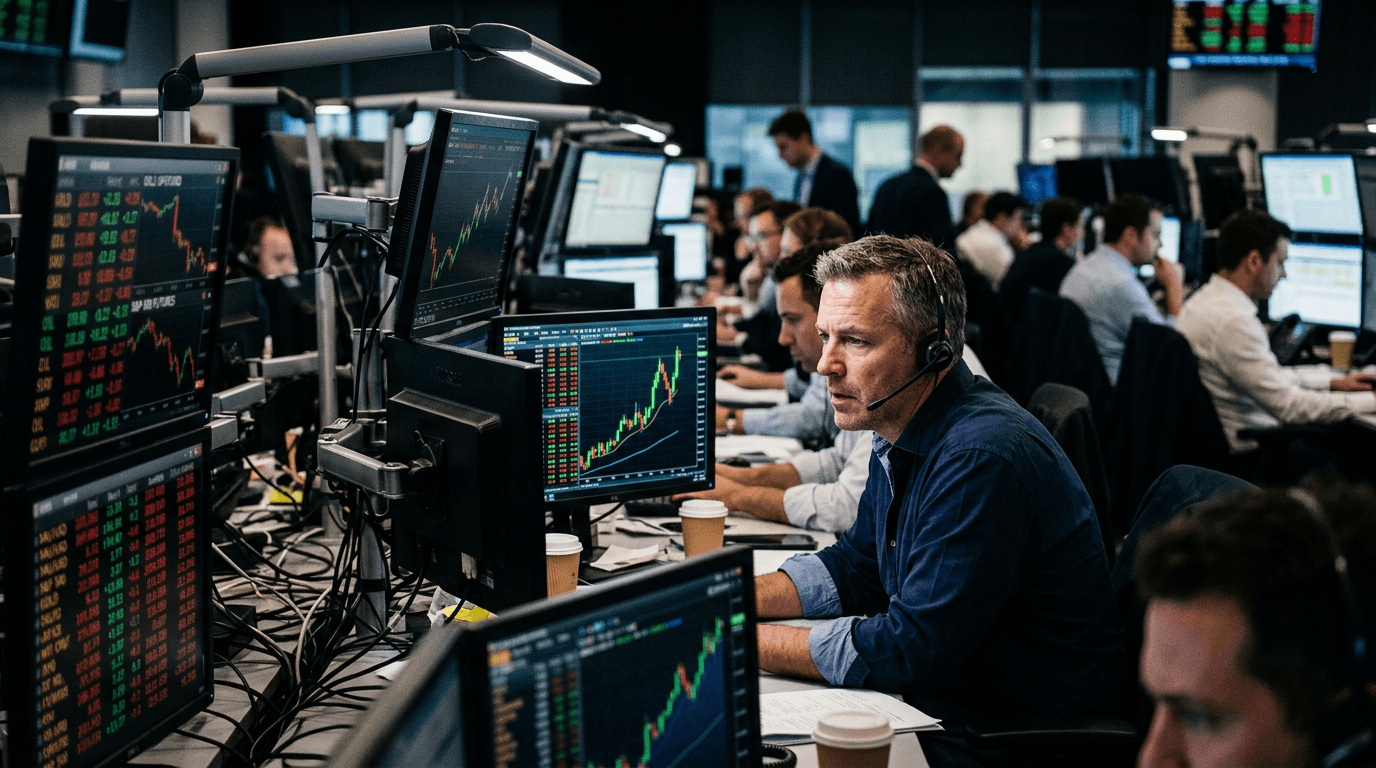
When geopolitical tensions flare, currencies often move faster than the headlines. That is exactly what we are seeing as escalating conflict in the Middle East pushes investors toward traditional safe-haven assets and lifts the U.S. dollar against most major counterparts.[1][3][13] The result is a sharp pickup in FX volatility, fresh pressure on commodities, and choppier trading in equity index futures as markets reprice risk across the board.[2][7][16]
WHAT’S DRIVING THE DOLLAR’S SAFE-HAVEN BID?
In times of geopolitical stress, investors typically reduce exposure to riskier assets and rotate into instruments perceived as safer, more liquid, and more stable. The U.S. dollar sits at the center of that flight-to-safety dynamic thanks to its role as the world’s primary reserve currency and the deep liquidity of U.S. financial markets.[4][11]
Recent headlines out of the Middle East have reinforced this pattern. As prospects for a rapid de-escalation faded and negotiations were seen as “ringing hollow,” demand for dollar assets intensified.[1][3] The U.S. Dollar Index (DXY), which tracks the greenback against a basket of major currencies, has advanced toward multi-week and even multi-month highs during episodes of heightened tension.[1][13][16] In some recent bouts of stress, the dollar has posted its strongest monthly gains in nearly a year, underscoring the scale of safe-haven flows.[1]
There is also a rate story behind the move. Elevated energy prices fueled by conflict-related supply concerns have stoked fears of renewed inflation, prompting markets to reassess how quickly the Federal Reserve and other central banks can cut interest rates.[2][3][14] When markets price in a greater chance that U.S. rates will stay higher for longer relative to peers, the yield pickup on dollar assets amplifies safe-haven demand.[3][12] Historically, episodes of rising risk aversion combined with relatively attractive U.S. yields have been a powerful cocktail for dollar strength.[11][12]
KEY TAKEAWAY: The dollar is being supported by a double tailwind of safe-haven demand and sticky expectations for higher-for-longer U.S. interest rates, both linked to the spike in Middle East risk and energy prices.[2][3][11]
How Major Fx Pairs React When Tensions Escalate
The impact of safe-haven flows is not uniform across currencies. Some pairs react more sharply than others, and the current backdrop highlights several important patterns.
The euro and British pound often weaken as the dollar climbs, reflecting Europe’s greater sensitivity to energy prices and growth risks.[2][9][13] Recent episodes have seen EUR/USD and GBP/USD grind lower as traders hedge against the possibility of prolonged disruption in Middle Eastern supply routes and higher import costs.[2][9]
Interestingly, the Japanese yen—traditionally viewed as a safe haven—has not always kept up. In some recent moves, USD/JPY has pushed to fresh highs even as risk aversion rises, suggesting that carry dynamics and Japan’s low-yield environment are overriding the yen’s defensive reputation.[1][7] Investors seeking both safety and yield have favored U.S. assets over Japanese ones, leaving the dollar stronger even against another classic haven.[7][11]
Commodity-linked currencies such as the Australian dollar and Canadian dollar tend to face cross-currents. On one hand, higher oil and commodity prices can support their terms of trade. On the other, broad risk-off sentiment and a stronger U.S. dollar have historically weighed on these “risk” currencies as global growth concerns mount.[13][14]
KEY TAKEAWAY: In a Middle East shock, USD strength versus EUR, GBP, and many commodity currencies is often more reliable than a blanket move into JPY or other havens, as yield differentials and growth exposure reshape the traditional playbook.[1][2][7][13]
Spillover To Commodities And Index Futures
The FX story is only one layer of the market reaction. Rising tensions in a region that anchors global energy supply almost inevitably spill over into oil, gold, and equity index futures.
Crude oil prices typically jump on fears of supply disruptions or potential blockages of key shipping lanes like the Strait of Hormuz.[9][13][15] Higher oil acts as a tax on global growth and raises the risk of a renewed inflation pulse, particularly for energy-importing regions. That scenario helps the dollar via both the safe-haven channel and the interest-rate channel, as markets question how quickly central banks can ease.[2][3][14]
Gold, another classic hedge against geopolitical risk, often trades in a tug-of-war with the dollar. Both assets can attract safe-haven flows at the same time, but a stronger greenback tends to cap the upside in dollar-denominated commodities by making them more expensive for non-U.S. buyers.[2][8] This helps explain why, in some recent episodes, the dollar and oil surged while gold’s gains were more measured.
Equity index futures typically reflect the broader risk-off tone. Rising geopolitical risk premia, higher energy costs, and uncertainty about policy responses can pressure benchmarks like the S&P 500, Euro Stoxx 50, and Nikkei futures.[2][9][16] Volatility indices (such as the VIX) tend to rise, and sector performance becomes more differentiated, with energy shares sometimes outperforming while rate-sensitive and growth sectors lag.
KEY TAKEAWAY: The same tensions boosting the dollar are simultaneously lifting oil, complicating gold’s path higher, and injecting volatility into global equity index futures as investors reprice growth and inflation risks.[2][8][9][13]
How Traders Can Navigate Safe-haven Surges
For active traders—whether in live markets or in a SimFi environment—periods of geopolitical stress create both opportunity and risk. The key is to understand the transmission channels and adjust positioning and risk management accordingly.
First, recognize that correlations can shift rapidly. Pairs that usually move quietly may start trending strongly as safe-haven flows build, and traditional relationships (such as dollar vs. gold) can temporarily weaken or invert.[8][11] Backtesting strategies on prior episodes of Middle East shocks can help set realistic expectations for volatility, drawdowns, and potential slippage.
Second, sizing and leverage become critical when geopolitical headlines are driving price action. Stops that look generous in calm conditions may be too tight in a risk-off spike. Scenario analysis—“What happens to my portfolio if DXY jumps 1–2%, oil gaps higher, and equity futures sell off?”—is essential to avoid forced liquidations when volatility surges.
Third, focus on the interplay between macro data and geopolitics. For instance, if tensions stay high while inflation data surprise to the upside, markets may further increase expectations of higher-for-longer U.S. rates, reinforcing dollar strength.[3][12] Conversely, any credible signs of de-escalation can trigger swift reversals, especially if they coincide with softer inflation or growth indicators.[10][15] Being prepared for both continuation and mean-reversion scenarios is crucial.
Simulated trading platforms are particularly useful in this environment because they allow traders to stress-test strategies against geopolitical shocks without real capital at risk. You can experiment with:
- Hedging dollar exposure across multiple pairs
- Pairing directional FX views with commodities or index futures
- Adjusting position sizes in response to volatility regimes rather than price alone
KEY TAKEAWAY: Treat safe-haven surges as a distinct regime. Adapt your strategy, risk limits, and expectations to a world where headlines can move markets as much as data releases, and where the dollar’s role as a haven is front and center.[3][11][12][16]