
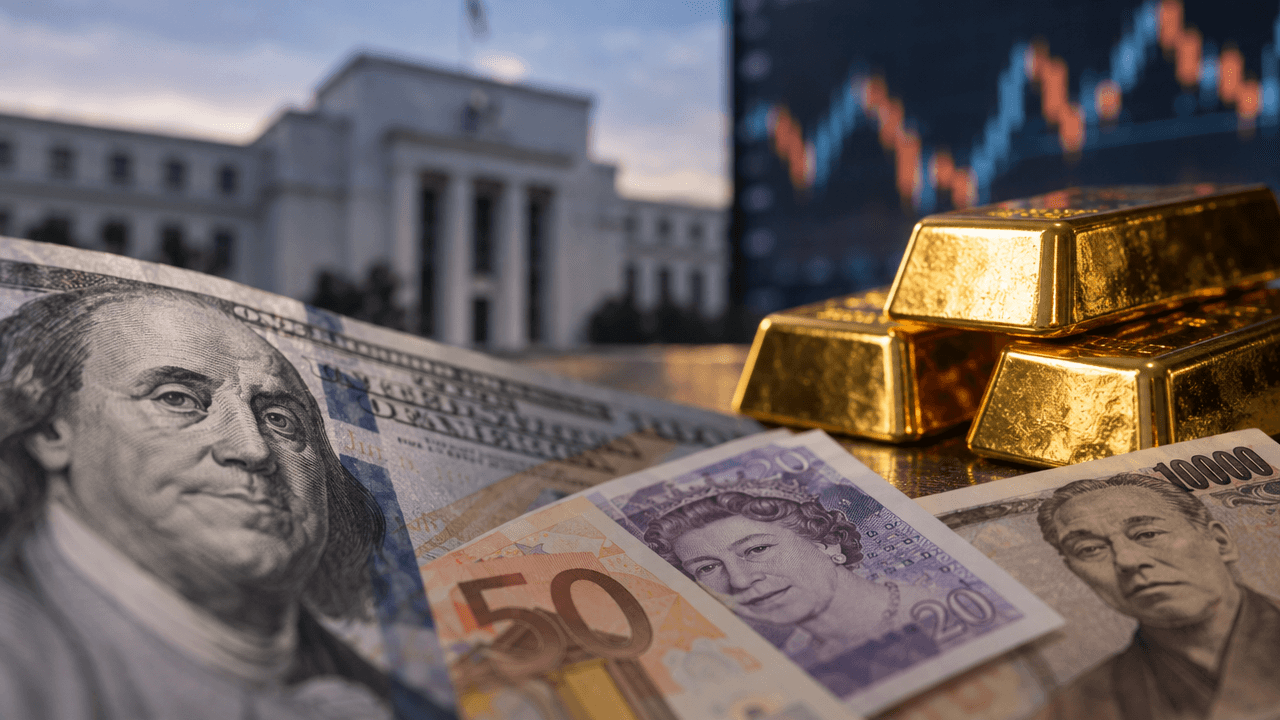
The U.S. dollar softened as traders reduced expectations for an October Federal Reserve rate hike, reversing some of the greenback’s recent strength and reshaping the outlook for currencies, gold, bonds, and risk assets. Market pricing had moved sharply toward a pause after Federal Reserve officials signaled that policymakers could wait for clearer evidence before tightening financial conditions further. [8]
The shift is a reminder that currency markets are driven not only by economic data, but also by the gap between what investors expect and what central banks ultimately deliver. Even hotter-than-expected inflation failed to provide lasting support for the dollar when traders concluded that the Fed was unlikely to respond immediately.
Why Rate Expectations Matter
Interest-rate expectations are one of the most important forces in the foreign-exchange market. When traders anticipate higher U.S. rates, dollar-denominated assets generally become more attractive because they may offer better returns than comparable assets in other countries. This can increase demand for the dollar and push the exchange rate higher.
The opposite can occur when expectations for rate increases fade. Lower expected interest rates reduce the potential yield advantage of U.S. assets, encouraging some investors to move toward other currencies, bonds, equities, or commodities.
In early October, markets were pricing in a materially higher possibility of an October hike. After softer economic signals and cautious remarks from Fed officials, the implied probability declined. One report showed traders pricing in roughly a 30% chance of an October increase, while another market snapshot placed the probability near 24% at one point. [1][10]
That repricing helped pull the dollar away from an 18-month high, even as inflation remained a concern. The market’s message was not necessarily that inflation had disappeared. Instead, investors appeared to believe the Fed could afford to wait before making another move.
The Dollar, Major Currencies, And Gold
A softer dollar can provide relief for major currencies such as the euro and Japanese yen. When the greenback loses momentum, exchange rates for these currencies may rise, particularly if their domestic economic outlooks are stable or their central banks are perceived as less dovish than the Fed.
However, currency movements are relative. A weaker dollar does not guarantee a sustained rally in every major currency. The euro remains sensitive to European growth and energy risks, while the yen is heavily influenced by Japanese monetary policy, government bond yields, and intervention concerns.
Gold is another important beneficiary of a weaker dollar. Because gold is priced in U.S. dollars, a declining greenback makes the metal less expensive for international buyers. Falling Treasury yields can provide an additional boost because gold does not pay interest. Gold rose more than 1% in one session as the dollar eased and yields declined, illustrating how quickly precious metals can respond to changes in monetary-policy expectations. [1]
Still, traders should avoid treating a single-day move as a guaranteed trend. Gold can face resistance when real yields rise, inflation expectations fall, or investors reduce positions after a strong rally.
What It Means For Risk Assets
Reduced expectations for an immediate Fed hike may also ease pressure on risk assets. Higher interest rates increase borrowing costs and reduce the present value of future corporate earnings, which can weigh on equities, technology shares, and speculative investments.
A pause can have the opposite effect by giving investors more time to assess economic conditions without the immediate threat of tighter financial conditions. A weaker dollar can also benefit multinational companies because overseas revenue may translate into more dollars when the U.S. currency declines.
Yet the market response is not automatically bullish. Traders may interpret fading hike expectations as evidence that economic growth is weakening. In that situation, lower rates could reflect concern rather than optimism. Recent technology-sector volatility and worries about an artificial-intelligence-driven equity selloff show that investors are balancing monetary-policy relief against broader valuation and growth risks. [15]
For SimFi traders, this distinction is essential. A dollar decline caused by improving global growth is a different setup from a dollar decline caused by rising recession fears. The direction may look similar, but the likely behavior of equities, commodities, and volatility can be very different.
Practical Takeaways For Traders
First, monitor interest-rate probabilities rather than relying only on the Fed’s most recent decision. Futures pricing can change rapidly after inflation, employment, or retail-sales data.
Second, watch Treasury yields alongside the dollar. A falling dollar accompanied by lower yields generally supports gold and may help risk assets. A falling dollar with rising yields can signal a more complicated market driven by fiscal concerns, foreign demand, or positioning.
Third, distinguish between an October pause and a permanent end to tightening. Markets later assigned a high probability to a December rate hike, showing that postponement does not necessarily eliminate future policy action. [5]
Finally, manage exposure around economic releases. Currency markets can reverse quickly when new data changes expectations. Traders should define risk before entering positions and avoid assuming that a widely anticipated policy outcome is already fully reflected in price.
Conclusion
The dollar’s softening reflects a meaningful adjustment in rate expectations, not the end of the inflation debate. As traders reduce the probability of an immediate October Fed hike, major currencies and gold gain room to recover, while risk assets may benefit from reduced near-term policy pressure.
The next phase will depend on incoming inflation, labor-market, and growth data. For traders, the most useful approach is to track the interaction between Fed expectations, Treasury yields, and the dollar rather than viewing any one market in isolation. In a policy-sensitive environment, changes in expectations may matter more than the decision itself.