
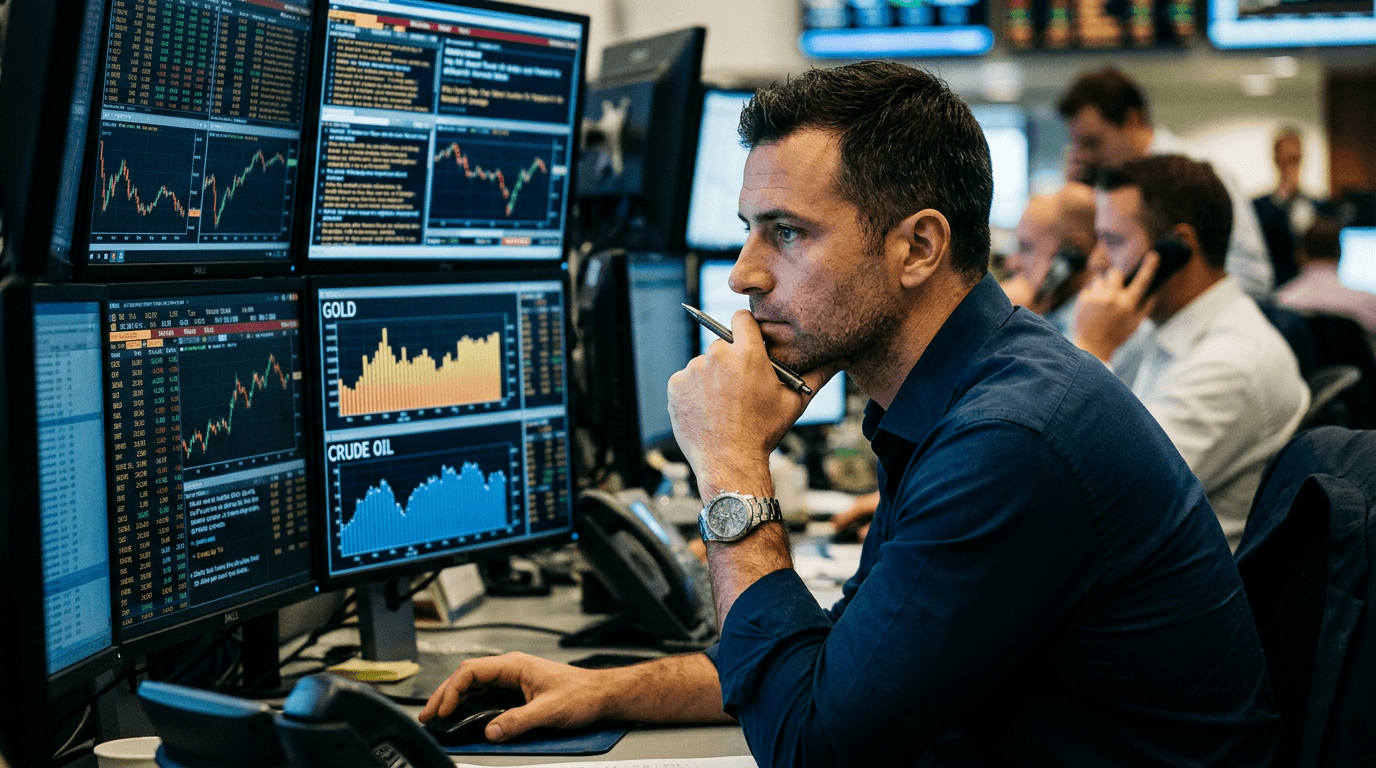
Markets kicked off the latest trading sessions with a clear risk-on tone as headlines pointed to improving prospects for a U.S.–Iran understanding, including talk of a ceasefire framework and steps toward de-escalation.[1][3][6] As traders reduced some of the geopolitical risk premium they had priced into portfolios, the U.S. dollar softened, while risk-sensitive currencies such as the Australian dollar and emerging market FX found support.[1][5][6] The shift has also rippled across equity index futures, energy markets, and precious metals, as investors recalibrate their safe-haven exposure without abandoning hedges altogether.[1][3][6]
What A Risk-on Tone Really Means
“Risk-on” is more than a buzzword—it describes periods when investors are more willing to take on exposure to equities, high-yield credit, commodities, and higher-beta currencies, and less inclined to hold cash or safe havens like the dollar, yen, and U.S. Treasuries.[3][5] In the latest move, optimism around U.S.–Iran peace efforts has encouraged investors to rotate out of defensive assets, pushing the dollar lower against a broad basket of peers while lifting cyclical currencies and equity futures.[2][3][6]
In FX, this typically shows up as strength in commodity-linked and higher-yielding currencies—such as AUD, NZD, and a range of EMFX—alongside relative underperformance in traditional safe havens.[1][5][6] That is exactly what markets have been pricing: AUD and other risk-sensitive pairs have traded with a firm tone, while the safe-haven premium that built up in the dollar and yen has started to ease.[1][3][5] At the same time, equity index futures in Asia and Europe have reflected better risk appetite, with investors betting that de-escalation would reduce the tail risk of a broader regional conflict.[1][6]
WHY U.S.–IRAN PEACE PROSPECTS MOVE CURRENCIES AND COMMODITIES
The U.S.–Iran narrative matters because it sits at the intersection of geopolitics, energy supply, and global risk appetite.[1][3][6] Reports point to a tentative ceasefire or truce framework, including steps that could reopen or normalize traffic through the Strait of Hormuz—one of the world’s most critical chokepoints for oil shipments.[1][3] When tensions were high, traders priced in a significant risk premium across energy and safe-haven assets; headlines about ceasefire extensions and ongoing negotiations now encourage a partial reversal of that premium.[1][3][6]
Reduced perceived risk of supply disruption has already weighed on oil, with benchmarks such as WTI and Brent slipping as traders reassess worst-case scenarios.[1][3][6] A lower geopolitical risk premium in oil tends to support oil-importing economies and their currencies, while denting the allure of the dollar as a defensive play.[1][3] At the same time, the fact that any agreement remains tentative—and dependent on political sign-off from both Washington and Tehran—means markets are not yet pricing in a full resolution.[1][3] This uncertainty explains why hedging via crude and gold has persisted, even as outright safe-haven demand has moderated.[1][6]
Cross-asset Winners And Losers
On the currency side, the most immediate loser has been the U.S. dollar, which has slipped against major peers as traders unwind some of the defensive flows that built up during earlier escalations.[2][3][5] The dollar’s weakness has been broad-based rather than confined to a single pair, with gains in the euro, commodity-linked currencies, and several EMFX crosses.[1][3][5] For many market participants, this isn’t just “noise”—it reflects a recalibration of the geopolitical premium that had been supporting the greenback for weeks.[3]
Risk-sensitive currencies have been among the main beneficiaries. The Australian and New Zealand dollars have traded with notable resilience, supported by both improving global risk sentiment and domestic data in Australia’s case.[1][6] Emerging market currencies, particularly those with attractive carry, have also drawn renewed interest as investors search for yield in a calmer geopolitical environment.[5][6] Conversely, traditional safe havens like the yen and Swiss franc have seen some of their earlier gains pared back as investors reduce tail-risk hedges.[1][3][5]
In commodities, oil stands at the center of the story. Prices have eased on expectations of reduced supply disruption if peace efforts gain traction, even as traders keep one foot in the door by maintaining some upside hedges.[1][3][6] Precious metals have seen a more nuanced reaction: gold has faced pressure from the reduction in geopolitical fear, yet remains supported by broader macro factors and ongoing use as a hedge against residual uncertainty.[1][6] Equity index futures in Asia and Europe have generally leaned higher, reflecting this tentative but tangible improvement in risk appetite.[1][6]
How Traders Are Repositioning
The market response suggests that traders are not pricing in a full, clean resolution, but rather a shift from “acute crisis” to “managed risk.”[1][3][6] That nuance is important. Many investors have reduced outright safe-haven exposure—cutting long dollar positions, trimming defensive equity allocations, and moderating long gold holdings that were put on purely for geopolitical reasons.[1][3] At the same time, they have kept or even added targeted hedges in crude and gold, recognizing that ceasefires can break down and negotiations can stall.[1][6]
From a positioning standpoint, strategies being deployed include rotating into higher-beta equities, adding EMFX and commodity FX exposure, and selectively selling volatility as headline risk calms.[1][5][6] However, institutional players are also using options structures—such as out-of-the-money calls in oil or gold—to retain upside protection in case tensions flare up again.[1][6] This blend of risk-taking and risk-hedging underscores a key lesson: geopolitical de-escalation is often a process, not a single event.
Practical Takeaways For Traders And Simulated Investors
1) Respect geopolitics as a volatility driver Markets can reprice quickly when geopolitical narratives shift, especially in FX, energy, and precious metals.[1][3][6] Traders should treat major headlines as catalysts for volatility clusters, not isolated events.
2) Separate short-term sentiment from long-term fundamentals A risk-on turn driven by ceasefire hopes may weaken the dollar and lift risk assets in the short run, but the longer-term trajectory still depends on economic data, inflation, and central bank policy.[2][5][6] Avoid extrapolating one week’s price action into a structural trend without supporting fundamentals.
3) Think in terms of risk premia, not absolutes The market is not deciding whether risk exists or not; it is constantly repricing how much risk is embedded in assets.[1][3][6] As U.S.–Iran tensions ease, the geopolitical premium in oil, gold, and the dollar shrinks—but does not necessarily disappear.
4) Use simulated trading to stress-test scenarios For traders using SimFi or other simulated environments, this kind of episode is an ideal case study. You can backtest how your strategies respond to sudden shifts from risk-off to risk-on, experiment with hedging combinations (e.g., long EMFX vs. long gold calls), and refine rules for reacting to geopolitical headlines—without putting real capital at risk.
Conclusion: Navigating A Fragile Risk-on Environment
The latest risk-on tone, powered by growing optimism around U.S.–Iran peace efforts, is pressuring the dollar and supporting risk assets from AUD and EMFX to equity futures.[1][3][5][6] Yet the market’s reaction also reflects a recognition that the path to a lasting agreement is uncertain, which is why hedging via crude and gold remains in play.[1][6] For active traders and simulated investors alike, the lesson is clear: use periods of de-escalation to reassess positioning, refine your risk frameworks, and prepare for both smoother and rougher scenarios ahead.