
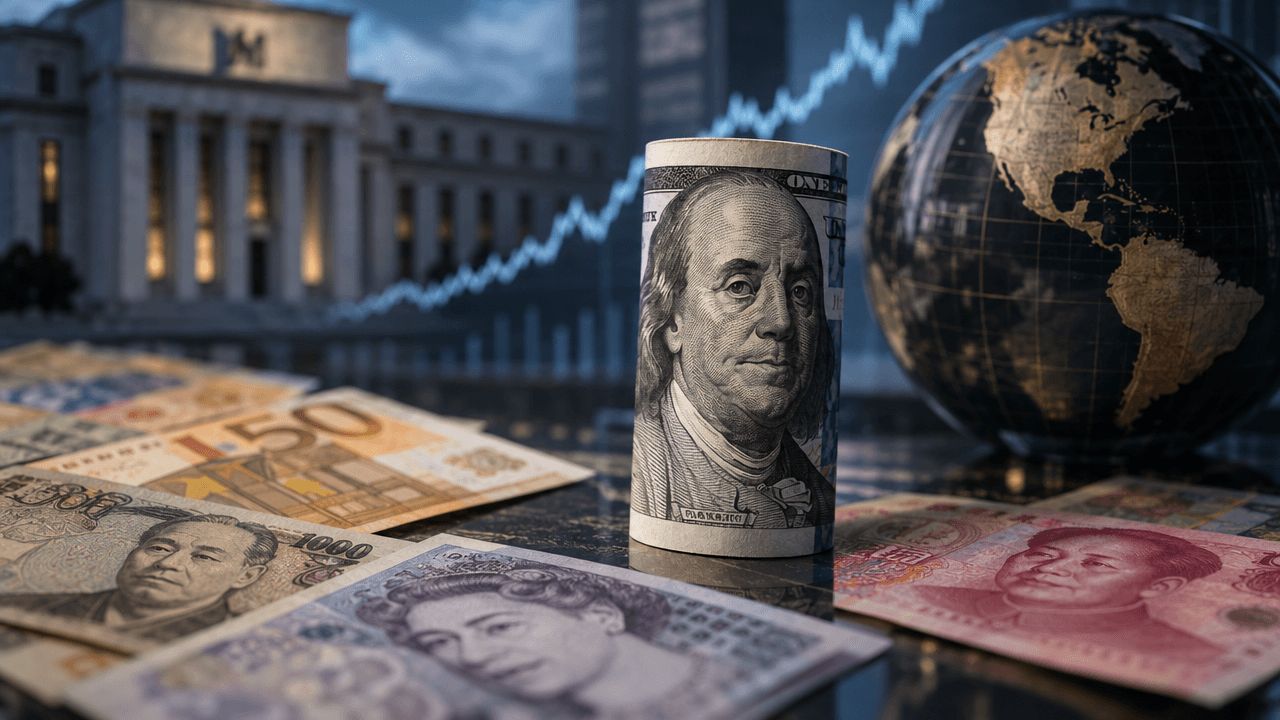
The U.S. dollar is regaining momentum as financial markets increasingly prepare for another Federal Reserve interest-rate increase. The Dollar Index climbed toward 104.3–104.5, its strongest level in roughly 19 months, while traders moved to fully price a 25-basis-point hike at the Fed’s December meeting. [8][3] The move reflects more than a simple change in interest-rate expectations: renewed optimism surrounding U.S. technology stocks has improved the growth outlook and encouraged global investors to direct capital toward American assets.
For traders, the combination creates a powerful short-term theme. Higher expected U.S. rates increase the relative appeal of dollar-denominated investments, while stronger technology-sector sentiment supports demand for U.S. equities. Together, these forces are pressuring major currency pairs such as EUR/USD and GBP/USD and tightening financial conditions for emerging markets.
Why The Dollar Is Strengthening
Currency values are heavily influenced by the expected return on interest-bearing assets. When traders anticipate that the Federal Reserve will raise rates, U.S. Treasury yields and other dollar-linked returns generally become more attractive compared with assets in countries where rates are expected to remain lower.
Markets now assign approximately a 95% probability to a 25-basis-point Fed increase at the next meeting, according to recent futures pricing. [2] The current target range is 3.75% to 4.00%, and a quarter-point increase would take the range to 4.00% to 4.25%. [3] Although the hike itself is increasingly expected, the dollar can continue moving if investors revise their expectations for future policy.
Recent inflation data and hawkish comments from Fed officials have helped reinforce the view that policymakers may need to keep rates higher for longer. That expectation has supported the dollar even as markets debate whether additional increases could follow in early 2027.
Technology Optimism Adds A Second Engine
The latest dollar move is also linked to renewed enthusiasm for artificial intelligence and large-cap technology companies. Reports that Nvidia shares surged following Jensen Huang’s return as chief executive helped revive the technology trade and improve overall sentiment toward U.S. growth assets. [8][2]
At first glance, optimism in technology stocks might appear to conflict with higher-rate expectations. Rising interest rates typically reduce the present value of future corporate earnings, which can weigh on growth stocks. However, stronger technology optimism can also improve expectations for U.S. economic growth, business investment and productivity.
That growth narrative can attract international capital. Overseas investors buying U.S. equities often need dollars to complete those purchases, creating additional demand for the currency. In this environment, the dollar is benefiting from both sides of the market: higher expected yields and renewed confidence in U.S. companies.
The relationship will not always be stable. If rising yields begin to damage equity valuations or weaken economic activity, technology optimism could fade. Traders should therefore watch whether stocks and the dollar continue rising together or begin sending opposing signals.
PRESSURE ON EUR/USD AND GBP/USD
A stronger dollar naturally places downward pressure on EUR/USD and GBP/USD. If the Federal Reserve appears more willing to tighten policy than the European Central Bank or Bank of England, the interest-rate gap can shift in favor of the dollar.
EUR/USD recently fell as the Dollar Index advanced, with the euro trading near $1.089 during the latest surge in the greenback. [8] Sterling is also vulnerable when U.S. yields rise because traders may prefer dollar assets over British assets, particularly if the U.K. economic outlook remains uncertain.
For forex traders, the important question is not simply whether the Fed will raise rates. That outcome is already widely anticipated. The larger market reaction may depend on the tone of the policy statement, updated economic projections and comments about the timing of future hikes.
A decision that matches expectations could produce limited movement if it has already been fully priced in. By contrast, a more hawkish message could push the dollar higher, while signs that December may be the final increase could trigger profit-taking and a rebound in the euro or pound.
Emerging-market Risks And Trading Takeaways
Dollar strength can create broader challenges for emerging markets. Many governments and companies in these economies borrow in dollars, so a stronger greenback increases the local-currency cost of servicing that debt. Higher U.S. yields can also encourage investors to move funds away from riskier assets and into American bonds.
The result may be weaker emerging-market currencies, tighter local financial conditions and greater pressure on central banks to defend exchange rates or keep domestic interest rates elevated. Countries with large dollar liabilities, current-account deficits or limited foreign-exchange reserves are generally more exposed.
Traders should approach the current environment with a clear plan. First, monitor U.S. inflation, employment and growth data because each release can reshape expectations for the Fed. Second, distinguish between a confirmed trend and an already crowded trade; when a 25-basis-point hike is almost fully priced, the dollar may need a stronger policy surprise to extend its gains. Third, manage leverage carefully around the Fed decision, since currency volatility can rise sharply when the statement and press conference are released.
It is also useful to track the interaction between the Dollar Index, U.S. Treasury yields and technology stocks. A rising dollar alongside higher yields would confirm the current hawkish narrative. A falling dollar despite strong yields could signal that traders are taking profits or becoming concerned about the economic outlook.
Conclusion
The dollar’s advance reflects a favorable mix of higher Fed-hike expectations, stronger U.S. growth optimism and renewed demand for American technology assets. With markets already pricing a December increase, the next major catalyst will be the Fed’s guidance on what comes afterward.
For market participants, the key lesson is to focus on expectations rather than headlines alone. The rate decision matters, but the dollar’s next major move may depend on whether policymakers validate or challenge the belief that U.S. interest rates will remain elevated. Until that uncertainty clears, dollar strength is likely to remain an important force across forex, equities and emerging-market assets.