
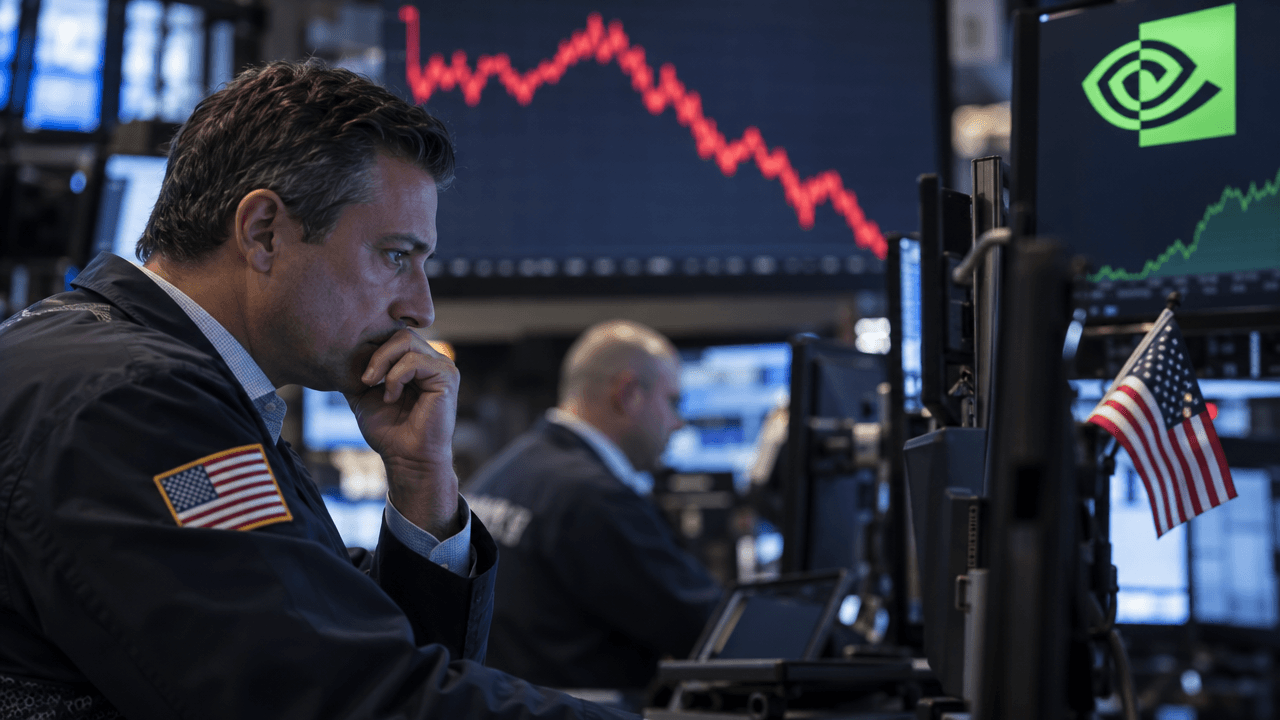
U.S. equity futures slipped on Tuesday as the semiconductor trade paused after a powerful Nvidia-led rebound. The pullback highlights a familiar tension in today’s market: investors remain eager to buy technology and artificial intelligence exposure, but they are also increasingly sensitive to inflation, interest rates, and elevated expectations. With the Federal Reserve’s December meeting approaching, the next major inflation report could determine whether the rally broadens or loses momentum.
The Market Shift After A Powerful Rebound
The previous session delivered a dramatic recovery for Nvidia and other chip stocks. Nvidia shares surged more than 31%, helping lift technology stocks after a difficult stretch for the broader market. The rally followed the company’s decision to reinstate founder Jensen Huang as chief executive, giving investors a fresh catalyst in a sector that had recently faced concerns about valuation, data-center spending, and higher borrowing costs. [3][14]
Tuesday’s weaker futures do not necessarily invalidate that rebound. Instead, they suggest that traders are reassessing how much of the good news has already been reflected in prices. When one company drives a large move across an entire industry, profit-taking is common. Traders who bought semiconductor shares during the selloff may choose to lock in gains, while investors who missed the initial rally may wait for a more attractive entry point.
This distinction matters. A market can remain structurally bullish while experiencing short-term weakness. Futures prices reflect positioning and expectations before the regular trading session begins; they do not guarantee how stocks will perform once investors respond to new economic data and company-specific developments.
Why Inflation Matters More Than The Headline
The next major focus is the personal consumption expenditures price index, or PCE, scheduled for Wednesday. The PCE index is the Federal Reserve’s preferred inflation gauge, making it especially important for traders trying to estimate the central bank’s next move. It is expected to provide one of the final major economic signals before the Fed’s December policy meeting. [1][4]
A hotter-than-expected report could pressure technology shares because growth stocks are particularly sensitive to interest rates. Their valuations depend heavily on expected earnings in future years. When bond yields rise, those future profits become less valuable in today’s dollars, which can reduce the price investors are willing to pay for high-growth companies.
A softer inflation reading could have the opposite effect. Lower price pressures may encourage traders to expect a less aggressive Fed, potentially supporting technology, semiconductor, and other rate-sensitive stocks. However, a single report is unlikely to settle the policy outlook by itself. Investors will also consider employment data, consumer spending, wage growth, and comments from Federal Reserve officials.
The market is reportedly pricing in roughly a 96% probability of a 25-basis-point rate increase at the December meeting, according to CME FedWatch data cited in market reports. [2][4] That high expectation creates a risk of volatility if the inflation figures or Fed communication differ significantly from what traders anticipate.
Reading The Semiconductor Signal
Semiconductor stocks have become a useful barometer for risk appetite. Nvidia is central to the artificial intelligence investment theme, but the trade extends across chip designers, manufacturers, equipment providers, data-center operators, and cloud companies. When these stocks rise together, investors are often expressing confidence in strong technology spending and economic growth. When they retreat together, concerns about valuation or financing conditions may be spreading.
Traders should avoid interpreting every semiconductor decline as evidence that the AI trend is over. Industry cycles rarely move in a straight line. Even companies with strong long-term growth prospects can experience sharp pullbacks when expectations become crowded.
A better approach is to separate business fundamentals from market momentum. Fundamental questions include whether demand is growing, whether companies can convert revenue into cash flow, and whether spending plans remain sustainable. Market questions include whether a stock has moved too far too quickly, whether investors are heavily positioned in the same direction, and whether upcoming economic data could change the interest-rate outlook.
Practical Lessons For Simfi Traders
For SimFi traders, this environment provides a valuable exercise in risk management. The first lesson is to avoid chasing a large overnight move. A stock that surges more than 30% can continue higher, but it can also reverse quickly as early buyers take profits. Entering after a major gap requires a clear plan for position size, invalidation, and potential volatility.
The second lesson is to monitor correlations. Holding several semiconductor stocks may appear diversified, but those positions can all respond to the same factors: Nvidia’s outlook, Treasury yields, AI spending, and Federal Reserve policy. Diversification should consider exposure to common risks, not simply the number of tickers in a portfolio.
The third lesson is to define scenarios before economic data is released. A trader might prepare one plan for a cooler-than-expected PCE reading, another for a hotter number, and a third for a result close to consensus. This reduces the temptation to make impulsive decisions when prices move rapidly.
Finally, traders should distinguish a market view from a trade setup. Believing that AI demand will remain strong over several years does not automatically justify buying a stock at any price today. A trade still needs a favorable entry, manageable risk, and a clearly defined exit.
What Comes Next
The Nvidia-led rally has restored confidence in technology stocks, but Tuesday’s softer futures show that confidence remains conditional. Investors now need evidence that inflation is moving in a direction compatible with economic growth and a manageable Federal Reserve policy path.
For short-term traders, the PCE report and subsequent Fed communication may produce the next significant volatility window. For longer-term participants, the more important question is whether corporate earnings and investment demand can support the market’s ambitious expectations.
The key takeaway is straightforward: momentum can open the door to a rally, but economic data determines how far that rally can travel. By combining market awareness with disciplined risk controls, SimFi traders can study this kind of event without relying on headlines alone.