
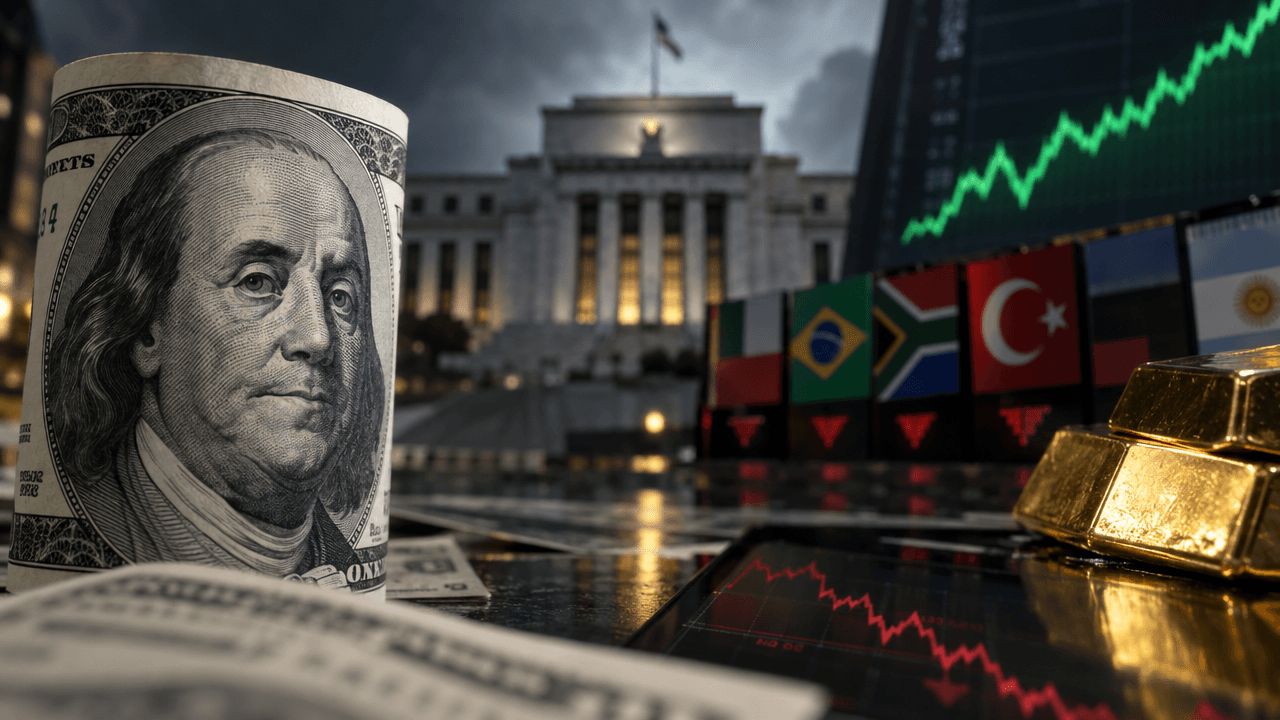
The U.S. dollar has regained momentum as traders revive expectations for a more aggressive Federal Reserve. The dollar index recently climbed about 0.5% to approximately 104.3, reaching a 19-month high, while markets priced in roughly a 96% to 97% probability of a quarter-point rate increase at the Fed’s December meeting. [3][11]
The move reflects a sharp reassessment of the interest-rate outlook. Stronger-than-expected inflation data and increasingly hawkish comments from Federal Reserve officials have convinced investors that policymakers may need to keep rates higher for longer—or potentially tighten policy more forcefully than previously expected.
Why The Dollar Is Strengthening
Currencies respond heavily to changes in relative interest rates. When investors expect U.S. interest rates to rise compared with rates in other major economies, dollar-denominated assets become more attractive. Higher yields can draw capital toward U.S. Treasury securities, corporate bonds, and other investments priced in dollars.
Recent comments from Fed Governor Christopher Waller intensified that dynamic. Waller argued that the central bank may need to take more aggressive action to bring inflation under control, including the possibility of a half-point increase in December or clearer guidance about faster increases in 2027. [1][9]
Those remarks came after data indicated that inflation remained stubbornly elevated. Markets had previously been debating whether the Fed would cut rates or remain on hold. The conversation has now shifted toward how quickly and how far rates may need to rise.
The result has been a broad-based dollar advance. The dollar index, which measures the greenback against a basket including the euro and yen, reached levels last seen in April 2025. [5][15]
Yields, Inflation, And Market Expectations
The dollar’s strength is closely linked to Treasury yields. When bond yields rise, investors receive greater potential returns from holding U.S. government debt. This can support the currency, particularly when higher yields reflect expectations of additional Federal Reserve tightening.
However, rising yields can also signal concern about inflation. If investors believe inflation will remain high, they may demand greater compensation to hold longer-term bonds. That pushes yields upward and can create volatility across stocks, currencies, and commodities.
For traders, the important distinction is between an expected rate hike and a surprise rate hike. A December increase now appears largely reflected in market prices. As a result, the dollar’s next major move may depend less on whether the Fed raises rates and more on its guidance about future policy.
A hike accompanied by cautious language could limit further dollar gains. By contrast, an indication that additional increases are likely could extend the rally. Any evidence that inflation is cooling or economic growth is weakening could produce the opposite reaction.
Pressure On Emerging Markets And Risk Assets
A stronger dollar creates challenges for emerging-market economies. Many governments and companies in these markets borrow in U.S. dollars. When the dollar appreciates, the local-currency cost of servicing that debt increases.
A stronger greenback can also raise the price of imported energy, food, machinery, and other goods. That can increase inflation in countries whose currencies are falling, potentially forcing their central banks to keep interest rates high even when domestic growth is slowing.
Higher U.S. yields add another layer of pressure. Investors may reduce exposure to emerging-market bonds and equities when relatively safer U.S. assets offer more attractive returns. Research from the Bank for International Settlements indicates that increases in U.S. yields are more likely to produce adverse emerging-market outcomes when they coincide with dollar appreciation and rising inflation expectations. [12]
Risk assets can also struggle. Higher interest rates increase the discount rate applied to future corporate earnings, which can weigh particularly heavily on growth stocks and speculative assets. A stronger dollar may also reduce the overseas value of revenue earned by multinational companies.
Gold has already shown this relationship. The metal recently fell to a 14-month low as the dollar and U.S. yields moved higher, reducing the appeal of an asset that does not pay interest. [2]
What Traders Should Watch Next
The Federal Reserve’s December statement and press conference will be the central market event. Traders should focus on the updated interest-rate projections, the language used to describe inflation, and any discussion of labor-market conditions.
Economic data will remain equally important. Inflation reports, employment figures, retail sales, and consumer spending can all influence expectations for future policy. A series of stronger reports could strengthen the hawkish case, while softer data may revive expectations for a pause.
Currency traders should also monitor the euro and yen. The dollar’s gains have been especially significant against major currencies when other central banks appear less willing or less able to match the Fed’s tightening stance. Central-bank divergence can sustain trends for longer than a single economic report.
From a risk-management perspective, traders should avoid assuming that a strong trend will continue without interruption. A heavily anticipated rate hike may already be priced into the dollar, creating the possibility of a “buy the rumor, sell the news” reaction after the Fed decision. Position sizing, stop-loss planning, and awareness of event risk are essential.
Practical Takeaways For Simfi Traders
First, monitor interest-rate expectations rather than focusing only on the current Fed funds rate. Currency markets often move before policy decisions occur.
Second, track Treasury yields alongside the dollar index. A rising dollar supported by rising yields usually signals stronger rate expectations, while a dollar rally without yield confirmation may be less durable.
Third, be cautious with emerging-market currencies and highly leveraged risk assets during periods of dollar strength. Volatility can increase quickly when capital flows shift toward U.S. assets.
Finally, remember that economic narratives can change. The current theme is inflation and tighter policy, but weaker growth or softer prices could quickly return rate-cut expectations to the forefront.
The dollar’s advance reflects more than a single Federal Reserve meeting. It represents a broader repricing of inflation risk, interest-rate policy, and global capital flows. For traders, the key question is no longer simply whether the Fed will raise rates in December, but whether policymakers will signal that this is the beginning of a longer tightening cycle.