
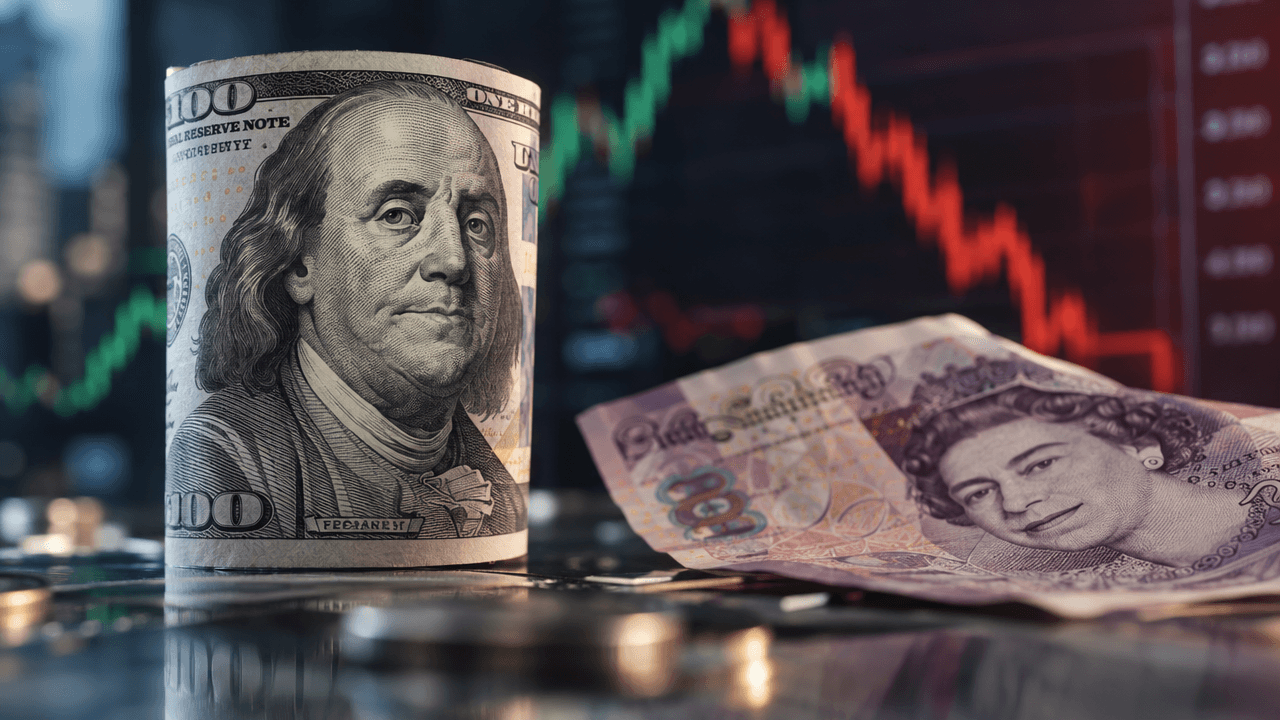
The U.S. dollar is ending the week close to a 19-month high, extending a rally that has reshaped the foreign-exchange landscape. The Dollar Index, which measures the greenback against six major currencies, was trading around 103.7 to 103.9 and was on track for a fourth consecutive weekly gain. Sterling, meanwhile, weakened toward a new 2026 low near $1.31. [1][4]
This divergence reflects more than short-term market noise. Investors are reassessing the outlook for U.S. interest rates, reducing exposure to risk-sensitive assets, and questioning whether the Bank of England can maintain a similarly firm policy stance. For traders, the latest moves highlight how interest-rate expectations and investor confidence can combine to drive currency trends.
THE DOLLAR’S TWO-PART RALLY
The dollar’s advance has been supported by two powerful forces: expectations of tighter U.S. monetary policy and demand for safe-haven assets.
Recent U.S. inflation data and hawkish comments from Federal Reserve officials have encouraged markets to price in a greater possibility of additional rate increases. Higher expected interest rates tend to support a currency because they can improve the returns available on assets denominated in that currency. Treasury yields and the dollar may therefore rise together when traders believe the Federal Reserve will keep policy restrictive for longer.
The dollar has also benefited from renewed caution in global markets. Concerns surrounding the sustainability of the artificial-intelligence investment boom have reduced appetite for risk, prompting investors to move toward traditionally defensive assets. The greenback often attracts these flows because of the size and liquidity of U.S. financial markets. [4][7]
The result has been an eight-session advance for the dollar and a fourth straight weekly gain for the Dollar Index. Although the index eased slightly on Friday, its position near the strongest level since April 2025 shows that bullish momentum remains significant. [1][6]
Why Sterling Is Under Pressure
Sterling’s weakness reflects a less supportive interest-rate outlook in the United Kingdom. The pound traded near $1.3094 to $1.3106, close to a one-year low and around its weakest point of 2026. [1][4]
A key factor has been softer underlying inflation in the United Kingdom. When inflation pressures appear less persistent, markets may lower expectations for aggressive Bank of England tightening. That reduces the yield advantage of pound-denominated assets and can make sterling less attractive relative to the dollar.
The policy gap is especially important. Markets have been assigning a higher degree of conviction to further Federal Reserve tightening than to another Bank of England increase. One recent market assessment put the probability of another 25-basis-point Bank of England hike at roughly 75%, while expectations for the Federal Reserve have appeared firmer. [10]
Even a modest difference in expected policy can have a substantial effect on foreign exchange. Currency markets are forward-looking, so traders react not only to current interest rates but also to the expected path of rates over the next several months.
WHAT GBP/USD TRADERS SHOULD WATCH
The GBP/USD exchange rate is now approaching an important technical and psychological area near $1.30. A sustained break below that level could encourage additional selling, particularly if the dollar continues to strengthen against the euro and other major currencies.
However, traders should avoid treating every move toward a round number as an automatic signal. Currency prices can reverse quickly when economic data changes the interest-rate outlook. Stronger-than-expected U.K. growth, renewed inflation pressure, or more forceful Bank of England guidance could support sterling.
On the U.S. side, upcoming inflation, employment, and consumer-spending data will remain critical. Evidence that the economy is overheating could reinforce rate-hike expectations and extend the dollar rally. Conversely, weaker data could lead markets to question whether the Federal Reserve can tighten policy without damaging growth.
Risk sentiment is another major variable. If concerns about the AI sector spread into broader equity markets, safe-haven demand could continue to favor the dollar. If investors regain confidence and return to stocks and other higher-risk assets, some of the dollar’s defensive premium may fade.
Practical Takeaways For Traders
First, monitor interest-rate differentials rather than relying only on currency charts. A strong-looking dollar trend is more likely to persist when it is supported by rising expectations for U.S. rates.
Second, separate broad dollar strength from sterling-specific weakness. GBP/USD can fall because the dollar is rising, because the pound is weakening, or because both forces are operating at once. Comparing GBP/USD with EUR/GBP and other dollar pairs can help traders identify which currency is driving the move.
Third, respect volatility around economic releases. A market positioned heavily for a stronger dollar can experience sharp reversals if the data disappoints or central-bank communication becomes less hawkish.
Finally, risk management remains essential. Traders should define invalidation levels before entering a position, avoid excessive leverage near major support or resistance, and remember that a long-running trend can still produce sudden countertrend rallies.
The Broader Market Message
The dollar’s rise and sterling’s decline demonstrate how currency markets connect monetary policy, economic data, and global risk appetite. The current move favors the greenback because U.S. rate expectations are firm while uncertainty has encouraged demand for safety. Sterling is being squeezed by weaker expectations for Bank of England tightening and a lack of convincing bullish momentum.
For now, the dollar retains the advantage. But the next phase of the trend will depend on whether incoming U.S. data continues to justify tighter policy and whether the Bank of England can rebuild confidence in the pound. Traders who follow both central-bank expectations and market sentiment will be better positioned to distinguish a durable trend from a temporary extension.