
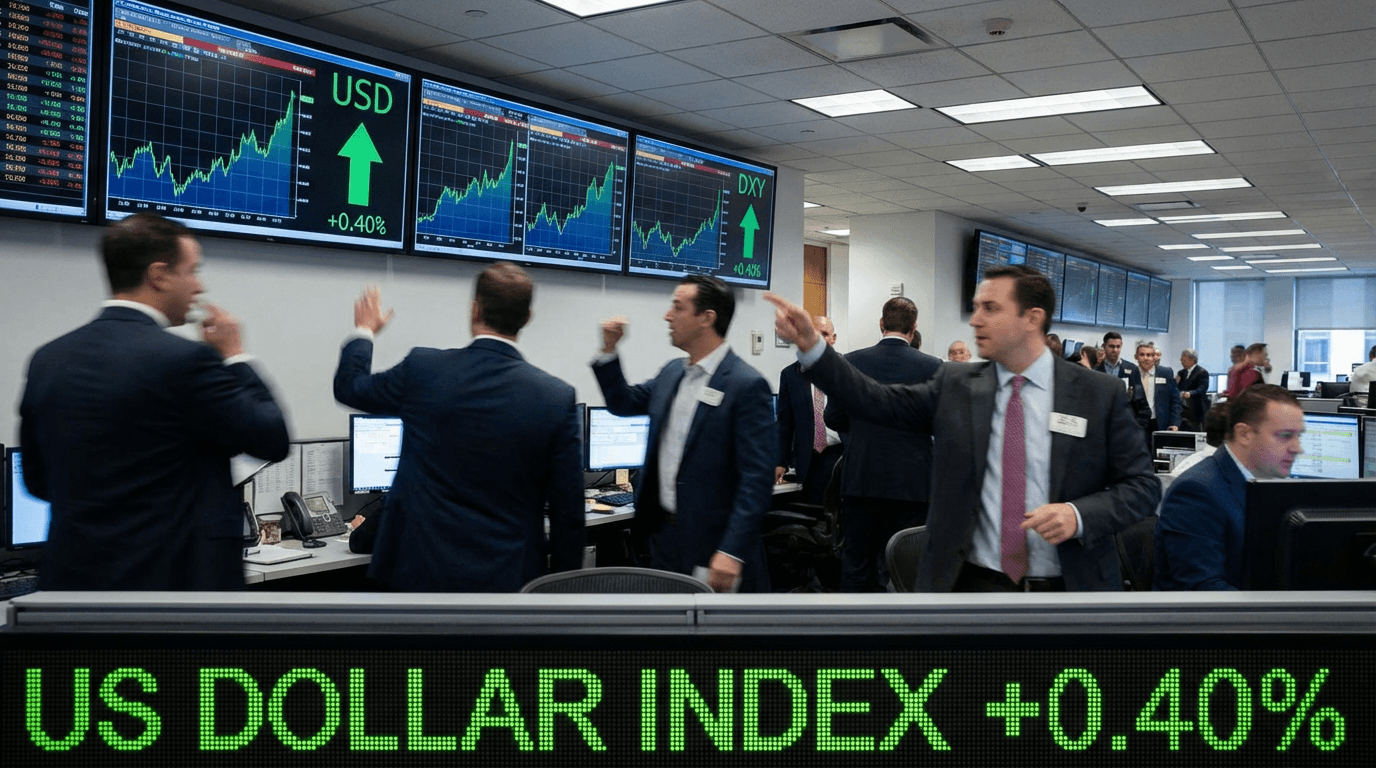
The US dollar surged against major currency pairs on January 30, 2026, as financial markets responded to President Trump's nomination of Kevin Warsh as the next Chairman of the Federal Reserve. The Bloomberg dollar index climbed 0.4% across all major peers, reflecting investor expectations about potential policy shifts under Warsh's leadership. This immediate market reaction underscores how central bank leadership transitions can significantly impact currency valuations, with ripple effects across forex markets and commodity prices globally.
The dollar's strength came as a surprise to many market participants who anticipated continued monetary easing. Treasury rates spiked higher, gold prices fell sharply, and equity futures declined as traders quickly reassessed their expectations for future Federal Reserve policy. Understanding this market dynamic requires examining who Kevin Warsh is, what his policy preferences suggest for the Fed's direction, and what this means for currency traders and investors exposed to forex and commodity markets.
WHO IS KEVIN WARSH?
Kevin Warsh brings substantial credentials to the Fed chair position, making him one of the most qualified candidates the Trump administration could have selected. Warsh holds degrees from Stanford University and Harvard Law School, providing him with both elite educational pedigree and formal legal training. He previously worked as a Morgan Stanley executive, giving him deep experience in capital markets and financial operations.
His experience extends to senior government service as a top economic advisor to President George W. Bush during a crucial period in US economic history. From 2006 to 2011, Warsh served as a Federal Reserve Governor, making him the youngest-ever Fed governor at the time of his appointment. During his tenure at the Fed, he directly participated in policy decisions that shaped the nation's response to the 2008 financial crisis. This combination of private-sector expertise, government service, and Fed experience positions him as someone who can command immediate respect from financial markets and policy communities worldwide.
The Market's Inflation Hawk Interpretation
The dollar's immediate strength reflects how markets interpreted Warsh's nomination through an inflation-fighting lens. Financial markets initially characterized Warsh as an inflation hawk, suggesting he may take a more restrictive monetary policy stance compared to current Fed Chair Jerome Powell. This perception centers on Warsh's well-documented criticisms of the Federal Reserve's expansion beyond its core dual mandate of maximum employment and price stability.
Warsh has been sharply critical of what he describes as "mission creep" at the Fed, arguing that the institution has grown too large and interventionist. He believes these expansions have undermined the Fed's credibility and contributed to policy mistakes. This hawkish reputation, combined with his background at Morgan Stanley and Republican administration ties, created market expectations that a Warsh-led Fed might maintain higher interest rates longer than Powell's Fed.
However, the picture becomes more nuanced upon closer examination. Recent reports indicate that Warsh has shifted his tone regarding interest rates, now favoring policy easing in 2026. He reportedly believes that productivity gains could support US economic growth without triggering additional inflation, therefore justifying rate reductions. This stance conflicts somewhat with a purely hawkish characterization, suggesting his actual policy approach may prove more balanced than initial market reactions suggested.
Currency And Commodity Market Implications
The dollar's 0.4% climb against major peers carries significant implications for forex traders and commodity markets. A stronger dollar typically pressures commodity prices denominated in dollars, which explains why gold prices plunged immediately following the announcement. For traders with positions in forex pairs like EUR/USD, GBP/USD, and USD/JPY, the Warsh nomination creates both challenges and opportunities.
Higher US Treasury rates, which spiked on the announcement, increase the attractiveness of dollar-denominated assets, creating additional upward pressure on currency valuations. This dynamic benefits traders positioned for dollar strength but creates headwinds for those betting on dollar weakness or commodity rallies. The broader implication is that Fed chair transitions can rapidly reshape portfolio positioning across multiple asset classes.
Looking Ahead To Senate Confirmation
Warsh will succeed Jerome Powell once Powell's term ends in May 2026, pending Senate confirmation. While he is expected to eventually win confirmation, the process may face some complications. Senator Thom Tillis has vowed to block nominees for Fed chair until an investigation into the Fed's building renovation is resolved, though Warsh's strong track record and bipartisan support from Republicans and financial sector leaders suggest eventual approval.
His confirmation hearing will provide crucial market intelligence about his specific policy priorities and how his approach differs from Powell's framework. This hearing represents a critical moment for forex traders and investors to refine their expectations about future Fed policy and currency valuations.
Market Takeaways For Traders
The Warsh nomination highlights how Fed leadership transitions create trading opportunities across multiple markets. While initial reactions often prove oversimplified, the underlying dynamics—interest rate differentials, inflation expectations, and safe-haven flows—remain fundamental drivers of currency values. Traders should monitor upcoming confirmation hearings closely, as Warsh's testimony will clarify whether his views truly align with a hawkish stance or whether markets have overestimated the policy shift.
The dollar's immediate strength on Warsh speculation demonstrates that monetary policy expectations remain the primary driver of currency movements, regardless of broader economic conditions.