
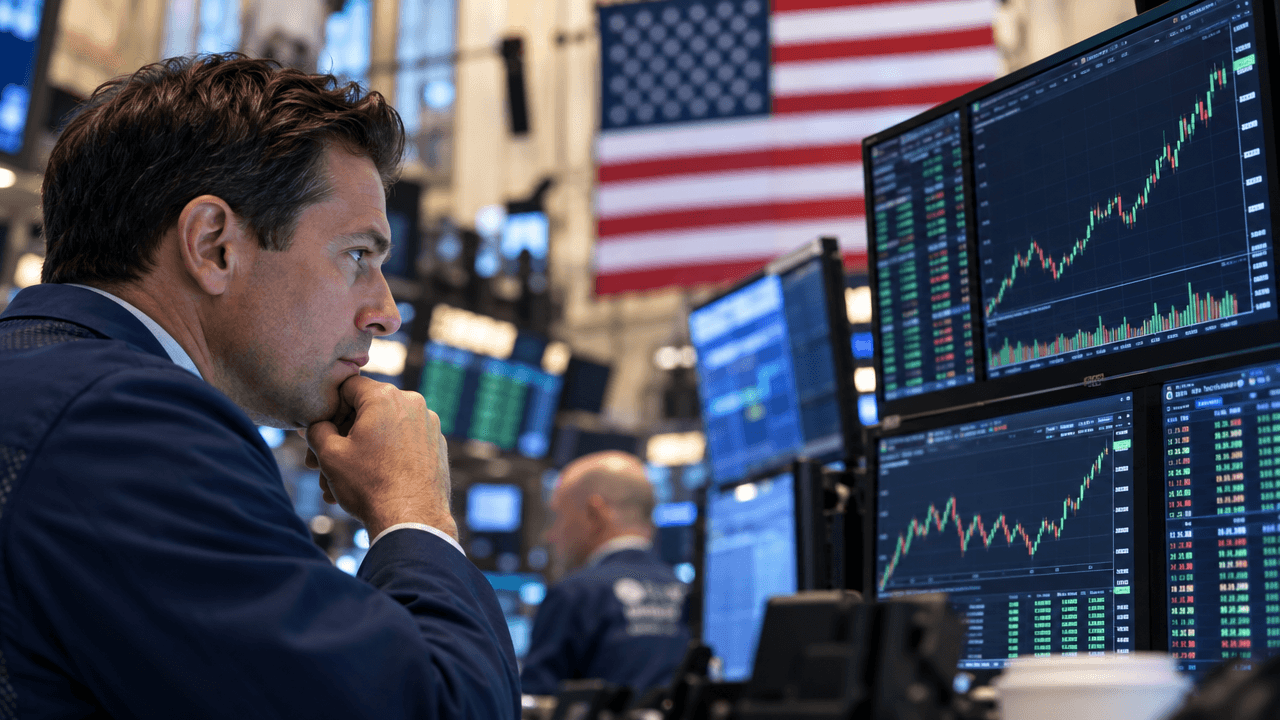
Dow Jones futures and other major U.S. index futures ticking higher may look like a small move on the surface, but it carries an important message about how traders are positioned for the day ahead. With Dow futures up around 0.2% and S&P 500 and Nasdaq 100 futures also firmer, the futures complex is signalling a cautiously positive tone into the cash market open, even as global cues like GIFT Nifty are slightly softer and remind traders that sentiment is never one‑sided[5][15].
Markets Snapshot: Futures Point To A Brighter Open
Index futures are simply contracts that track major benchmarks like the Dow Jones Industrial Average, S&P 500, and Nasdaq 100, allowing traders to express views on where these indices may trade at a future time. When these futures trade higher in the pre‑market, they suggest buyers are willing to take risk ahead of the opening bell, often implying expectations of a positive or at least constructive cash session[5][12].
The current backdrop of modest gains in U.S. futures is consistent with recent sessions where Dow, S&P 500, and Nasdaq contracts have edged higher after short bouts of volatility. These moves have frequently come as investors digest new information on inflation, central bank policy, and commodities such as oil, reinforcing the idea that futures markets are the first place where new macro narratives are priced in[5][12][14].
Today’s configuration—U.S. futures up, GIFT Nifty a touch weaker—captures a familiar theme: regional markets reacting differently to the same global information. While U.S. traders lean slightly risk‑on, Indian and other Asian markets may be more cautious due to local factors like domestic data releases, currency moves, or regulatory developments. For multi‑market traders, that divergence is a cue to watch how correlations evolve through the day rather than assume global indices will move in lockstep.
Why Index Futures Matter For Everyday Traders
For many newer traders, index futures can seem like a purely institutional product, but in reality they are one of the cleanest ways to read market sentiment. Because these contracts trade almost around the clock, they capture reactions to overnight news that cash index levels will only reflect once the market opens. Futures’ pre‑open pricing therefore acts as an “early edition” of the market’s mood.
A small, steady rise in Dow and S&P futures often points to a market that is willing to add risk but not in a euphoric way. Contrast that with sharp pre‑market spikes or drops, which tend to accompany major surprises, such as unexpected central bank decisions or geopolitically driven moves in oil and bond yields[9][10]. Learning to distinguish between a routine, data‑driven grind higher and a shock‑driven gap can help traders calibrate their intraday strategies.
For intraday equity and index traders, futures are especially useful as a benchmark. If futures are up 0.2–0.3% and the cash market opens flat or negative, that divergence may indicate early selling pressure or profit‑taking. If, instead, the cash market gaps higher in line with or beyond the futures move, it suggests that overnight optimism is being validated and potentially extended by cash investors.
WHAT TODAY’S FUTURES ARE SIGNALING ABOUT RISK APPETITE
Recent episodes of futures strength have often coincided with narratives of easing macro stress: retreats in oil prices, clearer messaging from the Federal Reserve, or data that are consistent with a slowing but resilient U.S. economy[5][12][14]. Modest gains in Dow and S&P futures today fit this pattern—a market that remains sensitive to risk but is not positioned for imminent stress.
Importantly, a 0.2% rise in Dow futures is not a blockbuster move. It signals constructive, not aggressive, risk appetite. Traders are prepared to lean long, but they are not pricing in a dramatic re‑rating of equities or a sudden shift in policy expectations. In this environment, the opening hour often becomes a test: does fresh order flow from cash investors reinforce the futures’ message, or does it fade the pre‑market optimism?
The contrast with GIFT Nifty, which is slightly lower, suggests that domestic Indian factors or regional risk considerations are prompting a more cautious stance there. For global traders, this is a reminder to look beyond headline moves and consider how local macro stories—such as inflation trajectories, currency dynamics, and fiscal policy—shape individual markets differently, even when they are fed the same global data.
Using Futures Moves In A Simulated Finance Environment
On a Simulated Finance platform like E8 Markets, futures moves are a powerful training ground for building and testing trading playbooks without real‑world capital at risk. When Dow and S&P futures trade higher ahead of the open, traders can practice several scenarios: a continuation rally, a fade of the move, or a choppy session where the pre‑market optimism gives way to indecision.
Because index futures are tightly linked to macro narratives, they are ideal instruments for practising event‑driven trading. For example, simulations can be built around typical patterns seen when futures rise on the back of softer oil prices or clearer central bank communication: early strength, midday consolidation, and an afternoon directional move aligned with bond yields or sector flows[5][12].
SimFi trading also allows participants to experiment with risk management rules around futures‑led openings. Traders can rehearse how to size positions when futures are up moderately versus sharply, how to adjust stops in the first volatile minutes, and how to scale out of trades as the futures‑cash relationship evolves through the session.
Practical Takeaways For Traders
1. Treat pre‑market index futures as your first sentiment gauge. Small, orderly gains often point to a constructive but not euphoric mood, while large moves deserve more caution and tighter risk controls.
2. Compare futures performance with the cash open. If the cash market fails to confirm a positive futures move, be prepared for mean‑reversion or increased intraday volatility as the market resolves that discrepancy.
3. Watch cross‑market signals. Divergences between U.S. futures and indices like GIFT Nifty can reveal where risk is being embraced and where it is being avoided, helping you refine both directional and relative‑value ideas.
4. Use SimFi environments to stress‑test your game plan. Practise trading around different futures setups—modest strength, sharp rallies, or mixed global cues—so that when similar patterns appear in live markets, your reactions are disciplined rather than emotional.
Conclusion
Today’s higher trade in Dow Jones and other U.S. index futures is a textbook example of how small pre‑market moves can carry useful information. The market is leaning modestly risk‑on, signalling confidence but not exuberance, while global cues such as GIFT Nifty’s softer tone inject a note of caution. For traders on E8 Markets and beyond, the lesson is clear: futures are more than a prelude to the cash session—they are a real‑time barometer of risk appetite and a rich source of trading scenarios. Learning to read that barometer, and to rehearse responses in a simulated environment, is a practical edge in a world where sentiment can shift as quickly as the next headline.