
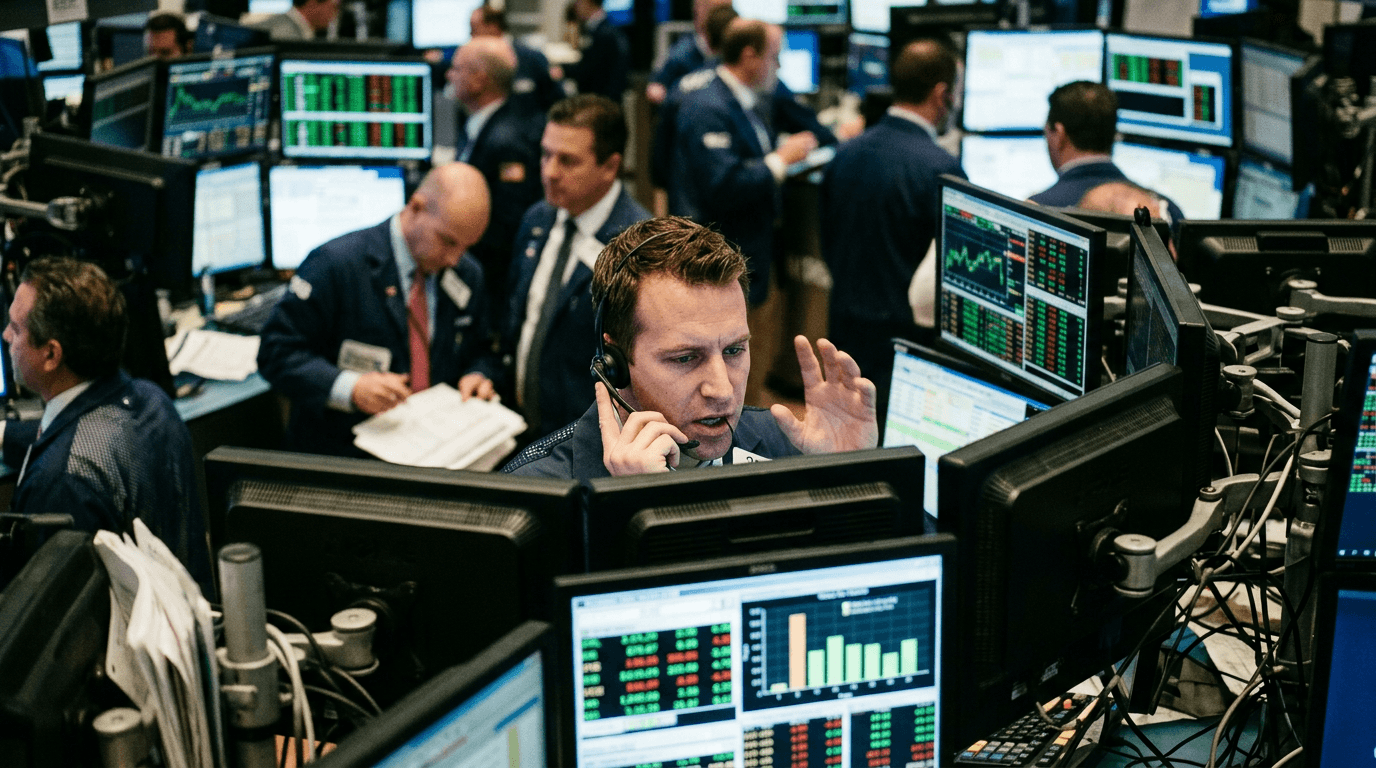
Equity markets are entering a pivotal stretch as the Dow pushes into record territory while traders quietly dial back expectations for additional Federal Reserve rate hikes. With Q2 earnings season about to kick off, the interplay between softer Fed hike bets and corporate fundamentals is reshaping positioning in index futures and driving a fresh round of sector rotation across the market.
Markets At A Crossroads
The current backdrop is defined by a tug-of-war between macro uncertainty and micro-level earnings visibility. On one side, investors are reassessing how much more tightening the Fed is likely to deliver this year as incoming data points to a cooler, but still resilient, U.S. economy.[4][9] On the other, companies are about to reveal whether profit margins and revenue growth can justify equity valuations that now sit near all-time highs.
When major indices like the Dow make new highs against a shifting rate narrative, it often marks a transition phase rather than a clear-cut trend. Price action reflects optimism about future earnings and economic durability, but it also embeds assumptions about a less aggressive Fed path. As Q2 results roll in, those assumptions will be tested in real time, and markets will adjust quickly if reality diverges from expectations.
Why Fed Hike Bets Are Easing
The key driver behind easing Fed hike bets has been a series of softer labor market readings that suggest demand for workers is cooling from earlier extremes.[4] Weaker-than-expected nonfarm payrolls data prompted traders to trim the odds of another rate increase later in the year, with CME FedWatch probabilities for a September hike slipping from roughly two-thirds to closer to half.[4][6] Similar declines have been noted in other rate probability gauges tracking the Fed’s upcoming meetings.[7][10]
This repricing has real cross-asset consequences. As investors scale back expectations for further tightening, Treasury yields and the U.S. dollar have retreated, leaving the dollar near recent lows against a basket of major currencies.[3][9] Lower yields reduce the opportunity cost of holding non-yielding assets like gold, helping bullion stage its first meaningful weekly rise in several weeks as rate fears ease.[1][4] Equity markets, meanwhile, have found support from the perception that the Fed is less likely to risk over-tightening into a slowing jobs environment.
For traders, the nuance is important: hike bets are easing, not disappearing. Futures still price some chance of additional tightening, but the distribution of outcomes has shifted toward “higher-for-longer” rather than a rapid new hike cycle.[4][6] That distinction shapes how rate-sensitive sectors, duration-heavy growth names, and cyclical plays trade as the macro narrative evolves.
Dow Records And Sector Rotation
The Dow’s move into record territory underscores how equity investors are leaning into the idea that the Fed can slow inflation without severely damaging growth. Gains have broadened beyond ultra-growth names, with cyclicals, industrials, and select financials participating as confidence in the economic outlook stabilizes.[3][9] At the same time, rate expectations that are less hawkish than a few months ago continue to underpin valuations in longer-duration assets, from technology to AI-linked chipmakers, which have recently led gains in U.S. indices.[3]
Sector rotation is a central theme in this environment. When investors believe the Fed is closer to the end of its hiking cycle, they often rotate toward:
- Economically sensitive sectors, such as industrials and materials, that benefit from ongoing demand without the drag of sharply rising borrowing costs.
- Quality growth and technology stocks, which are supported by lower discount rates on future cash flows.
- Select defensives, including healthcare and staples, as a hedge against the possibility that growth slows more than expected.
Index futures traders are expressing these views via relative value trades: going long the Dow or S&P while hedging with Nasdaq, or overweighting cyclical indices versus more rate-dependent benchmarks. The record levels in the Dow signal that these rotations are not just theoretical—they are actively reshaping index composition and performance.
What Q2 Earnings Mean For The Rally
With Q2 earnings season ahead, the market’s focus is about to shift from macro probabilities to micro realities. The central question is whether corporate earnings can validate the prices investors are currently willing to pay. In particular, traders will scrutinize:
- Revenue growth: Are companies still seeing solid demand, or is spending now constrained by tighter financial conditions?
- Margin resilience: Can firms defend margins against wage pressures and input costs, especially if pricing power starts to wane?
- Guidance and outlooks: Do management teams signal confidence in the second half of the year, or do they turn more cautious?
Sectors will likely respond differently. Financials will provide an early read on credit quality and loan demand. Consumer-facing companies will reveal how households are reacting to higher borrowing costs and fading excess savings. Industrials and materials will offer clues about capital spending and global trade. Technology and communication services will be key to understanding whether AI and digital transformation tailwinds can offset any macro slowdown.
If earnings broadly meet or beat expectations, the combination of softer Fed hike bets and solid corporate results could reinforce the current rally. If results disappoint, especially on guidance, markets may question whether record index levels accurately reflect underlying fundamentals.
Trading Takeaways In A Simulated Finance Environment
For traders operating in simulated finance (SimFi) platforms, this environment is rich with learning opportunities. The convergence of shifting rate expectations, record equity benchmarks, and a crucial earnings window offers a practical lab for testing strategies without real capital at risk.
Several themes are particularly useful to explore
- Rate expectations and index futures: Build scenarios that adjust Fed hike probabilities and observe how different equity indices respond. This can help clarify the sensitivity of the Dow, S&P, and Nasdaq to changes in the policy path.
- Sector rotation baskets: Design long-short baskets across sectors (e.g., long cyclicals, short defensives) and examine how rotations evolve as earnings and macro data are released.
- Volatility around catalysts: Simulate trading around key earnings dates or Fed-related data prints, studying how implied and realized volatility behave before and after each event.
- Risk management under uncertainty: Practice position sizing, diversification, and stop-loss techniques in an environment where both macro and micro narratives can rapidly change.
By experimenting with these strategies in a simulated setting, traders can build a more intuitive understanding of how expectations—not just outcomes—move markets. When Fed hike bets ease while indices sit at records, the difference between what the market is pricing in and what ultimately happens becomes a powerful driver of opportunity and risk.