
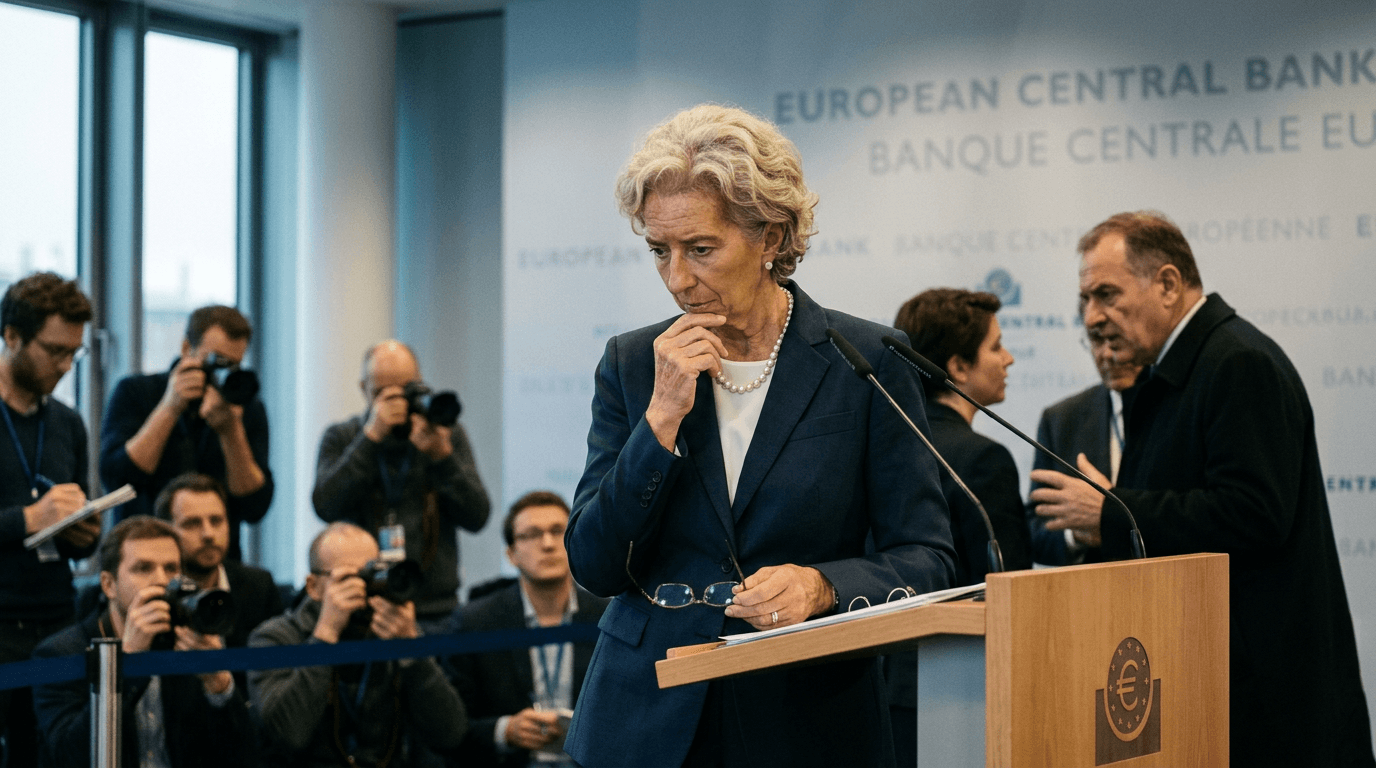
The European Central Bank faces an unprecedented political challenge as rumors swirl that President Christine Lagarde may step down months before her official mandate expires in October 2027. Recent reports from the Financial Times and Bloomberg suggest the French monetary policymaker could vacate her Frankfurt position before France's April 2027 presidential election, a move that would fundamentally alter the succession process and raise serious questions about central bank independence in the world's largest integrated currency zone.
The timing is not coincidental. Lagarde's potential early departure would allow French President Emmanuel Macron and German Chancellor Friedrich Merz to oversee the appointment of her successor while they remain in power. Most crucially, it would prevent the far-right Rassemblement National, currently polling strongly in France, from potentially influencing the selection of the ECB's next president. This scenario reveals how political calculations at the national level are increasingly affecting the governance of Europe's most critical financial institution.
The Political Calculus Behind A Sudden Exit
What makes Lagarde's reported consideration of early departure significant is the explicit political motivation. In June 2025, when similar rumors emerged about her potentially joining the World Economic Forum, Lagarde stated she was "determined to complete" her term. The apparent shift in her position now reflects genuine anxieties within European leadership about the electoral landscape.
The concern centers on what analysts view as a realistic possibility of far-right parties gaining power across Europe. Marine Le Pen and her protégé Jordan Bardella in France, coupled with the Alternative for Germany's rising influence, represent a fundamental threat to the EU's institutional consensus. If either party assumes power before the next ECB presidency is appointed, the entire selection process could face paralysis or political capture.
This political defensive maneuver is not isolated to the ECB. François Villeroy de Galhau, Governor of the Banque de France, unexpectedly announced his early resignation in February 2026, reportedly following a similar political timetable. Additionally, Budget Minister Amélie de Montchalin was appointed as president of the Court of Auditors under circumstances that raised eyebrows in Brussels. These moves suggest a coordinated effort by Macron to secure key institutional positions before potential political upheaval.
Central Bank Independence Under Pressure
The irony is striking: attempting to protect central bank independence from political influence is itself a politically motivated action. This paradox exposes the fragility of technocratic institutions in modern democracies. When political leadership explicitly structures the timing of central bank succession to avoid influence from rival parties, it inherently politicizes the process, even if the underlying intention is defensive rather than offensive.
The ECB's cautious response to reports of Lagarde's potential exit is telling. Rather than firmly denying the possibility as it did in 2025, the ECB merely stated that "President Lagarde is totally focused on her mission and has not taken any decision." This softer language suggests the institution is keeping doors open to an early departure while maintaining surface-level neutrality.
The broader concern is what economists call the "politicization creep" of central banking. Once precedent is set for timing leadership transitions based on electoral cycles in member states, future ECB presidents may face similar pressures. This threatens the institutional independence that has been fundamental to the ECB's credibility since its establishment.
The Race For The Frankfurt Seat
If Lagarde departs early, the appointment process for her successor will follow established protocols but operate under extraordinary time pressure. The 21 national leaders of eurozone countries must reach consensus and submit a candidate for European Parliament approval. This consensus requirement has historically ensured relatively balanced geographic and political representation.
Current candidates generate significant discussion among market observers. Klaas Knot, the long-serving Dutch central bank governor, is frequently mentioned as the "Goldilocks" candidate, representing a balanced approach between inflation hawkishness and consensus-building. Pablo Hernández de Cos, former Spanish central bank governor and current BIS leader, brings deep technical expertise and is valued for his collaborative approach.
German candidates, including Isabel Schnabel and Joachim Nagel, face the structural challenge that Ursula von der Leyen already represents Germany as European Commission president. Appointing another German to the ECB's top role might trigger concerns about excessive German influence over monetary policy, even though this fear may be more psychological than substantive.
Another French successor is widely viewed as impractical, given the need to rotate the position among eurozone nations and maintain geographic balance.
Implications For Eur Volatility And Policy Continuity
The ECB's monetary policy trajectory under a new president could shift subtly based on leadership preference, though institutional momentum typically maintains continuity. What markets should monitor more closely is the appointment process itself. Politically charged debates about candidates could create EUR volatility during the selection period.
More concerning for traders and investors is the signal this sends about institutional resilience within Europe. If the ECB's presidency becomes subject to electoral cycle management at the national level, what prevents the same logic from applying to other independent institutions? The slippery slope from defensive political maneuvering to routine politicization can happen faster than institutions typically recognize.
Key Takeaways For Market Participants
Watch the ECB's official communications carefully for any confirmation of Lagarde's departure timeline. Monitor the evolution of successor candidates and their policy orientations. Finally, consider whether these institutional pressures might indicate broader challenges to technocratic governance in Europe that could affect investment positioning across the continent.
The question facing European policymakers is whether protecting central bank independence through political maneuvering ultimately strengthens or weakens the institutions involved. History suggests that once such precedents are set, they rarely reverse course.