
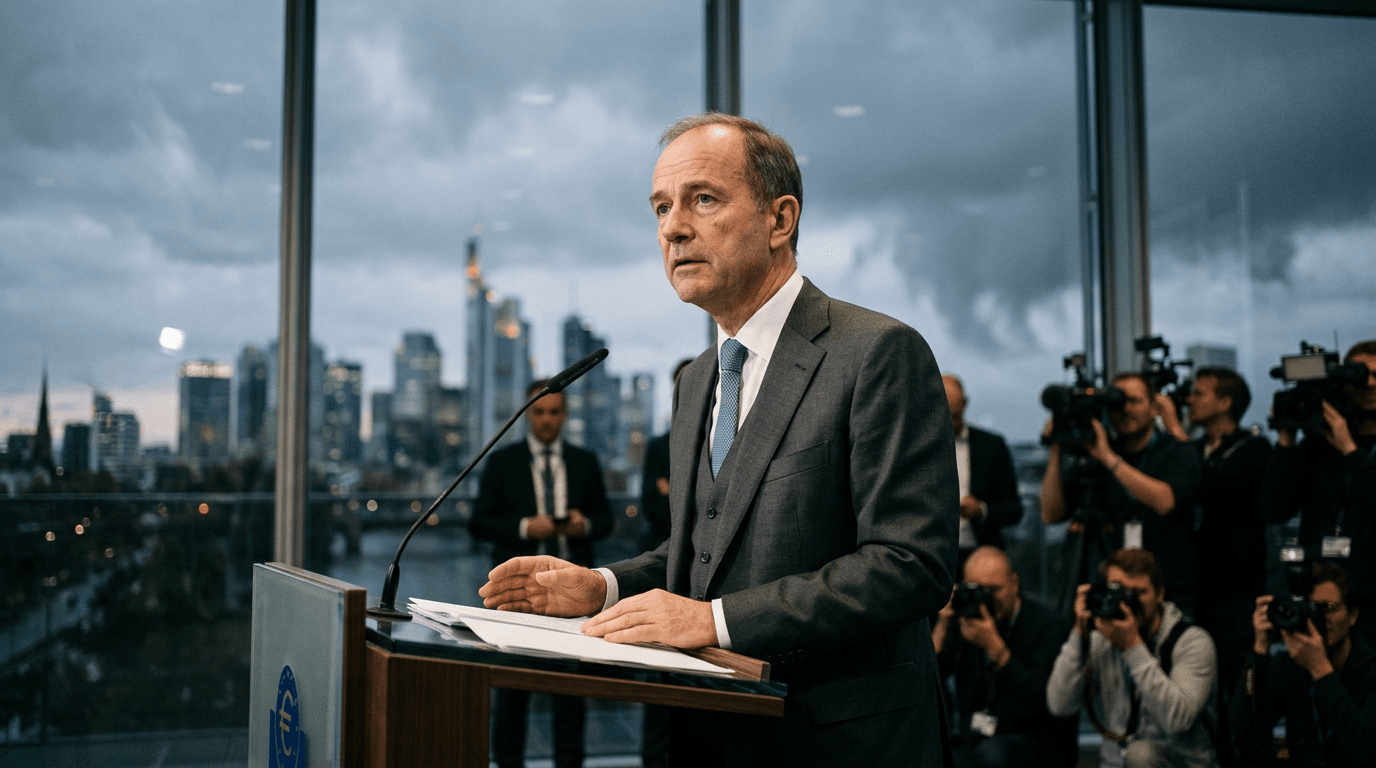
As geopolitical tensions in the Middle East escalate, the European Central Bank is raising red flags about potential economic consequences that could reshape monetary policy and investment strategies. ECB Chief Economist Philip Lane recently warned that a prolonged conflict between the US, Israel, and Iran could trigger a substantial spike in inflation across the eurozone while simultaneously dampening economic growth—a scenario that traders and investors must carefully monitor as uncertainty clouds the outlook for 2026.
The Energy Shock Threat
Energy markets are already reacting to Middle East instability. European natural gas prices surged nearly 50 percent after Qatar halted liquefied natural gas production following Iranian strikes, while oil prices climbed over 7 percent to $77.74 per barrel due to near-complete halts of shipments through the Strait of Hormuz, a critical chokepoint through which roughly one-fifth of the world's oil and LNG transits.[2] These price movements are not merely theoretical—they represent real cost pressures that ripple through the eurozone economy immediately.
Lane's key message is straightforward: "Directionally, a jump in energy prices puts upward pressure on inflation, especially in the near-term, and such a conflict would be negative for economic activity."[3] This dual threat—inflation rising while growth slows—presents a policy dilemma that central banks traditionally struggle to address, as rate cuts designed to support growth could further fuel inflation, while rate hikes to combat inflation could worsen the economic slowdown.
The Ecb's Scenario Analysis
To understand the potential magnitude of an energy-driven shock, the ECB conducted sensitivity analyses published in December 2023 that provide crucial context. In their modeling, economists assumed a persistent disruption affecting approximately one-third of oil and gas flowing through the Strait of Hormuz. Under this scenario, they projected oil prices could spike more than 50 percent from the then-current $80 level to approximately $130 per barrel.[2]
The economic consequences in this scenario are significant: inflation would surge more than 0.8 percentage points above baseline, while eurozone growth would decline by 0.6 percentage points in the subsequent year.[2] A separate December analysis suggests a permanent oil price spike of this magnitude could lift inflation by 0.5 percentage points and lower growth by 0.1 percentage point.[3] While these numbers may seem modest in isolation, they become substantial when compounded across an economy already dealing with above-target underlying inflation.
Critically, Lane emphasized that "the scale of the impact and the implications for medium-term inflation depend on the breadth and duration of the conflict."[3] This uncertainty is precisely what concerns policymakers and traders—we cannot predict whether this conflict remains localized or escalates into broader regional warfare.
Current Inflation Environment
Understanding Lane's cautious stance requires examining the current eurozone inflation landscape. Current inflation stands at 1.7 percent, below the ECB's 2 percent target.[4] This below-target reading might suggest room for rate cuts, yet Lane explicitly rejected this argument. Even excluding volatile energy prices, underlying inflation remains elevated relative to the 2 percent medium-term target, and wage compensation per employee rose slightly more than expected in late 2024.[2]
This combination explains Lane's assertion: "This is not an environment where I see an argument in favour of taking a bit of risk on inflation."[1] The ECB is essentially saying it will tolerate slightly-below-target inflation readings rather than risk igniting second-round inflation effects through wage expectations or financial market repricing during a period of geopolitical uncertainty.
Ecb Policy Outlook And Market Expectations
Regarding immediate policy action, Lane signaled stability: "I think where we are now is OK."[1] This statement reflects ECB comfort with current rates and explains why investors currently price in an 88 percent probability that the ECB will leave interest rates unchanged at 2 percent throughout 2026.[2]
The ECB's approach reflects its traditional treatment of energy-driven inflation. The bank typically looks through energy price volatility as long as fluctuations don't impact longer-term inflation expectations or seep into underlying inflation through wage demands and pricing behavior.[3] Barring a massive and prolonged shock, the eurozone economy is "growing in the neighbourhood of its potential,"[1] suggesting the ECB sees no urgent need for policy adjustments.
Implications For Traders And Investors
For market participants, this situation creates distinct trading dynamics. Energy and defensive equities may benefit from inflation concerns, while rate-sensitive sectors could face headwinds if upside inflation surprises accumulate. The key variable remains conflict duration—short-lived disruptions may produce temporary price spikes that the ECB brushes aside, while prolonged warfare could force genuine policy recalibration.
The takeaway: monitor energy price movements and ECB communications carefully. Major escalation in the Middle East combined with extended supply disruptions could finally push the ECB off the sidelines, but current conditions suggest they remain patient observers rather than imminent rate-cutters, making this an environment of selective opportunity rather than broad-based policy shifts.