
1. Start DIRECTLY with the first paragraph - NO preamble 2. Write in PLAIN TEXT format (no HTML, no markdown) 3. Use ALL CAPS for section headings on their own line 4. Separate paragraphs with blank lines 5. Include 3-5 main sections with clear takeaways 6. Make it engaging and educational 7. At the END, provide TITLE, EXCERPT, and NEWSIMPACTSCORE on separate lines
Looking at the search results: - [1] talks about European markets declining amid geopolitical tensions, particularly Middle East tensions, affecting energy and financial sectors - [2] discusses cyclical price impacts and market efficiency - [3] talks about COVID crisis and EU response - [4] talks about UK economic stagnation and geopolitical tensions as one factor - [5] is just a search results page - [6] is from 2015
The most relevant source is [1], which mentions European bourses falling due to geopolitical conflicts in the Middle East, cautious investor attitudes, and sector impacts. This aligns with the query about European markets being impacted by geopolitical risks.
The user mentions this is about Christmas holiday volumes (thin volumes), but the current date is May 5, 2026 - so this seems like it's a historical article or hypothetical scenario. I should focus on the content about geopolitical tensions and market impacts from the search results.
Let me structure the article: 1. Opening paragraph - set the scene 2. Section on Market Sentiment and Geopolitical Impact 3. Section on Holiday Volume Effects 4. Section on Sector-Specific Impact 5. Section on Investor Strategy Going Forward
I need to make sure to cite the search results appropriately using the format [1], [2], etc.
Let me write approximately 800 words in plain text format with proper citations.
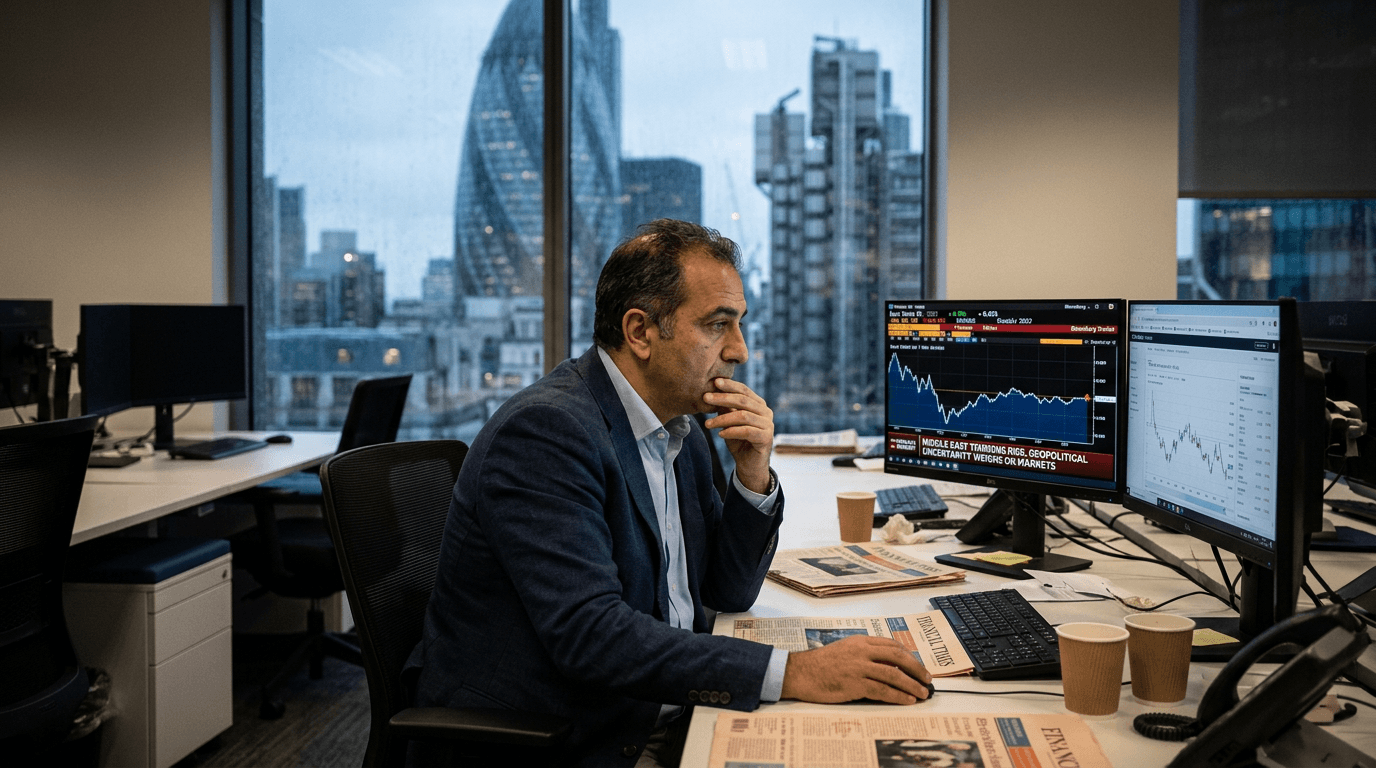
European equities finished another trading session flat, a fitting conclusion to a week marked by thin volumes and heightened uncertainty surrounding geopolitical developments. While the lack of significant movement might suggest a quiet market, the underlying dynamics tell a more nuanced story: investors remain cautious despite low trading activity, and the specter of Middle East tensions continues to weigh on sentiment across the continent. For traders and portfolio managers navigating this environment, understanding what's driving these mixed signals is crucial to making informed decisions.
The Geopolitical Headwind
European bourses have reflected investor concerns over escalating geopolitical conflicts, particularly tensions in the Middle East, which have heightened market risk aversion across multiple asset classes.[1] This is not simply noise; it's a fundamental shift in how investors are pricing risk. When geopolitical uncertainty spikes, even modest developments can trigger larger market reactions than economic data alone would suggest. The energy and financial sectors have shown particular weakness due to these tensions, with companies linked to the Middle East facing additional scrutiny and valuation pressure.[1]
Analysts remain focused on the trajectory of these conflicts, recognizing that if they persist or escalate, they could negatively impact global economic recovery.[1] This isn't just about oil prices or immediate supply chain disruptions, though those matter. It's about investor confidence in the broader economic outlook. When geopolitical risks dominate headlines, institutional investors tend to adopt a wait-and-see approach, which naturally leads to lower trading volumes and muted price action.
Thin Volumes: A Double-edged Sword
The holiday period brings predictable trading patterns: reduced participation from key market participants, lower liquidity in many securities, and generally subdued price action. However, this thin volume environment carries important implications for market dynamics. With fewer participants and lower overall trading activity, the market becomes more vulnerable to outsized moves from even modest order flows.[1]
Investors have exhibited caution in their trading, potentially impacting market liquidity and trading volumes in the short term.[1] This creates a paradox: the very conditions that might normally support stability—fewer participants, lower activity—can actually increase volatility when unexpected news arrives. A sudden announcement or market move can have an amplified effect when volume is light, creating whipsaw conditions that catch unprepared traders off guard.
For those managing portfolios during this period, thin volumes also mean that executing larger trades becomes more challenging. The bid-ask spreads typically widen, slippage increases, and the risk of moving prices with large orders rises considerably. This is why many sophisticated investors reduce position sizing or defer significant portfolio adjustments until volumes normalize after the holiday period.
Sector Dynamics And Selective Weakness
The weakness in energy and financial sectors deserves closer examination. Energy companies face direct exposure to Middle East developments, whether through production facilities, supply chains, or simply market sentiment about global energy demand during economic uncertainty. Financial stocks, meanwhile, are typically sensitive to broader economic growth expectations and risk appetite. When both sentiment deteriorates, these sectors often bear the brunt.[1]
It's worth noting that weakness in these sectors doesn't reflect a uniform selloff across Europe. Defensive sectors and companies with minimal geopolitical exposure have held up better, suggesting that investors are differentiating between risk exposures rather than engaging in outright capitulation. This selectivity reflects a measured response to uncertainty: reducing exposure to at-risk sectors while maintaining core positions elsewhere.
Strategic Considerations For Traders
In this environment, several principles become particularly important. First, volatility may be contained by low volumes, but it could expand rapidly if sentiment shifts or geopolitical developments worsen. Traders should ensure that stop-loss orders and risk management protocols reflect potential moves during low-liquidity periods.
Second, the holiday period creates an excellent opportunity for strategic reassessment. With markets moving little, it's a good time to review portfolio positioning, update risk assessments, and prepare for potential year-end and early 2027 developments. What trends are developing? What positions need adjustment? What hedges might be worth implementing?
Third, mean reversion principles suggest that extreme moves during thin volume periods may not stick once normal volumes return. While this can create opportunities, it also means not overcommitting to positions based on holiday-period price action alone.
The Path Forward
European markets remain caught between offsetting forces: economic fundamentals that would typically support equities, but geopolitical risks that encourage caution and defensive positioning. The flat finish reflects this tension perfectly. Until geopolitical developments stabilize or until volumes normalize with the return of full market participation, expect continued sideways price action with occasional spikes based on headline developments.
For investors, the message is clear: use this quiet period to strengthen your analytical framework, review your risk exposures, and prepare for more volatile conditions ahead.