
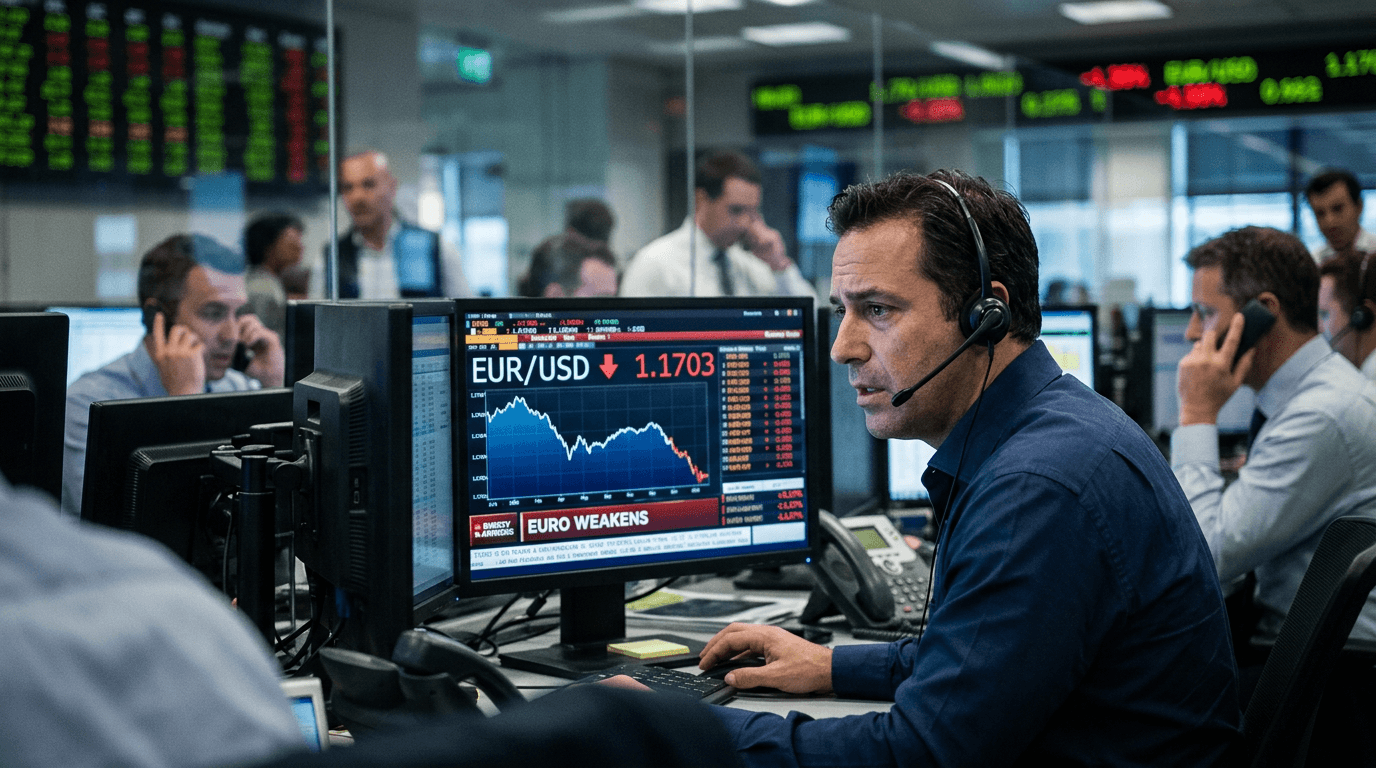
The EUR/USD currency pair has tumbled sharply toward the psychologically significant 1.1700 level, marking a reversal of earlier gains and reflecting renewed risk-aversion sentiment gripping financial markets. This decline represents more than a routine technical pullback; it signals a confluence of factors that traders and investors must understand to navigate the current trading environment effectively. The primary culprit behind this weakness in the euro has been the deterioration of hopes for a ceasefire between the United States and Iran, coupled with rising tensions around the critical Strait of Hormuz shipping route. As geopolitical risks escalate, market participants are retreating to the safety of the US Dollar, leaving the single currency under considerable pressure.
Geopolitical Tensions Reshaping Currency Flows
The collapse of peace negotiations between the US and Iran has fundamentally altered risk sentiment in global markets. President Trump's negative reaction to Iran's latest peace proposal has sent shockwaves through energy and currency markets simultaneously. This breakdown in diplomatic efforts raises the specter of renewed conflict in the Middle East, one of the world's most strategically sensitive regions. The Strait of Hormuz, through which approximately one-third of global maritime crude oil passes, becomes an immediate flashpoint should tensions escalate further. Traders are pricing in elevated energy price risks, which in turn influences currency valuations across major pairs.
The safe-haven demand for the US Dollar reflects a classic risk-off market structure. When geopolitical uncertainty rises, investors instinctively rotate capital into assets perceived as safer and more stable. The dollar, backed by the world's largest economy and deepest financial markets, naturally benefits from this flight to safety. The European economy, by contrast, faces its own set of headwinds including sluggish growth prospects and the complications that higher energy prices would create for its energy-dependent manufacturing sector. This dynamic provides a powerful tailwind for USD strength and a corresponding headwind for EUR weakness.
Technical Breakdown Confirms Bearish Bias
From a technical perspective, the break below 1.1700 holds significant meaning for short-term traders. This level had previously functioned as support, but its breakdown transforms it into resistance. Technical analysts now highlight a series of support zones that could attract buyers: the area between 1.1675 and 1.1650, with the April 9 low at 1.1650 representing a critical threshold. Should sellers push through this barrier, the next major target zone emerges around 1.1505 to 1.1525, representing April's bottom.
The Relative Strength Index on the 4-hour chart currently hovers in the high-30s range, indicating intensifying bearish momentum and suggesting the decline has room to run. The Moving Average Convergence Divergence indicator presents another bearish signal, with its line attempting to cross below the signal line. These technical confirmations suggest that the selloff in EUR/USD is not merely a superficial reaction but reflects deeper underlying weakness in market positioning. Resistance on the upside resides near 1.1727 and 1.1760, where the confluence of technical levels should cap any bounce attempts.
The Paradox Of Dax Strength Amid Euro Weakness
A curious market dynamic has emerged alongside the euro's decline: Germany's DAX index surged approximately 1 percent despite the weakness in EUR/USD and elevated crude oil prices. This apparent contradiction reveals important nuances about market structure and sectoral performance. The DAX strength likely reflects several offsetting factors. First, many DAX components are large multinational corporations that benefit from dollar strength when they convert foreign earnings back into euros. Second, sectors less exposed to oil prices and energy costs have found support from broader market repricing. Finally, some investors may view the DAX as an attractive opportunity after a period of relative underperformance.
This divergence between currency and equity markets underscores a critical principle for sophisticated traders: currency movements and equity movements do not always move in lockstep. Sector selection and individual company exposure matter tremendously, and a weak euro does not automatically translate to weakness across all German assets.
Implications For Traders And Investors
The current EUR/USD structure presents both risks and opportunities depending on your positioning and time horizon. Short-term traders focused on technical breakdowns may find opportunities in the continuation of euro weakness, particularly if geopolitical tensions remain elevated. Longer-term investors should consider whether the current valuation of EUR/USD reflects a temporary dislocation or a fundamental repricing of the euro relative to the dollar. The upcoming Federal Reserve decision and any ECB communications will likely prove critical in determining whether this selloff has legs or represents an overdone move.
Risk management becomes paramount in this environment. Setting appropriate stop-loss levels based on the technical support zones outlined above and maintaining disciplined position sizing will help traders navigate the inherent volatility that geopolitical events create.
Final Takeaway For Traders
Monitor three critical areas: any news developments regarding US-Iran tensions, economic data releases that could influence Federal Reserve policy, and technical support levels below 1.1700. Position sizing and risk management should be your top priorities as this market remains elevated in uncertainty.
---