
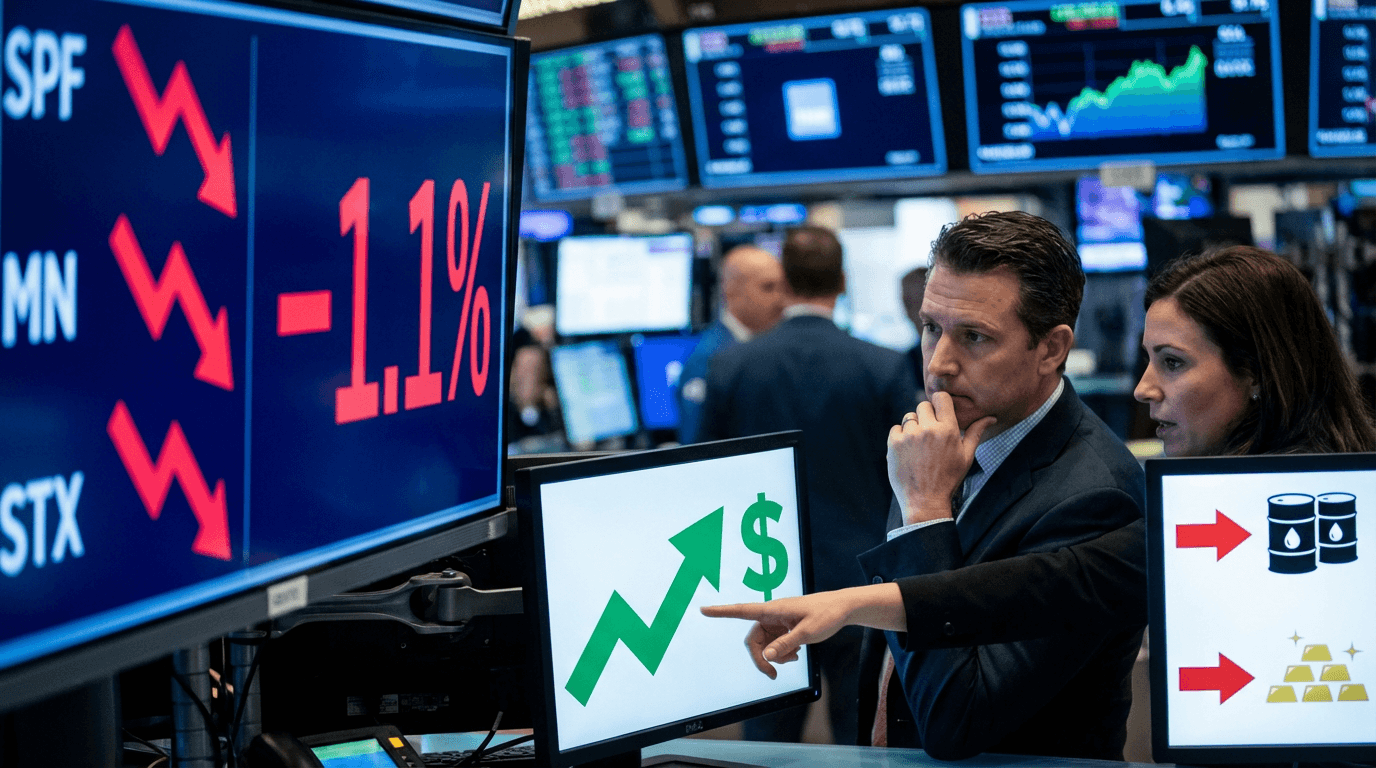
The stock market experienced a notable pullback on January 30, 2026, as major indices declined following President Trump's announcement that he had nominated Kevin Warsh to succeed Jerome Powell as Federal Reserve Chair. The S&P 500 fell 0.97%, the Nasdaq Composite dropped 1.52%, and the Dow Jones declined 0.28%, marking the most significant market reaction to a policy announcement in recent weeks. Despite the day's losses, all three major indices remain positioned for positive returns throughout January 2026, suggesting that this pullback represents a market recalibration rather than the beginning of a sustained downtrend.
The Catalyst: Warsh Nomination Reshapes Rate Expectations
President Trump's announcement that Kevin Warsh would be his choice to lead the Federal Reserve sent immediate shockwaves through financial markets. Warsh, a former Federal Reserve Governor and currently a Distinguished Fellow at the American Enterprise Institute, carries a reputation as a monetary policy hawk skeptical of the Fed's expansive money printing policies. His nomination prompted investors to immediately reassess their expectations for interest rate cuts throughout 2026, reversing some of the optimism that had built up around the possibility of more accommodative monetary policy later in the year.
What makes this nomination particularly significant is Warsh's historical criticism of the Federal Reserve for underestimating inflation risks. While he has recently signaled pragmatic openness to rate reductions that the Trump administration favors, markets remain uncertain about how his views would translate into actual policy decisions should inflation pressures reemerge. This uncertainty created an immediate repricing of risk assets across multiple categories, from equities to commodities to cryptocurrencies.
The Dollar Surge And Commodity Collapse
One of the most striking market movements following the Warsh announcement was the sharp appreciation of the U.S. Dollar Index, which climbed significantly as investors reassessed the possibility of higher-for-longer interest rates under a potentially more hawkish Fed leadership. A stronger dollar typically pressures commodity prices, and that dynamic played out dramatically on January 30.
Gold experienced a particularly sharp correction, tumbling over 4% to fall below $5,116 per ounce. Silver plummeted even more severely, dropping nearly 13% as investors abandoned positions in precious metals that had benefited from months of rate-cut expectations and safe-haven positioning. These sharp declines suggest that positioning in commodity markets had become stretched, and the Warsh announcement provided the trigger for widespread profit-taking and forced liquidations of leveraged positions.
Cryptocurrency And Leverage Unwind
Digital assets proved equally vulnerable to the risk-off sentiment that gripped markets following the Fed chair announcement. Bitcoin fell 1.85% to trade near $83,033, hitting a two-month low as the Nasdaq Crypto Index declined 1.70%. More significantly, the announcement of Bitcoin's decline coincided with reports of approximately $1.7 billion in liquidations of leveraged long positions in cryptocurrency markets. These cascading liquidations highlight just how much leverage had accumulated in crypto markets during the recent risk-on environment.
Earnings Mixed As Investors Reassess Fundamentals
Beyond the macro story, January 30 also brought fresh corporate earnings results to the market. The earnings picture proved decidedly mixed, with some companies delivering strong results while others disappointed. Verizon surged 6.6% on strong earnings results, while Chevron rose 0.5% following a profit beat. On the negative side, American Express tumbled 3.1% following an earnings miss, and ExxonMobil slipped 0.8%. These individual stock movements demonstrated that beneath the headline decline, there remained genuine dispersion in corporate performance and investor appetite for quality earnings.
January Gains Intact Despite Pullback
Despite the sharp intraday declines on January 30, the broader context remains supportive. The S&P 500 was still up 1.8% for the month of January, the Dow had advanced 2.1%, and the Nasdaq had gained 1.9% heading into the final trading days of the month. This means that the January 30 pullback, while notable, has not erased the solid monthly gains that most indices had already accumulated. Trading volume on Thursday totaled 23.36 billion shares, higher than the 20-session average of 18.83 billion, suggesting that the selling had conviction behind it.
Key Takeaways For Traders And Investors
The Warsh nomination represents a genuine regime shift in terms of expectations for monetary policy in 2026. Rather than viewing this as a crash or capitulation, traders should understand it as a necessary market repricing following weeks of building expectations for more aggressive Fed easing. The sharp declines in commodities and cryptocurrencies suggest that significant leverage positions were unwound, which may reduce tail risks in those markets going forward.
Investors should monitor how Warsh's actual statements and positions develop in the coming weeks. The market's initial interpretation may prove overly hawkish if Warsh emphasizes his more recent pragmatic stance on rate flexibility. Additionally, the earnings season will continue to provide crucial information about corporate health and profitability regardless of the monetary policy backdrop.