
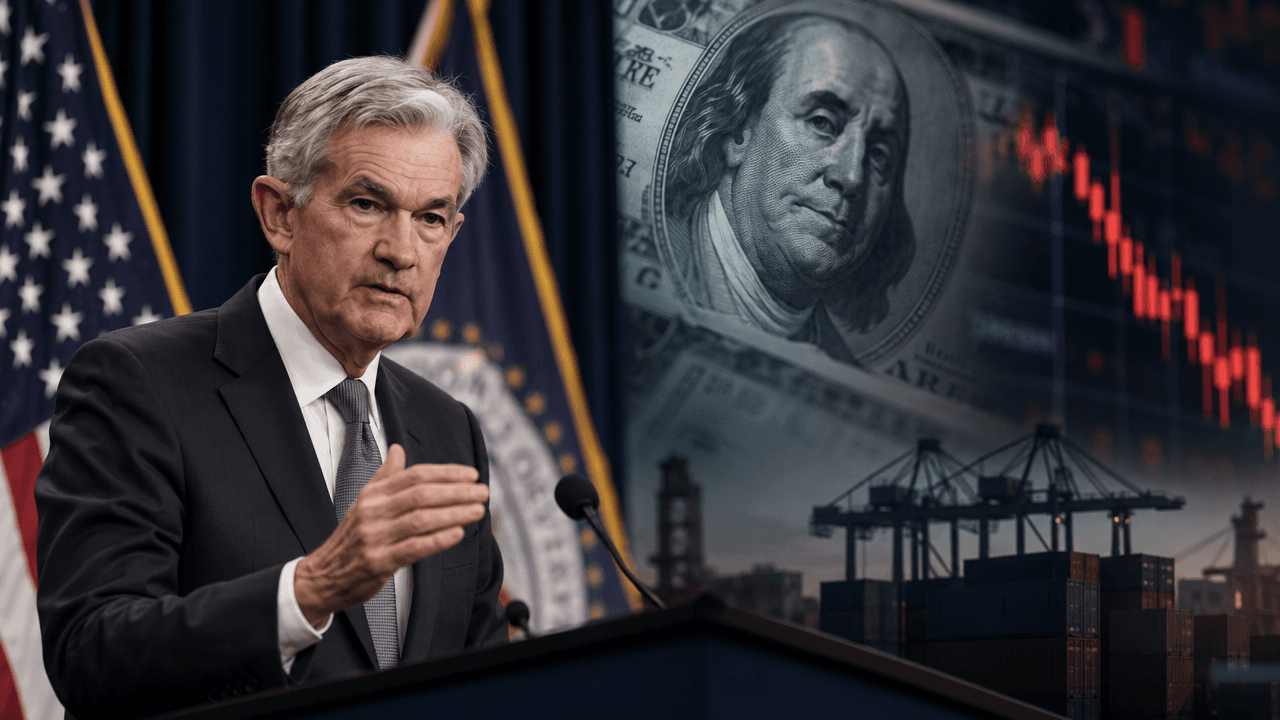
Federal Reserve officials are sending a clear message: inflation risks remain elevated and may prove harder to tame than earlier hoped. New comments from regional Fed presidents highlight persistent price pressures, ongoing supply shocks, and a willingness to keep policy restrictive or even tighten further if needed[1][4][10]. For traders, this translates into a more volatile macro backdrop, stronger support for the dollar, and a tougher environment for risk assets.
Why The Fed Is Still Worried About Inflation
New York Fed President John Williams recently said it would be “reasonable” to expect another interest rate hike by the end of the year as inflation remains above 3% and the economy continues to show strength[10]. His remarks signal that the Federal Reserve does not yet see inflation as safely on a path back to its 2% target, despite previous tightening. When growth is resilient and inflation is still running hot, policymakers tend to err on the side of caution and keep financial conditions tight.
St. Louis Fed President Alberto Musalem has underscored that the risks around monetary policy have shifted toward higher inflation, citing strong demand and rising input costs as key concerns[2]. He has argued that interest rates may need to stay elevated “for some time,” and possibly move higher, to prevent inflation from remaining above target[2][4]. Musalem even stated that inflation “is not a risk. It’s there,” noting that underlying price pressures are still running roughly a percentage point above the Fed’s goal and “moving in the wrong direction”[4].
At the Jackson Hole conference, multiple Fed officials reiterated that inflation is proving stubborn and sticky, with price pressures remaining above the 2% target for more than five years[5]. Kansas City Fed President Jeffrey Schmid described inflation as “still stubborn and sticky,” while other officials warned that current policy may not be sufficiently restraining the economy to bring prices down[5]. Chicago Fed President Austan Goolsbee emphasized that his biggest near-term fear is that inflation is not yet under control[5].
Supply Shocks: From Transitory To Persistent
Fed officials are increasingly focused on supply-side shocks as a key driver of ongoing inflation risks. Musalem and others have pointed to volatile energy markets, higher commodity prices beyond oil, and renewed supply chain disruptions linked to geopolitical conflicts as sources of persistent inflation pressure[2][4][8]. The Iran-related conflict, in particular, is raising concerns about sustained high oil prices and broader supply chain issues that could keep inflation elevated[2][8].
Richmond Fed President Tom Barkin has warned that “passing” shocks are no longer proving short-lived, instead generating more persistent price pressures than initially expected[1][15]. He noted that the cumulative impact of repeated supply waves risks loosening the anchor on inflation expectations, which is crucial for keeping prices stable over the long term[9][15]. When businesses and households start to expect higher inflation, they adjust prices and wages accordingly, making it harder for the Fed to restore price stability.
Research from Federal Reserve staff has highlighted a new era of asset-pricing risks, driven by heightened perceived risks of adverse supply shocks and concerns about fiscal sustainability[3]. While longer-term inflation compensation has remained relatively stable, suggesting investors still believe the Fed will ultimately control inflation, far-forward nominal rates have risen as markets price in greater macro uncertainty[3]. This combination of persistent supply shocks and elevated risk premia complicates the Fed’s task, especially because supply shocks move growth and inflation in opposite directions, putting its dual mandate in tension[13].
Market Reaction: Dollar, Equities, And Crypto
A hawkish tone from Fed officials typically supports the U.S. dollar, as expectations of higher or longer-lasting interest rates increase the relative return on dollar assets. When policymakers talk openly about the possibility of additional rate hikes or keeping policy restrictive for an extended period, investors tend to rotate toward safer, interest-bearing instruments and away from high-beta risk assets. The combination of elevated inflation, strong demand, and persistent supply shocks encourages markets to price in tighter financial conditions for longer.
Equity markets generally struggle when the Fed emphasizes inflation risks and the need for more restraint. Higher real yields can compress valuation multiples, particularly for growth and technology stocks that are sensitive to discount rates. At the same time, earnings uncertainty rises if input costs, wage pressures, and financing expenses remain elevated. Crypto assets, which are highly sensitive to liquidity and risk appetite, typically face headwinds in this environment as investors demand higher compensation for risk and prefer assets with clearer cash flows.
For traders on both traditional and simulated finance platforms, the key takeaway is that the macro regime remains driven by inflation and policy expectations rather than purely by micro or idiosyncratic factors. Positioning around rate expectations, yield curves, the dollar, and volatility becomes more important when the central bank is signaling that the inflation fight is not yet over. Short-term market rallies can be quickly faded if new data or speeches revive fears of additional tightening.
How Traders Can Navigate A Hawkish Fed
In an environment where Fed officials repeatedly highlight inflation risks, traders benefit from structuring strategies around scenarios rather than single-point forecasts. One scenario assumes inflation gradually cools and the Fed ultimately pauses, with rates staying high but stable; another assumes renewed inflation shocks, prompting further tightening. Stress-testing positions across both paths helps identify where portfolios are overly exposed to one outcome.
Monitoring key Fed speakers and data releases becomes a core risk-management task. Statements from influential officials such as Williams, Musalem, Barkin, and Goolsbee can shift rate expectations intraday, especially when they directly reference inflation trajectories and supply shocks[1][2][4][10]. Combining these communications with incoming data on inflation, labor markets, and energy prices can help traders anticipate how the policy narrative might evolve.
On simulated finance platforms, traders can use this period to practice trading around central bank communication and macro news without real capital at risk. Strategies might include:
1) Testing different allocations between dollar exposure, equity indices, and crypto during hawkish policy phases. 2) Simulating reactions to surprise data or unexpectedly aggressive Fed commentary. 3) Experimenting with volatility-based strategies that aim to capture moves around major Fed events.
What To Watch Next
Looking ahead, the most important signals will come from future inflation readings, energy prices, and any escalation or resolution in geopolitical conflicts that affect supply chains and commodities[2][8][14]. If inflation data show renewed momentum or fail to decelerate meaningfully, Fed officials will have a stronger case for keeping rates high or raising them again. Conversely, a clear and sustained cooling of inflation, coupled with easing supply pressures, would make it easier for the Fed to shift toward a more neutral stance.
Policymakers have made clear that they see the risks skewed to the upside, with several scenarios in which inflation gets stuck above 2% for a prolonged period[5][6][14]. As long as that remains true, traders should assume that the Fed will prioritize price stability over growth, accepting slower activity or market volatility as the cost of restoring inflation to target. Aligning trading strategies with this reality—rather than hoping for a quick pivot—can help manage risk more effectively in the current macro environment.