
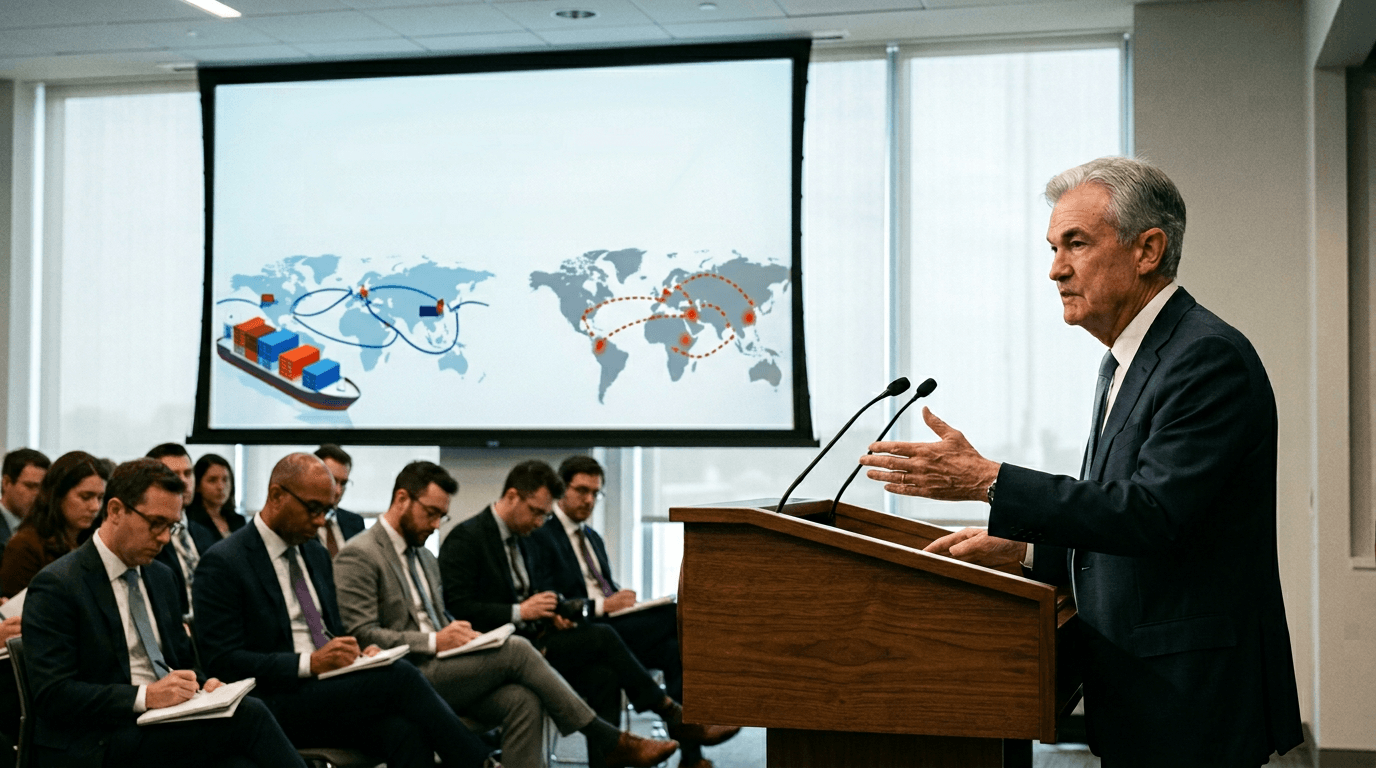
Fed's Steady Hand Amid Economic Crosswinds
In March 2026, the Federal Reserve opted to keep its benchmark federal funds rate steady at 3.50–3.75%, a decision that highlights the central bank's nuanced approach to a challenging economic landscape. The Fed finds itself navigating persistent inflation, geopolitical turbulence, and signs of a cooling labor market. This decision aligns with market forecasts but underscores the Fed's tightrope walk between bolstering employment and curbing inflation to prevent it from settling above the desired 2% target.
Fed's Cautious Strategy in a Volatile Climate
The Federal Open Market Committee's decision to maintain the current rate saw overwhelming support, with 11 out of 12 members in agreement. Only Governor Stephen Miran dissented, advocating for a rate cut of 25 basis points. This consensus reflects the Committee's belief that the existing rate effectively balances the dual mandate of employment and price stability. Fed Chair Jerome Powell described the stance as "wait-and-see," emphasizing vigilance in monitoring incoming data before making any policy shifts.
The decision follows positive adjustments in economic forecasts, with GDP growth for 2026 revised to 2.4% and inflation expectations for PCE and Core PCE indices increased to 2.7%. These updates indicate a resilient economy, where robust consumption and growth help counterbalance labor market weaknesses. The current rate resides within the Fed's neutral range, where policy neither significantly stimulates nor restrains economic activity.
The Persistent Inflation Conundrum
Despite previous aggressive rate hikes, inflation continues to exceed the Fed's 2% target, with core inflation at around 3% and PCE readings between 2.8% and 3.0%. Of particular concern is the inflation's composition: tariff-induced price pressures represent a significant portion of the core inflation figure, while energy price pressures from Middle East geopolitical tensions add further inflationary risks.
This complexity is crucial for policy decisions. Powell noted that the Fed cannot dismiss energy inflation until tariff-driven goods inflation shows clear moderation. This sequencing dilemma means that the path to rate cuts remains obstructed until tangible progress on tariff-related inflation is observed.
Labor Market's Subtle Signals of Change
While inflation remains a pressing issue, the labor market presents a different picture. Job creation has slowed considerably, with new payroll gains described as "low" and demand for labor showing signs of softening. Despite a stable unemployment rate, Powell attributes the hiring slowdown to reduced labor demand and lower immigration, rather than voluntary workforce exits.
This disparity between persistent inflation and weakening labor market momentum poses policy challenges. Traditionally, slowing job growth would suggest rate cuts to stimulate the economy. However, the Fed believes that the labor market doesn't yet justify easing, partly due to the risk that premature cuts could entrench inflation expectations further. The Committee perceives the risks of premature easing as greater than those of maintaining the current stance.
Geopolitical Uncertainty Adds Complexity
Adding to these domestic issues is significant geopolitical uncertainty. Powell highlighted the unpredictability of Middle Eastern developments and their potential impact on inflation expectations and consumer sentiment. Rising energy prices could temporarily boost inflation while dampening growth and confidence—a complex stagflationary scenario for policymakers.
Nevertheless, the Fed appears prepared to weather short-term energy price fluctuations as transitory, provided inflation expectations remain stable. This stance reflects confidence in the Fed's credibility, though Powell acknowledged the challenge of assessing the scale and duration of geopolitical shocks.
Future Trajectory for Markets and the Economy
Looking forward, the Fed's rate trajectory remains data-dependent rather than predetermined. The Committee projects two 0.25% rate cuts in 2026 and 2027, contingent on incoming data. Market expectations have shifted significantly since early 2026, with investors no longer anticipating rate cuts by year-end, a stark contrast to earlier projections of two cuts.
The immediate market reaction was negative, with S&P 500 futures dropping 2.28%, the VIX rising 20% to 25.87, and Bitcoin futures declining 5.69%. This reflects investor disappointment over delayed rate relief and ongoing concerns about inflation and geopolitical risks.
For traders and investors, the message is clear: the Fed's focus remains on data dependency, prioritizing inflation control over employment support until the inflation outlook becomes clearer. Until goods and energy prices stabilize, the "wait-and-see" stance is likely to persist.
News Impact Score: 7