
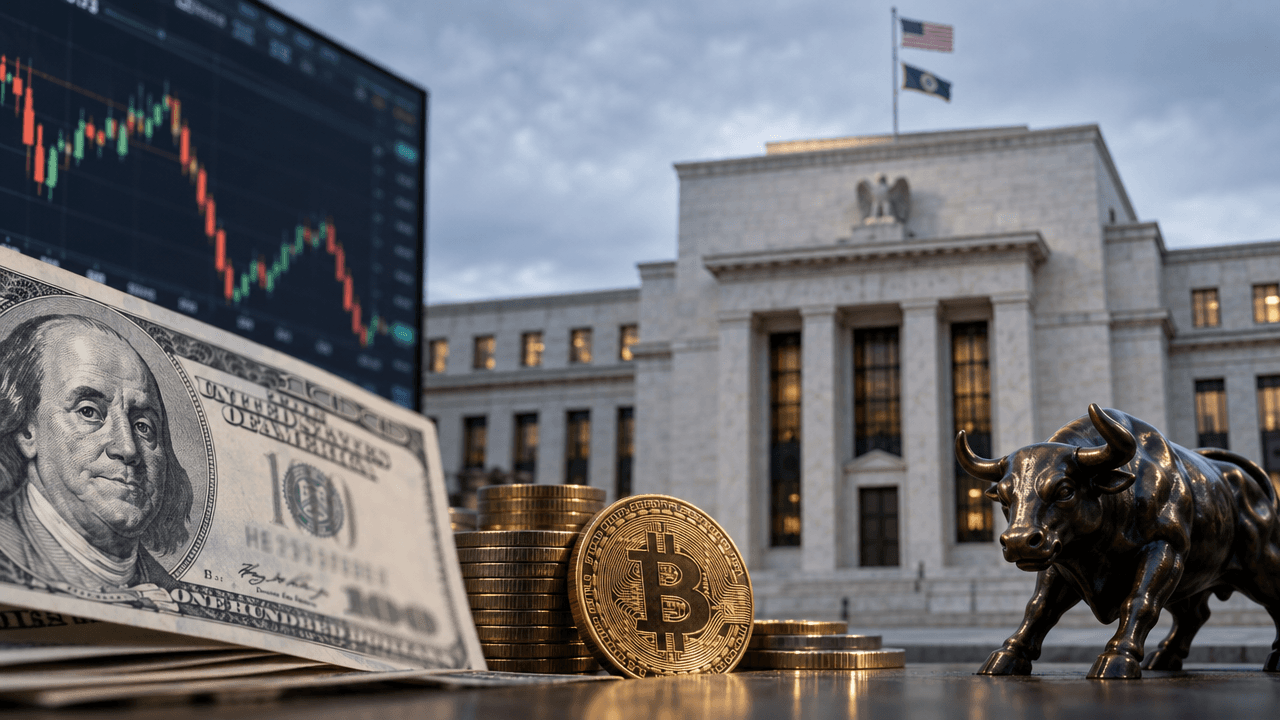
Fed rate-hike expectations have moved sharply higher, changing the market’s outlook for borrowing costs, the U.S. dollar and risk assets. Federal funds futures were recently pricing approximately a 73% probability of an October rate hike, up from about 53% previously, as stronger economic activity and renewed inflation pressure encouraged traders to anticipate a more hawkish Federal Reserve. [1]
The shift is important because financial markets respond not only to actual policy decisions, but also to changes in expectations. Even before the Federal Open Market Committee announces a decision, traders can reprice stocks, bonds, currencies and cryptocurrencies based on their assessment of what the Fed is likely to do next.
Why Rate-hike Expectations Are Rising
Several developments have contributed to the change in market pricing. Economic activity has remained stronger than many investors expected, suggesting that demand may be resilient enough for businesses to continue raising prices. At the same time, higher energy, transportation, raw material, insurance and labor costs are adding to inflation pressure. [1]
This combination creates a difficult environment for policymakers. The Fed wants to prevent inflation from becoming entrenched, but it also needs to avoid weakening the economy unnecessarily. When growth remains firm and inflation moves higher, the central bank has less reason to reduce interest rates and may face greater pressure to tighten policy.
Recent inflation data also played a role in moving expectations. Following a hotter-than-expected inflation report, futures markets rapidly increased the implied probability of an October hike, with estimates moving from roughly 22% to more than 50% in a short period. [12] Such moves demonstrate how quickly market expectations can change when incoming data challenges the prevailing narrative.
What Higher Rates Mean For The Dollar
Higher expected interest rates are generally supportive for the U.S. dollar. If investors believe dollar-based assets will offer better returns, demand for the currency can increase. International capital may flow toward U.S. Treasury securities, money-market instruments and other assets that benefit from higher yields.
A stronger dollar can affect global markets in several ways. Commodities priced in dollars, including oil, gold and some industrial materials, may become more expensive for buyers using other currencies. Emerging-market economies can also face pressure when they have significant dollar-denominated debt, because repayment costs rise as their local currencies weaken.
However, a stronger dollar is not guaranteed to rise indefinitely. Currency markets also consider economic growth outside the United States, geopolitical risks, central-bank policy abroad and the extent to which a rate hike has already been priced in. If traders believe the Fed is nearing the end of its tightening cycle, the dollar may react modestly even after a hike occurs.
Pressure On Stocks And Crypto
Higher rates are typically challenging for duration-sensitive assets. Growth stocks are especially vulnerable because much of their expected cash flow lies far in the future. When Treasury yields rise, those future earnings are discounted at a higher rate, which can reduce the present value investors assign to companies with expensive valuations.
Technology stocks, speculative shares and other high-growth areas may therefore experience greater volatility than established companies with strong current cash flow. Higher borrowing costs can also reduce corporate investment, increase financing expenses and place pressure on profit margins.
Cryptocurrency markets can face similar headwinds. Digital assets do not generate traditional cash flows, so their valuations are strongly influenced by liquidity, investor risk appetite and the opportunity cost of holding assets that do not pay interest. When government bonds and cash equivalents offer more attractive yields, some investors may reduce exposure to crypto and other speculative assets.
Higher rates can also strengthen the dollar and tighten financial conditions, two forces that have historically created pressure for crypto valuations. [3] Still, the market response depends on expectations. If traders have already priced in a hike, the actual decision may have a limited effect. A larger reaction could occur if the Fed signals that additional increases are likely.
How Traders Can Respond
The most important distinction is between a policy decision and a policy surprise. A rate hike that matches market expectations may produce a muted reaction. A hike accompanied by unexpectedly hawkish guidance, however, could push Treasury yields and the dollar higher while weighing on stocks and crypto.
Traders should monitor several indicators
Federal funds futures: These show how markets are pricing the probability of future policy decisions.
Treasury yields: Rising short-term yields often reflect expectations for tighter monetary policy, while longer-term yields also incorporate growth and inflation forecasts.
The U.S. Dollar Index: A rising dollar can signal tighter global financial conditions and create pressure on dollar-priced assets.
Inflation and employment data: These reports can quickly change expectations before an FOMC meeting.
Market breadth and volatility: Weak participation beneath headline stock gains may indicate that investors are becoming more defensive.
Risk management is especially important during periods of shifting expectations. Traders may consider reducing excessive leverage, defining exit levels before entering positions and avoiding assumptions that a familiar correlation will hold every day. Markets can rally after a rate hike if investors view the decision as the final increase, just as they can fall after a rate hold if the accompanying message sounds more aggressive than expected.
The Bigger Market Picture
The increase in October rate-hike expectations reflects a broader debate over whether inflation is cooling fast enough and whether economic growth remains too strong for the Fed to ease policy. The answer will depend on upcoming inflation, labor-market and activity data, as well as the central bank’s communication.
For traders, the key lesson is that expectations often move markets before official decisions do. A stronger dollar, higher yields and tighter liquidity may create headwinds for equities and crypto, but the ultimate impact will depend on how much of the news is already reflected in prices.
The most effective approach is to follow the interaction between data, Fed guidance and market positioning rather than focusing on a single headline. In a rapidly changing rate environment, preparation and disciplined risk control can matter more than trying to predict every short-term move.