
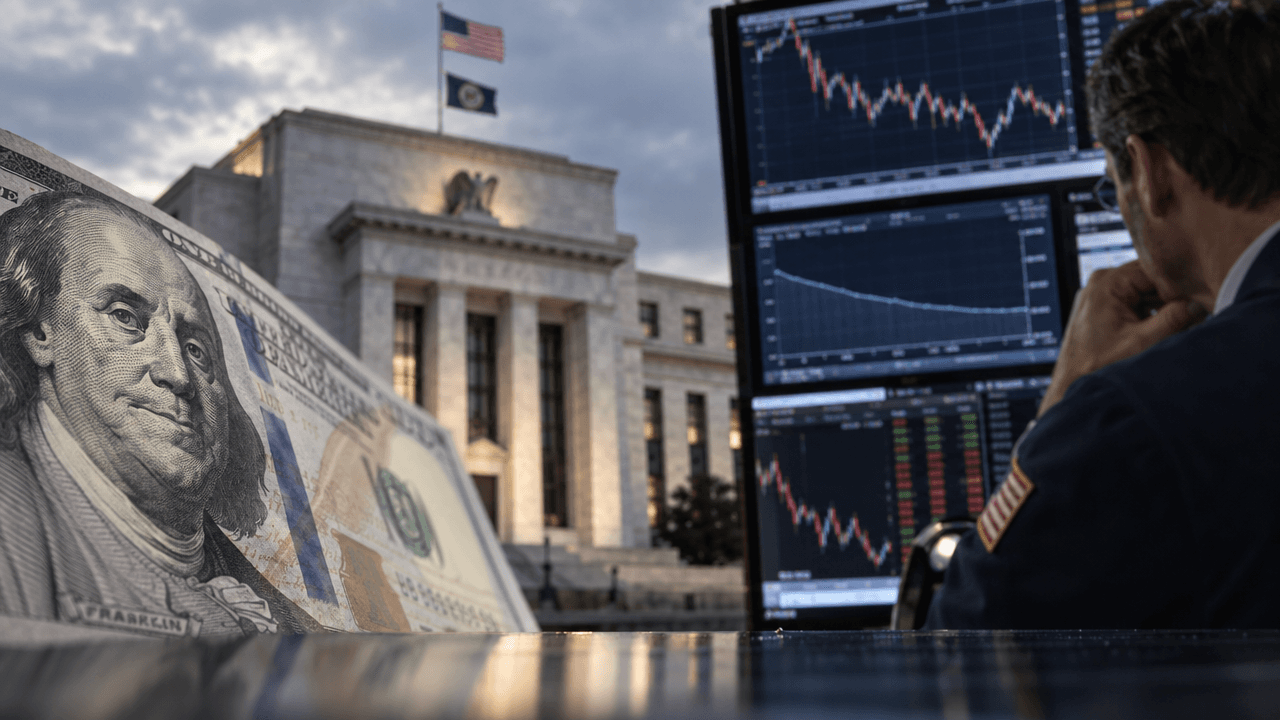
The Federal Reserve has restarted its rate-hike cycle, lifting the federal funds rate by 25 basis points to 3.75–4.00% in its first increase since 2023.[1][3][6] Alongside the move, policymakers signaled at least one more hike this year and a higher-for-longer path that could keep policy rates near or above 4% for an extended period.[5][8][11] This shift is rippling through currency markets, the Treasury curve, and futures pricing, creating both challenges and opportunities for traders and SimFi participants who need to quickly reassess risk and reward.
Why This Fed Hike Matters
After an extended pause, a fresh rate increase marks a clear change in the Fed’s reaction function toward stubborn inflation and resilient economic activity.[1][4][7] The new 3.75–4.00% target range pushes short-term borrowing costs higher and reinforces the message that policymakers are not ready to pivot toward easing.[3][6] Projections showing at least one more hike this year and policy rates staying elevated into 2027 underline the higher-for-longer narrative that markets had only partially priced in.[5][8][13]
For traders, the key takeaway is that the Fed is now less tolerant of inflation surprises and more willing to trade off some growth to re-anchor expectations. Rate-sensitive assets—from growth equities to credit and real estate proxies—are likely to face more volatility as markets digest the idea that cheaper money is not coming back quickly. In SimFi environments, this is an ideal scenario to stress-test portfolios under different paths for inflation, growth, and Fed policy rather than assuming a swift return to near-zero rates.
DOLLAR STRENGTH AND THE USD/JPY MOVE
A higher policy rate and a more hawkish Fed have given the U.S. dollar fresh momentum against major currencies, especially those with ultra-low or capped yields.[5][6] As U.S. short-end yields rise and the expected peak rate shifts higher, the yield differential versus Japan has widened, pushing USD/JPY higher as carry trades become more attractive.[5][10] For FX traders, the combination of U.S. rate hikes and Japan’s more gradual shifts in yield-curve control or policy stance keeps the dollar-yen pair highly sensitive to each new macro data point.
Three practical takeaways for FX and SimFi traders
- Think in rate differentials, not just headline decisions. A 25 bp Fed hike has more impact when other central banks are standing pat or easing.
- Watch volatility regimes. A stronger dollar can compress volatility in some pairs while amplifying it in risk-sensitive crosses.
- Use simulations to model scenarios where the Fed hikes again while the Bank of Japan moves only cautiously, stressing USD/JPY and broader risk sentiment.
For E8 Markets users trading simulated FX, this is a prime environment to experiment with position sizing, carry strategies, and hedging tactics that account for both directional trends and the risk of sharp reversals if data or central-bank communication shifts.
Treasury Curve Flattening: Signals From Bonds
The Treasury curve has undergone a bear flattening, with yields rising across maturities but front-end rates climbing more sharply than those further out.[10] This pattern typically reflects markets pricing in tighter policy over the near term while questioning how much room the economy has to absorb sustained high rates. A flatter curve often signals increased concern about future growth, even as the Fed focuses on inflation control.
For rates traders, a flatter curve changes the relative attractiveness of duration and curve trades. Steepener positions become riskier when the front end leads the move higher, while relative-value opportunities emerge as different maturities adjust at varying speeds. In a SimFi context, curve scenarios are particularly valuable: traders can test how portfolios respond if the Fed delivers its projected additional hike but long-end yields lag, implying growing recession risk and safe-haven demand.
Futures Repricing: From Rate Expectations To Equity Risk
Fed funds and Eurodollar-style rate futures have quickly repriced to reflect a higher terminal rate and fewer cuts in the coming years.[8][13][15] Implied probabilities now point to at least one more hike this year and a plateau around the 4.0–4.25% area rather than a swift descent back toward pre-hike levels.[5][8] This shift matters because futures curves are the market’s consensus view of where policy is headed; when they adjust abruptly, every asset priced off those expectations—from mortgages to corporate funding costs—must recalibrate.[11]
Equity index futures have reacted by reassessing valuation multiples and growth assumptions. Higher discount rates compress the present value of long-duration cash flows, particularly in tech, growth, and speculative segments. At the same time, sectors with stronger pricing power or direct benefits from higher rates (such as financials) can see relative outperformance, even if broad indices face choppier trading. For traders, the repricing across rate and equity futures emphasizes the need to link macro views with sector and style exposures rather than treating indices as monolithic.
How Simfi Traders Can Turn Volatility Into A Learning Edge
For E8 Markets users, this environment is tailor-made for building and testing robust trading frameworks without real-world capital at risk. A few concrete actions:
- Run multi-scenario backtests: Simulate paths where the Fed hikes once more, pauses, or is forced into additional tightening by upside inflation surprises.
- Connect markets: Model how a 25 bp surprise in rate expectations flows through to USD strength, USD/JPY moves, curve shape, and equity index volatility.
- Practice risk management: Use simulations to refine stop-loss placement, position sizing, and diversification across FX, rates, and index futures under higher-for-longer assumptions.
- Focus on narratives as well as numbers: Track how changes in Fed communication—statements, projections, and press conferences—shift futures pricing even when the rate move itself is well telegraphed.
By treating this Fed hike as a case study, traders can deepen their understanding of how macro policy, market expectations, and cross-asset pricing interact. That knowledge is transferable to future cycles, whether the next major move is tightening, easing, or a regime change in inflation dynamics.
Conclusion
The Fed’s first rate hike since 2023, and the clear signal of at least one more increase this year, has reset the landscape across currencies, bonds, and futures.[1][5][6][8] A stronger dollar, a flatter Treasury curve, and a broad repricing of rate and index futures all point to a market that is adapting to a higher-for-longer policy stance rather than betting on a quick pivot.[10][13][15] For traders and SimFi participants, the opportunity lies in using this moment to refine macro frameworks, stress-test strategies, and build discipline around risk management. Understanding how one 25 bp move propagates through global markets is essential preparation for whatever the Fed does next.