
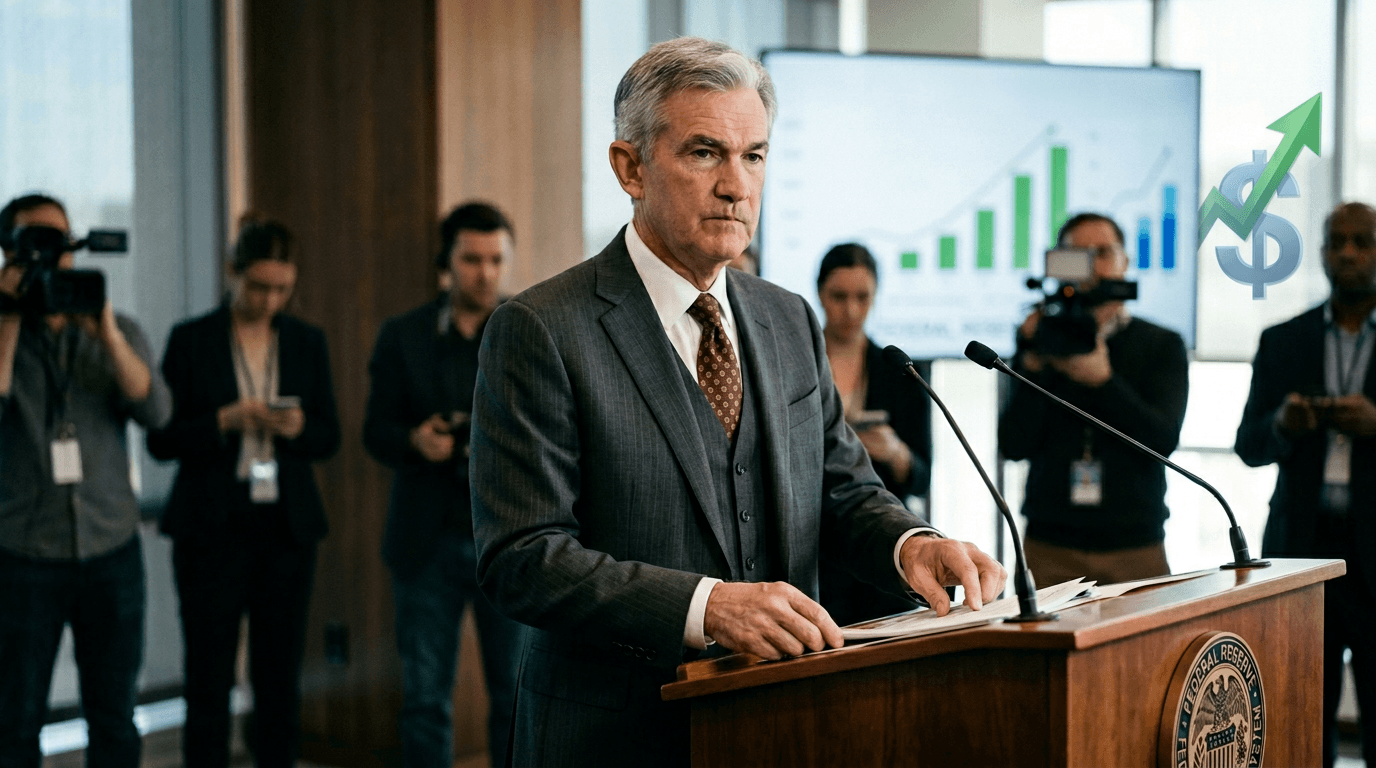
Fed's Firm Stance on Rates Bolsters Dollar Amid Inflation and Geopolitical Tensions
The Federal Reserve's decision to maintain the federal funds rate between 3.5% and 3.75% at its March 18 meeting underscores its hawkish approach, aimed at stabilizing prices despite inflationary pressures from tariffs and geopolitical uncertainties, notably the ongoing Iran conflict that has disrupted oil markets. The rate hold, paired with high inflation figures, continues to bolster the US dollar, even as economic growth struggles with a weakening labor market and sluggish job creation.
Navigating Economic Challenges
During his press conference, Federal Reserve Chair Jerome Powell described the economic climate as a "difficult situation," highlighting the central bank's policy conundrum. Inflation remains elevated at around 3%, far exceeding the Fed's 2% target, while employment growth has significantly slowed. The Federal Open Market Committee's 11-1 vote for holding rates steady, with Governor Stephen Miran dissenting for a cut, illustrates a strong consensus despite previous disagreements since September 2025. Powell noted that the current rate is within a neutral range and stressed the Fed's readiness to adapt to economic data, cautioning against hasty rate cuts despite labor market challenges. This prudent approach has strengthened the US dollar, as evidenced by a 0.71% drop in the NZD/USD pair, signaling investor confidence in a prolonged higher interest rate environment.
Inflation: The Core Challenge
The Fed's hawkish stance is largely driven by the inflation issue, with Powell revealing that tariffs account for 50% to 75% of core inflation. This one-time price surge must run its course before rate cuts are considered. The Fed needs to see a significant decline in goods inflation, especially with potential energy price hikes due to the Iran conflict and rising oil prices nearing $109 per barrel for Brent crude. The stubbornly high personal consumption expenditures index in January indicates persistent consumer price pressures, with goods sector inflation attributed to tariffs posing a particular concern. The challenge is to wait for these effects to wane while monitoring for new energy shocks that could rekindle inflation.
Geopolitical Risks and Rate Prospects
The Fed's statement highlighted uncertainties in the Middle East, acknowledging the economic risks posed by developments there. Powell noted it's premature to gauge the Iran conflict's impact on inflation and growth, though rising oil prices threaten to push inflation higher while dampening economic growth through reduced consumer spending power. Despite hawkish signals, the Fed's projections suggest only one rate cut for 2026, with most members anticipating zero or one cut by year-end. Discussions of a potential rate hike in April indicate policymakers haven't ruled out tightening if inflation doesn't moderate as expected. Goldman Sachs Asset Management's Lindsay Rosner noted the FOMC's easing bias, anticipating two normalization cuts in 2026, contingent on conflict duration and inflation trends.
USD Strength and Market Implications
This hawkish stance supports the US dollar, as higher real interest rates in the US compared to other developed economies attract capital inflows, strengthening the greenback against lower-yield peers. The currency's strength reflects market confidence that the Fed will maintain a pause in rate cuts, potentially prolonging restrictive monetary policy into 2026. Traders should closely watch upcoming economic data releases, particularly employment and inflation figures, which will influence the Fed's April decisions. The central bank's cautious approach, balancing inflation concerns and labor market weakness, suggests a data-driven strategy that could adjust rapidly if conditions shift.
The March 18 decision marks a pivotal point where the Fed prioritizes inflation control over supporting a weakening labor market, continuing to underpin dollar strength across major currency pairs in the coming weeks.