
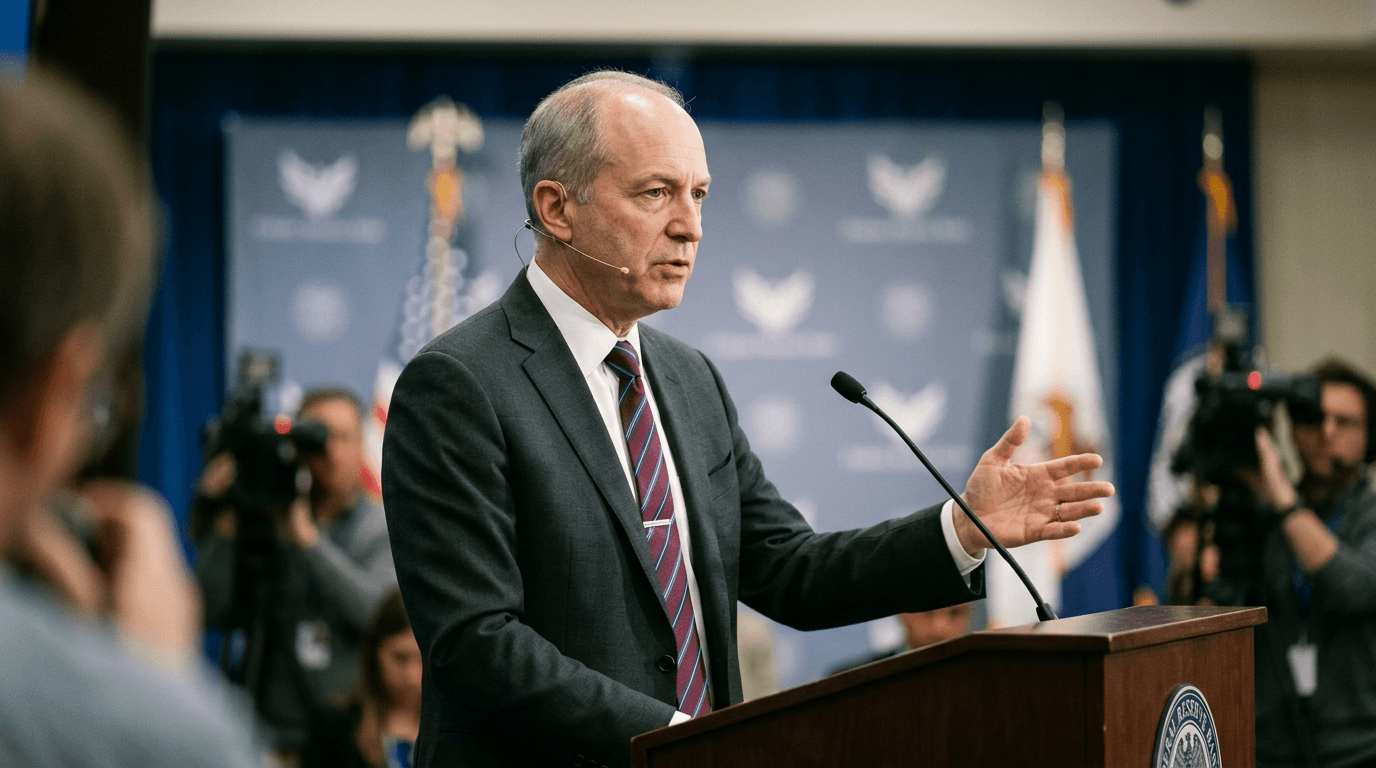
Fed's Barkin Warns on Inflation, Challenges Rate Cut Expectations
Richmond Federal Reserve President Tom Barkin has emerged as a key voice advocating caution on inflation, taking a stance that contrasts with the more dovish sentiments within the central bank. As of early 2026, Barkin's communication increasingly underscores the persistence of inflationary pressures, effectively tempering expectations for aggressive rate cuts in the near term. He remains concerned that, despite improvements from the highs of 2022, inflation still stubbornly exceeds the Federal Reserve's 2% target, and could surge again if monetary policy is eased too swiftly.
Inflation: The Persistent Challenge
The narrative Barkin presents is clear yet concerning: inflation, despite notable progress, remains above target. By early March 2026, the Personal Consumption Expenditures price index stands approximately one percentage point over the Fed's 2% objective, marking a consistent shortfall for nearly five years. Although there's been a significant decline from the 2022 peak of over 7%, Barkin treats this ongoing elevation with gravity. His rationale is that current inflation levels heavily influence future expectations; if businesses and consumers anticipate rising prices, their behavior could create a self-fulfilling cycle that's hard to break.
Barkin's focus is particularly on the recent stubbornness of inflation. Data suggest that the progress in taming inflation might stall, with fresh consumer price indices likely to indicate continued pressure. This perspective diverges from the optimistic view that inflation has been largely conquered. For traders and investors in simulated finance, this distinction is critical, implying that the Fed will prioritize controlling prices over employment concerns in the short term.
The Tariff Factor
A significant aspect of Barkin's analysis involves tariff dynamics and their effects on consumer behavior. Initially, many businesses attempted to offset tariff costs by hiking prices. However, consumer resistance has somewhat curtailed this pricing power, preventing the feared broad pass-through. While Barkin sees this as supporting anti-inflation efforts, tariff uncertainty remains a complication. Geopolitical tensions, notably with U.S.-Iran interactions, have driven crude oil prices up, posing a risk of reigniting inflation in transportation and energy sectors.
Businesses face a delicate situation as they cannot indefinitely absorb rising input costs. While recent productivity gains have offered some respite, this buffer has limits. If input costs continue to rise while consumer demand and margins remain strong, businesses might be forced to increase prices eventually. Barkin's cautious stance reflects an awareness of this potential tipping point.
Shifting From Dovish Expectations
Market expectations had leaned towards aggressive rate cuts starting mid-2026, possibly as early as June. Barkin's comments now place this timeline in doubt. His view that risks to the Fed's dual mandate have shifted—labor market risks diminishing relative to inflation risks—challenges the notion that rate reductions are imminent. Instead of cuts starting this spring, projections now look towards a potential September commencement, with fewer cuts expected overall.
This cautious hawkishness bears significant implications for fixed income markets and bond traders. Reduced likelihood of immediate rate cuts generally supports higher yields and could pose challenges for long-duration bonds. The market's response after Barkin's insights reflects this re-evaluation.
A Delicate Balancing Act
Barkin consistently portrays policy decisions as requiring precise judgments balancing both sides of the Fed's dual mandate. The labor market remains robust by historical standards, though hiring has slowed and unemployment has edged up slightly. Meanwhile, inflation continues to run above target. This balance explains the Fed's recent decision to hold rates steady while awaiting clearer data before moving to cuts.
For SimFi traders, the primary takeaway is clear: the policy landscape has shifted from accommodation to a holding pattern. The Fed is unlikely to provide the anticipated support of easy monetary policy. Participants should brace for a sustained period of elevated real interest rates and possibly volatile inflation data.
Barkin's cautiously hawkish stance offers a realistic appraisal of current economic conditions and the genuine risks posed by premature policy easing. As more inflation data emerges, his vigilance will likely steer the broader Fed discussion, influencing monetary policy in the coming quarters.
NEWSIMPACTSCORE: 7