
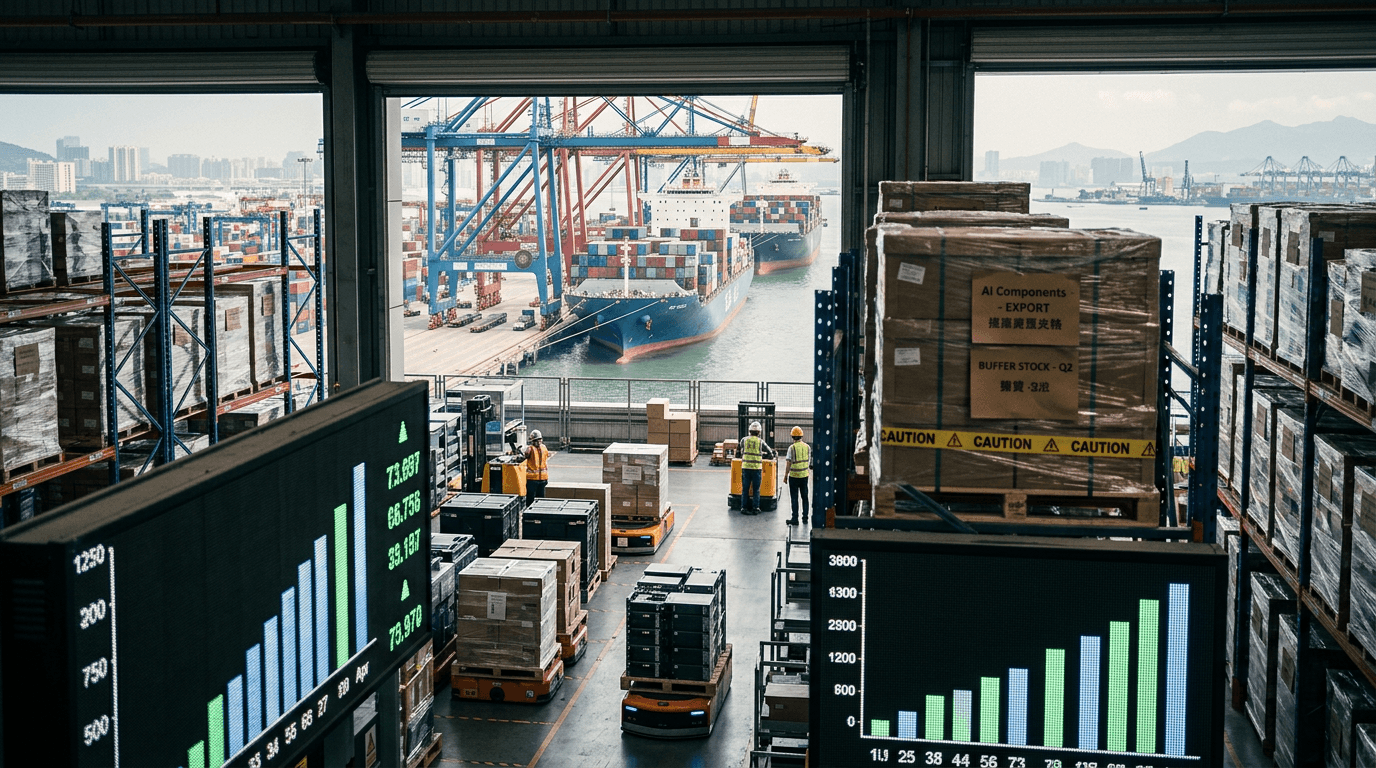
China's April trade data delivered a significant surprise to global markets, signaling renewed momentum in the world's second-largest economy just as geopolitical tensions threaten to reshape international commerce. With exports surging 14.1% year-over-year in dollar terms and the trade surplus nearly doubling to $84.8 billion, this rebound marks a dramatic turnaround from March's sluggish 2.5% growth. For traders and investors monitoring the health of the global economy, these numbers carry profound implications that extend far beyond Beijing's financial centers into every corner of world markets.
The Unexpected Export Surge
The April export performance shattered expectations in multiple directions. Economists had forecasted growth of just 7.9%, making the 14.1% actual result a 78% beat on consensus estimates. This acceleration from March's near-stagnant 2.5% growth rate represents a fundamental shift in Chinese factory activity and international demand patterns. The strength came through across multiple product categories, with particular vigor in semiconductor-related equipment and artificial intelligence infrastructure components.
Equally striking is the composition of this export surge. New export orders reached their highest levels in two years, according to factory activity surveys, suggesting this isn't merely a one-month bounce but potentially the beginning of a sustained uptrend. This metric matters significantly for traders because new order flows typically precede actual shipments, providing leading indicators for manufacturing momentum in subsequent months.
Ai And Semiconductor Demand Driving Growth
Behind the headline numbers lies a story that's reshaping global supply chains and investment flows. Semiconductors and AI-related equipment account for an increasingly large portion of China's high-value exports. The global AI boom has created insatiable demand for the chips and infrastructure components that Chinese manufacturers excel at producing at scale and competitive prices.
This isn't accidental timing. Throughout 2026, technology companies worldwide have accelerated their capital expenditure cycles, seeking to secure supply chains before potential disruptions occur. China's sophisticated chip ecosystem, while facing increasing restrictions in certain advanced technologies, remains the dominant global supplier of mid-range semiconductors and manufacturing equipment that power data centers, cloud infrastructure, and AI applications.
What makes this particularly significant for market participants is the sustainability question. If the AI infrastructure build-out continues at current trajectories, Chinese export growth could remain elevated through 2026 and into 2027. This scenario would support Chinese equities, boost regional Asian currencies, and potentially pressure the US dollar despite recent strength driven by interest rate expectations.
Supply Chain Anxiety And Precautionary Stockpiling
Beyond AI-driven demand, the data reveals another crucial driver: precautionary buying and inventory buildup. International buyers have grown increasingly concerned about potential disruptions stemming from Middle East conflicts that could affect energy prices and global shipping routes. This dynamic has created a rush to stockpile components, raw materials, and finished goods ahead of anticipated cost increases.
From a trader's perspective, this pattern historically marks an unsustainable boom phase. When supply chain anxiety drives inventory builds, that purchasing typically reverses sharply once the crisis subsides or proves less severe than feared. This creates a feast-or-famine dynamic that can amplify both rallies and selloffs in related equities and currencies.
China's trade surplus expansion from $51.13 billion in March to $84.8 billion in April underscores this dynamic. The wider surplus suggests exports grew faster than imports, though notably imports did remain robust at 25.3% growth, indicating domestic Chinese demand remains reasonably healthy despite economic headwinds.
Geopolitical Timing And Trade Tensions
The export rebound arrives at a particularly sensitive moment. US President Trump's scheduled visit to Beijing for talks with President Xi Jinping creates a backdrop where these numbers will inevitably become negotiating points. The widening US-China trade imbalance, which reached $87.7 billion through April 2026, continues to be a central point of friction between the world's two largest economies.
For traders, this geopolitical dimension cannot be ignored. Trade negotiations, tariff threats, and policy announcements emanating from Trump-Xi discussions could dramatically alter the outlook for Chinese exports in coming months. The market has priced in reasonable odds of increased trade tensions, but a dramatic escalation could quickly reverse the positive sentiment surrounding Chinese equities and regional Asian currencies that have benefited from this export surge.
Implications For Traders And Investors
The strong April export data argues for cautious optimism regarding Chinese equities and Asian currency strength in the near term, assuming geopolitical tensions don't suddenly escalate. The AI and semiconductor narrative provides fundamental support for export growth, while precautionary stockpiling adds temporary fuel that could extend the rally through Q2 2026.
However, traders should remain alert to reversal signals. Inventory builds typically prove temporary, and geopolitical dynamics remain fluid. Setting appropriate stop-losses and maintaining disciplined position sizing is essential when trading off data releases with such clear catalysts for both rallies and sharp reversals.
The April trade data reminds us that despite all the headlines about US-China tensions and economic slowdowns, fundamental supply-demand dynamics remain powerful drivers of market movements. Traders who understand the AI buildout trajectory and track inventory cycles carefully will find profitable opportunities in the coming quarters.