
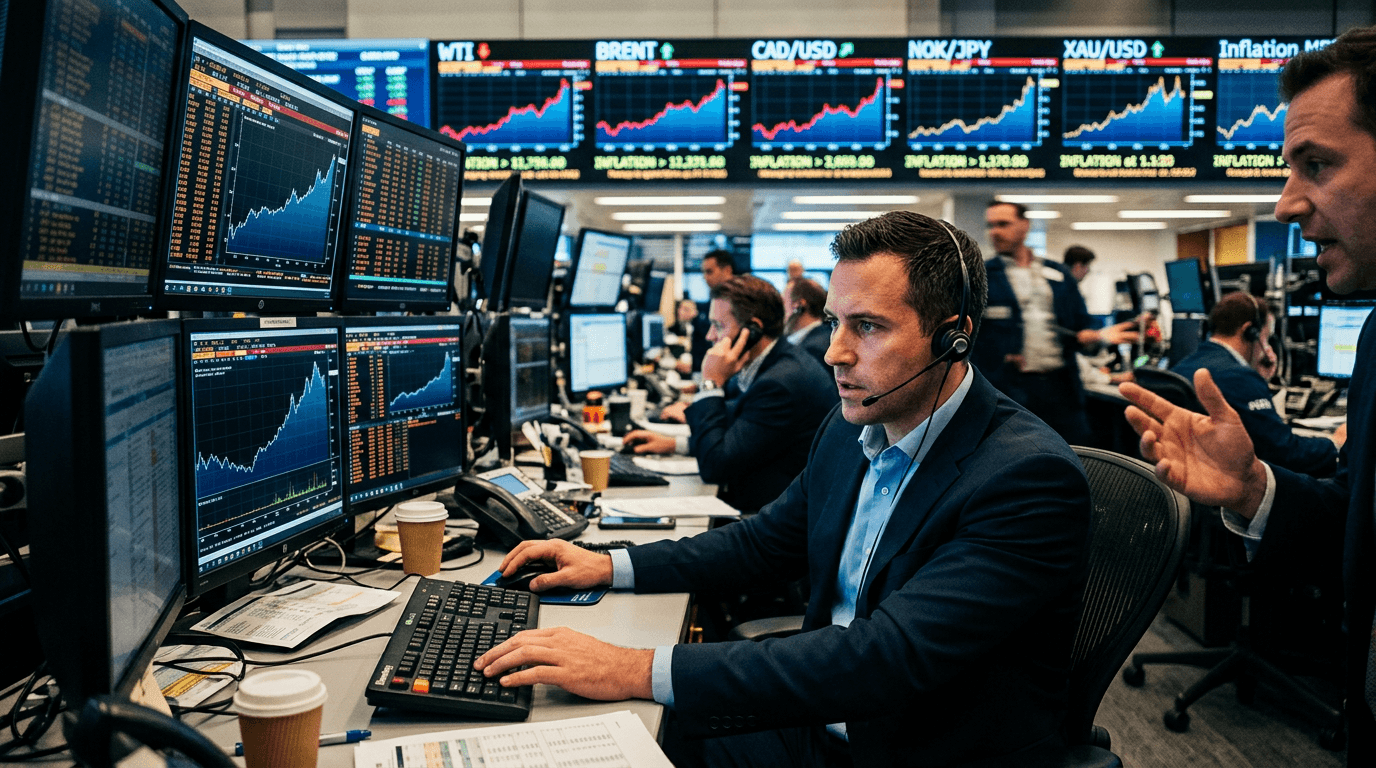
A sudden 9% jump in crude oil has ripped through global markets as the Iran conflict escalates, propelling U.S. futures toward $81–82 and Brent near $86, their highest levels since mid‑2024.[1] This is not just an oil story; it is a broad flight‑to‑safety episode reshaping currencies, futures, and inflation expectations in real time.[1]
Markets Reprice Geopolitical Risk
The immediate driver of the move is the rising war risk around Iran, a key regional power and major actor near the Strait of Hormuz, one of the world’s most critical energy chokepoints.[1] When markets worry that flows through such a bottleneck could be disrupted, they factor in a higher “risk premium” on every future barrel of crude.[1]
That repricing is exactly what traders are seeing now: front‑month West Texas Intermediate (WTI) briefly traded above $81 while Brent approached $86, levels not seen since mid‑2024.[1] The magnitude and speed of the move signal not just tighter current balances, but a sudden surge in demand for protection against future supply shocks.[1]
Equity indices have come under pressure as higher energy costs threaten corporate margins and household spending, especially in energy‑intensive sectors like airlines, transport, and manufacturing.[1] At the same time, energy stocks and oilfield services names have outperformed, reflecting improved cash flow expectations for producers and services companies that benefit from higher realized prices.[1]
For traders, the key message is that geopolitics can reassert itself as the dominant driver at any time, overwhelming day‑to‑day macro data and technical setups.[1] When that happens, correlations shift fast and historical relationships can temporarily break down.
How Oil Shocks Filter Through Fx
Oil is not just a commodity; it is a macro variable that reshapes currency markets through trade balances, inflation, and risk sentiment.[1] The latest spike has lit up FX screens worldwide.
Commodity‑linked currencies such as the Canadian dollar (CAD) and Norwegian krone (NOK) typically find support when oil rallies because higher crude prices improve fiscal revenues, export receipts, and terms of trade for these producers.[1] That dynamic is now in play, with oil‑linked FX seeing a bid as markets price stronger income for petro‑economies.[1]
On the other side, major net importers’ currencies tend to come under stress when energy costs jump.[1] For economies heavily dependent on imported oil, a sustained price shock can widen trade deficits, put downward pressure on the currency, and force central banks to weigh tougher policy choices.[1] Emerging markets with weaker external buffers are particularly vulnerable: higher oil bills can drain FX reserves and stoke inflation, complicating monetary policy.[1]
Layered on top of this is the classic “flight to safety.” Periods of geopolitical stress often push investors into perceived safe‑haven currencies and U.S. dollar–bloc crosses, as capital seeks liquidity, depth, and stability.[1] That means traders can see both a pro‑oil move in producer currencies and a broad risk‑off move favoring defensive FX pairs at the same time.
For FX traders, it becomes critical to distinguish between:
- Structural impacts (trade balances, terms of trade, inflation)
- Tactical flows (risk‑off positioning, funding unwinds, hedging demand)
Both are real, but they play out on different timeframes.
Impact Across Futures And Inflation Expectations
The oil spike is also triggering a repricing across futures curves beyond crude itself.[1] Energy futures and products tied to refined fuels are moving higher as markets extrapolate higher input costs into downstream pricing.[1]
In fixed income, rising oil prices tend to lift inflation expectations, especially as reflected in breakeven rates for inflation‑linked bonds.[1] When markets fear that higher energy costs will bleed into headline and possibly core inflation, they mark up expected price growth for the coming years.[1] That can influence rate expectations, term premia, and curve shape.
Alternative inflation hedges are back in focus as well. Assets like gold, broad commodity indices, and inflation‑protected securities often catch a bid when traders look for protection against the combination of geopolitical risk and potential inflation.[1] Even if the very short‑term reaction is dominated by U.S. dollar strength, the medium‑term narrative of “higher energy, higher inflation risk” tends to support these hedges over time.[1]
Volatility dynamics are also important. As uncertainty rises, options markets across oil, FX, and rates typically see higher implied volatility, increasing hedging costs but also expanding opportunity for volatility‑focused strategies. For futures traders, that means position sizing and margin management become more critical as price ranges widen.
Trading Playbook: Risk Management First
Episodes like this are where trading discipline matters most. A 9% move in a central macro asset like oil can quickly translate into outsized swings across correlated markets if positions are not calibrated to higher volatility.[1]
Practical risk‑focused takeaways:
- Reassess correlations: Oil, FX, equity indices, and bond futures may move together differently than they did in low‑vol regimes. Do not assume yesterday’s correlations will hold when geopolitics is in the driver’s seat.
- Resize for volatility: As average true range and implied volatility rise, the same nominal position carries more risk. Adjust contract sizes, leverage, and stop distances accordingly.
- Stress‑test scenarios: Map out bull, base, and bear paths for crude. Consider what happens if tensions escalate and oil pushes higher, but also if a sudden de‑escalation triggers a sharp reversal in the risk premium.
- Watch policy reactions: Central bank rhetoric can shift if inflation expectations jump meaningfully. A hawkish turn in response to energy‑driven inflation could amplify moves in rates and FX futures.
Above all, avoid narrative overconfidence. Geopolitical paths are inherently uncertain, and markets can rapidly swing from panic to relief on new headlines.
Why This Matters For Simulated And Live Traders
For traders using simulated finance environments, this is an ideal real‑time case study in how macro shocks propagate across asset classes.[1] The same patterns visible in live markets—oil’s impact on producer and importer currencies, shifting inflation expectations, sector rotation in equities—can be observed and tested without capital at risk.
Simulated trading allows you to
- Practice building and hedging cross‑asset views (for example, long oil vs. short an oil‑importer currency)
- Test how your strategy behaves when volatility spikes and correlations change
- Refine execution plans for news‑driven markets, including how quickly you adjust stops and targets after major headlines
For experienced traders, the current environment is a reminder to keep geopolitical risk on the radar even in seemingly calm periods. For newer traders, it is a live lesson in why a “single headline” can move everything from crude futures to currency crosses and inflation‑linked bonds.
The broader takeaway: when a key geopolitical risk flares up in an energy chokepoint, oil becomes the transmission channel through which markets reprice growth, inflation, and risk appetite. Understanding those linkages—and having a clear risk framework for trading them—is what turns a turbulent tape into a structured opportunity set.