
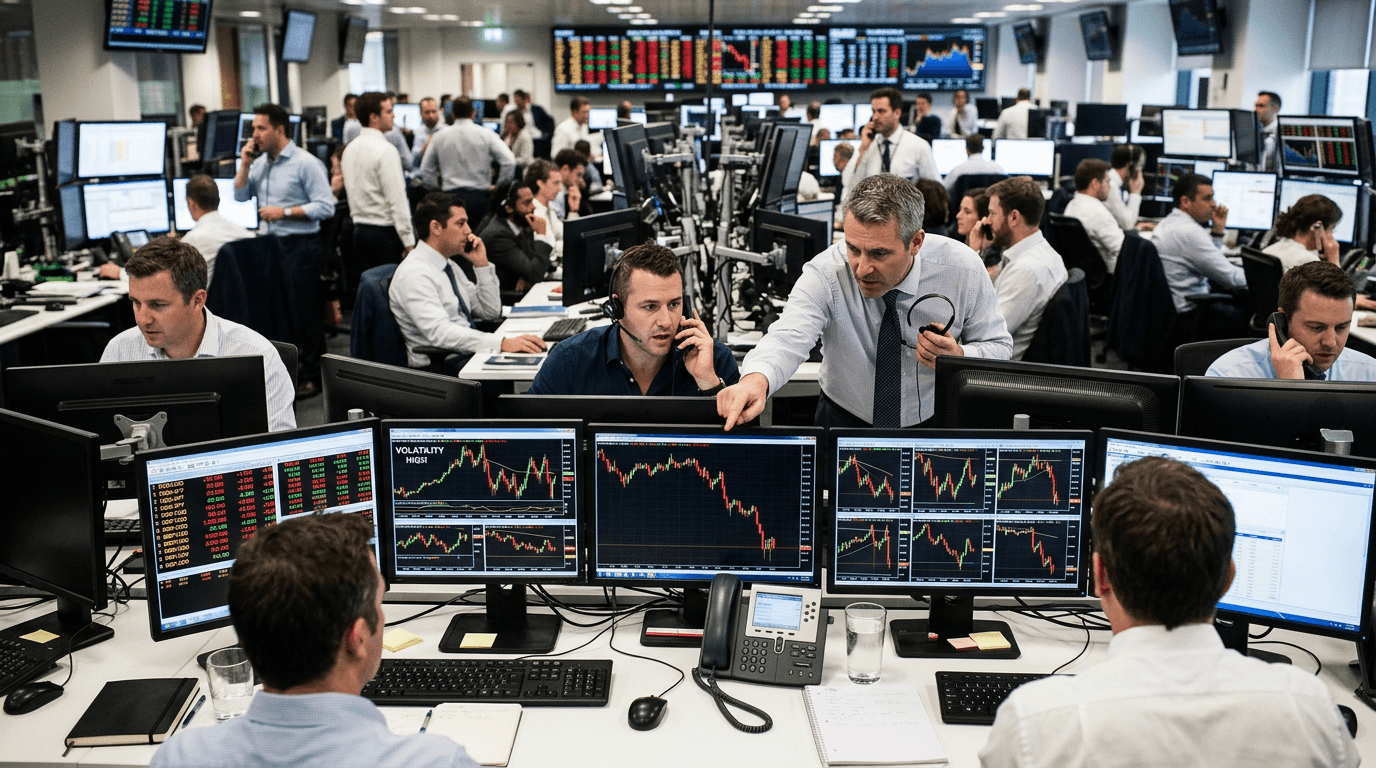
Foreign exchange markets are once again at the intersection of geopolitics and macroeconomics as the US‑Iran war escalates and traders prepare for key US jobs data. The result is broad, sometimes sharp, volatility across major currency pairs, with the US dollar trading flat to higher, while risk‑sensitive and commodity‑linked currencies swing as headlines and expectations shift.[2][6] This environment is testing both discretionary and systematic strategies in spot and futures markets, making risk management and scenario planning more important than ever.
GEOPOLITICAL SHOCK: US‑IRAN WAR AND SAFE‑HAVEN FLOWS
The latest phase of the US‑Iran conflict, including comprehensive US‑Israeli strikes on Iranian leadership and military installations, has injected a fresh layer of uncertainty into global markets.[9][12] Iran’s response—missile and drone attacks on US and Israeli targets and economic infrastructure in regional hubs—has raised concerns about energy supply and trade routes, especially around the Strait of Hormuz.[9][12] Unsurprisingly, oil has been one of the clearest beneficiaries: Brent and WTI have surged, with price gains exceeding 30–50% from pre‑conflict levels and trading back above $100 per barrel.[2]
In currency markets, the US dollar has reasserted itself as the primary safe‑haven asset, with the US Dollar Index up around 2% since the conflict intensified.[2] Market commentary from major banks and brokers consistently highlights the greenback, alongside the Swiss franc and Norwegian krone, as the preferred refuge, even though the initial moves versus other major currencies were relatively modest—often less than 1%.[9] At the same time, other traditional havens such as gold and Bitcoin have delivered mixed performances, with gold initially spiking before giving back some gains and Bitcoin failing to hold a consistent safe‑haven bid.[2][3]
Notably, overall risk sentiment has at times appeared surprisingly muted compared with the severity of the headlines. Equity indices such as the FTSE 100 and broader European benchmarks have fallen, the British pound has weakened against the dollar, and US futures have declined, but the magnitude of these moves has been more contained than many feared.[5][11] Analysts attribute this partly to the market’s perception that the conflict, while serious, remains regionally focused and partially priced in, even as they warn that sustained hostilities could trigger deeper declines.[11][12]
Dollar, Yen And Commodity Currencies Under Pressure
Against this backdrop, the US dollar has been trading flat to higher at the start of a key data week, reflecting a tug‑of‑war between safe‑haven demand and shifting expectations for the Federal Reserve’s rate path.[6][7] Renewed US strikes have repeatedly boosted the dollar as investors seek safety and higher yields, with the dollar index inching higher on each escalation,[7][10] while occasional progress toward ceasefire or peace frameworks has led to dollar softness and improved risk appetite.[4][13]
Major pairs are reacting in different ways. Risk‑sensitive currencies such as the Australian dollar have been caught between two forces: on one side, higher commodity prices can support AUD as an exporter‑linked currency; on the other, spikes in geopolitical risk and global growth fears tend to hurt high‑beta FX as investors de‑risk their portfolios.[2][12] The Canadian dollar faces a similar mix, with oil‑linked tailwinds offset by broader risk aversion and uncertainty around North American growth.
Safe‑haven currencies like the Japanese yen are experiencing more complex dynamics. At times, yen demand increases on risk‑off headlines, but higher US yields and the wide rate differential between the Federal Reserve and the Bank of Japan can limit yen strength and support USD/JPY on rallies. Emerging‑market FX pairs such as USD/INR are moving on a combination of local data, domestic policy expectations, and global risk sentiment, making them particularly sensitive to sudden swings in both war headlines and US economic surprises.
THE NFP FACTOR: WHY JOBS DATA MATTERS IN A WAR‑DRIVEN MARKET
Overlaying the geopolitical stress is the upcoming US Non‑Farm Payrolls (NFP) report, arguably the single most watched monthly data release for dollar traders. Employment and wage figures feed directly into expectations for the Fed’s next moves, which in turn shape the relative attractiveness of the dollar versus other currencies.[6][7] Strong jobs growth and firm wage inflation tend to reinforce the case for higher or more persistent interest rates, supporting the dollar and pressuring risk‑sensitive FX; softer data can have the opposite effect, weakening the dollar and boosting higher‑yielding currencies.
In calm markets, NFP can trigger short‑lived volatility that fades within hours. In the current environment—where US‑Iran war headlines can shift risk sentiment in minutes—the interaction between NFP surprises and geopolitical news could produce outsized moves. Traders are not just asking whether payrolls will beat or miss consensus, but also how any surprise might interact with safe‑haven flows already in play. A strong NFP print amid escalating conflict could fuel a dual tailwind for the dollar; a weak print released against improving ceasefire news might prompt a sharp reversal in safe‑haven positioning.
This is why market commentary frequently emphasizes the need to track both macro data calendars and geopolitical timelines. Even when initial FX reactions to the war were described as “muted,” analysts warned that volatility could rise quickly as new information on hostilities, energy supply, and diplomatic progress arrives.[9][13] NFP week simply amplifies those risks, because it combines known calendar events with unpredictable headline risk.
TRADING APPROACHES IN HIGH‑VOLATILITY FX
For active FX traders, this combination of war and major data risk calls for a more defensive and disciplined approach. When volatility broadens across major pairs, spreads can widen, liquidity pockets can appear, and slippage risk increases—not only in spot but also in futures and options markets. This makes pre‑defined risk limits and contingency plans essential.
Several practical takeaways stand out
First, position sizing should reflect the higher uncertainty. Many experienced traders reduce leverage ahead of NFP and major geopolitical events, recognizing that even “good” setups can be undone by surprise headlines.
Second, scenario planning is critical. Traders can map out simple frameworks: escalation vs de‑escalation on the geopolitical side, and stronger vs weaker than expected on the data side. Each scenario implies likely directions for the dollar, yields, and risk‑sensitive currencies, helping traders avoid emotional decision‑making in real time.
Third, cross‑asset signals matter more than usual. Oil prices, equity indices, and bond yields are all reacting to the US‑Iran conflict and shifting Fed expectations,[2][5][12] and FX rarely moves in isolation. Watching how these markets behave around war developments and US data releases can provide early warning of regime shifts—such as when the market abruptly switches from “shrugging off” the war to aggressively pricing in its impact.
Focus Points For Simulated And Live Fx Traders
For traders using simulated environments, this period is an ideal laboratory for testing strategies under stress. The US‑Iran war and impending NFP report combine two powerful sources of volatility: unpredictable headlines and scheduled macro surprises. Practicing how to manage risk, adjust exposure, and respond to conflicting signals in simulation can build skills that are directly transferable to live markets.
Whether trading AUD/USD, USD/JPY, USD/INR, CAD pairs, or the broader dollar index, the message is the same: stay data‑driven, respect headline risk, and prioritize capital preservation. Safe‑haven flows into the dollar have already shaped price action,[2][6][7][10] but they can reverse quickly if peace prospects improve or if US data undermines the case for further tightening.[4][13] In this kind of environment, the edge often belongs not to those who predict every twist, but to those who manage uncertainty better—through disciplined risk controls, clear scenarios, and a continuous focus on how geopolitics and macro data intersect in the FX market.