
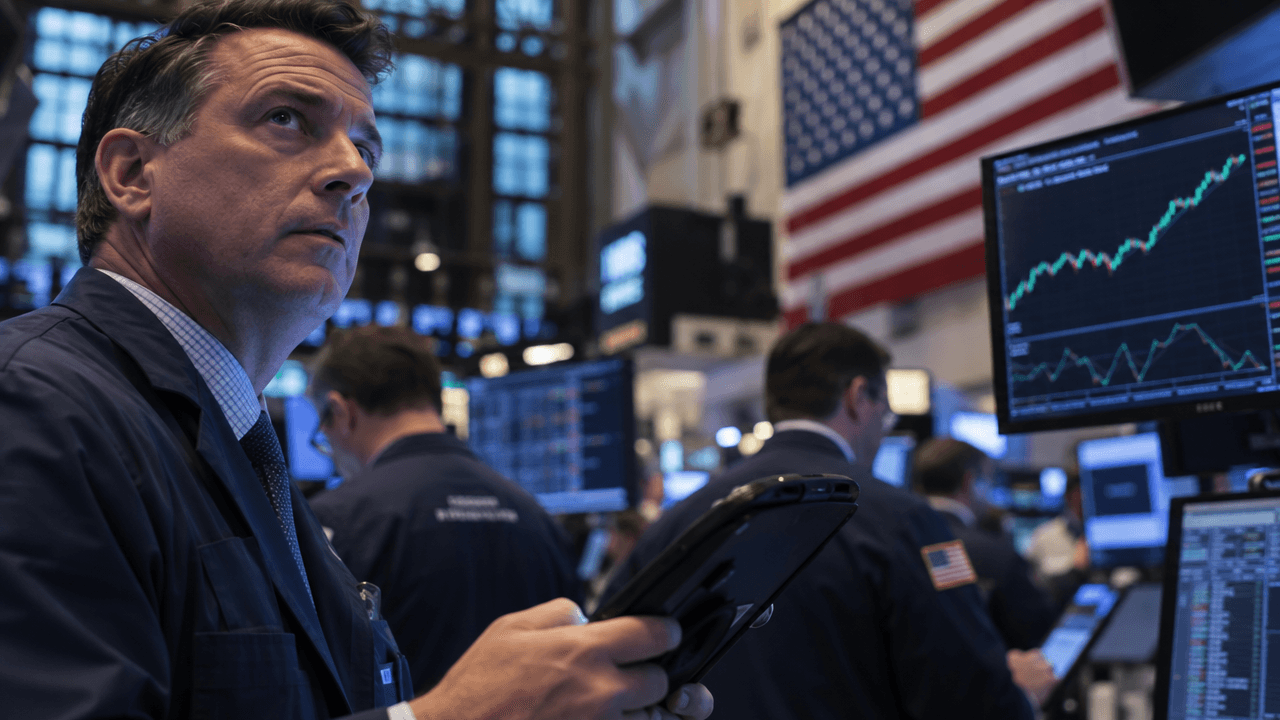
U.S. stock index futures are pointing slightly higher, but the move looks more like a pause than a full-throated risk-on rally.[1][2] Dow futures are up roughly 0.1%, with modest gains in S&P 500 and Nasdaq contracts, suggesting traders are nudging exposure higher while keeping plenty of dry powder on the sidelines.[1][2] Under the surface, higher Treasury yields and the prospect of tighter Federal Reserve policy continue to weigh on risk assets, particularly rate‑sensitive technology names and global equities.[1][2][15] The market tone is one of cautious positioning rather than optimism, as participants prepare for a widely expected 25 basis point rate hike.
Markets Edge Higher, But Nerves Remain
Futures markets are pricing in a quarter‑point increase in the federal funds rate to the 3.75%–4.00% range, with implied odds around or above 90% for this outcome.[1][13] This hike would extend the current tightening cycle, reinforcing the narrative that policy makers remain focused on containing inflation rather than supporting asset prices.[1][6][15] Even a modestly positive open for U.S. equities can coexist with anxious sentiment if traders see the move as a tactical rebound after prior selling, not a shift in the macro story.[11][12] In practical terms, that means intraday rallies may attract profit‑taking rather than aggressive follow‑through buying.
Part of the caution stems from how sharply expectations have coalesced around the Fed’s path in a short period of time.[6][11][13] Recent inflation data and policymaker commentary have pushed markets toward a consensus that rates must move higher and stay restrictive for longer.[6][9][15] When probabilities become that one‑sided, traders start to worry less about the decision itself and more about the risk of surprises in the Fed’s guidance, economic projections, or tone.
Why A 25 Bp Hike Matters For Stocks
On paper, a 25 basis point move is small, especially when compared with the jumbo hikes seen earlier in this tightening cycle.[5][15] In markets, however, incremental changes at already restrictive levels can have an outsized impact because they reset discount rates used in equity valuation models.[15] Higher policy rates filter quickly into Treasury yields and corporate borrowing costs, raising the hurdle rate for future cash flows and putting particular pressure on long‑duration assets such as growth and tech stocks.[1][2][15] That helps explain why Nasdaq futures remain more sensitive to rate expectations than the broader Dow or S&P 500.
The impact is not uniform across sectors. Financials, especially banks with asset‑sensitive balance sheets, can benefit from a steeper yield environment if loan demand holds up.[15] Defensive areas like utilities and staples may see relative support as investors seek earnings stability in a higher‑rate regime, even if their own valuations face some pressure.[9][15] Cyclical sectors tied to global demand, from industrials to semiconductors, can trade more erratically as markets weigh tighter policy against ongoing demand for goods and services.[1][2][12]
Expectations Beyond This Meeting
Today’s decision is only one waypoint in the policy path markets are pricing in. Fed funds futures and tools such as the CME FedWatch show investors assigning meaningful odds to additional quarter‑point increases over the coming months, even if those probabilities are lower than the near‑certainty around the next move.[1][8][13] Some scenarios foresee at least one more 25 bp hike before year‑end, while others assume a longer pause followed by potential cuts if inflation moderates and growth slows.[1][6][15] That range of outcomes creates a wide cone of uncertainty for earnings, valuations, and sector leadership.
For equity traders, the key is recognizing that the market often reacts more to changes in the expected policy path than to the move itself. If the Fed’s updated projections or press conference hint at a more hawkish trajectory—higher terminal rate, fewer cuts later—stocks can sell off even if the decision matches expectations.[4][13][15] Conversely, any sign that policymakers see inflation on a sustainable downward path could support a relief rally, especially in beaten‑down growth segments.[1][2][11] In other words, the “surprise” is in the guidance, not the 25 bp print.
Sector And Style Positioning In A Cautious Market
With futures only modestly higher, many investors are using the pre‑Fed window to fine‑tune exposures rather than make big directional bets.[1][2] Rotations between value and growth, cyclicals and defensives, and U.S. versus international equities can be more telling than the headline index move.[9][11][12] Higher yields generally favor value and income strategies, while compressing multiples in speculative growth, unprofitable tech, and high‑beta segments.[1][2][15] At the same time, elevated volatility encourages a tilt toward quality balance sheets and consistent cash generation.
Short‑term traders may focus on sectors with clear catalysts around the Fed meeting and upcoming data releases. Financials, real estate, and consumer discretionary can respond quickly to changes in rate expectations and forward guidance.[9][15] Meanwhile, energy and materials remain sensitive to global demand signals and commodity price swings, which can either offset or amplify the effect of U.S. monetary policy.[3][12] This mosaic reinforces why broad indices can appear calm even as considerable churn happens beneath the surface.
How Simulated Finance Traders Can Navigate This Environment
For participants using simulated finance platforms, environments like this are ideal for developing and stress‑testing trading playbooks. With a widely anticipated event, clear probability distributions, and tangible sector effects, traders can design and practice strategies around several scenarios: a hawkish surprise, a neutral outcome, or a slightly dovish tilt in guidance.[1][6][13] Simulated order execution ahead of and immediately after the announcement can help refine entries, exits, and risk controls without real capital at stake.
Practical takeaways include: 1) Build scenario trees tied to policy rates, yields, and sector reactions, then test how your portfolio behaves in each.[1][6][15] 2) Practice managing position size and leverage around known event risk, including how to reduce exposure into volatility and re‑engage afterward.[11][12][15] 3) Track how futures probabilities evolve using tools like FedWatch, and integrate changing odds into your decision‑making framework.[1][8][13]
Conclusion
U.S. stock futures may be edging higher, but the dominant market mood remains cautious as traders brace for a near‑certain 25 bp Fed hike into the 3.75%–4.00% range.[1][2][13] The move itself is less important than what it signals about the trajectory of policy, inflation, and growth, and how those forces ripple through yields, valuations, and sector leadership.[1][6][15] For both live and simulated traders, this is a moment to focus on process: scenario planning, disciplined risk management, and a clear understanding of how macro shifts translate into market behavior. In a world where policy expectations can change quickly, robust frameworks matter more than predicting any single meeting outcome.