
1. Start DIRECTLY with the first paragraph - NO introductory text 2. Write in PLAIN TEXT format (no HTML, no markdown) 3. Use ALL CAPS for section headings on their own line 4. Separate paragraphs with blank lines 5. Include 3-5 main sections with clear takeaways 6. Make it engaging and educational 7. Around 800 words 8. At the END provide: TITLE, EXCERPT, and NEWSIMPACTSCORE
Let me structure this: - Opening paragraph (compelling, sets the scene) - Policy Divergence section - Technical Analysis section - Geopolitical Context section - Implications for Traders section - Conclusion
Let me write this in plain text, all caps for headings on their own lines, and make sure it's engaging and educational.
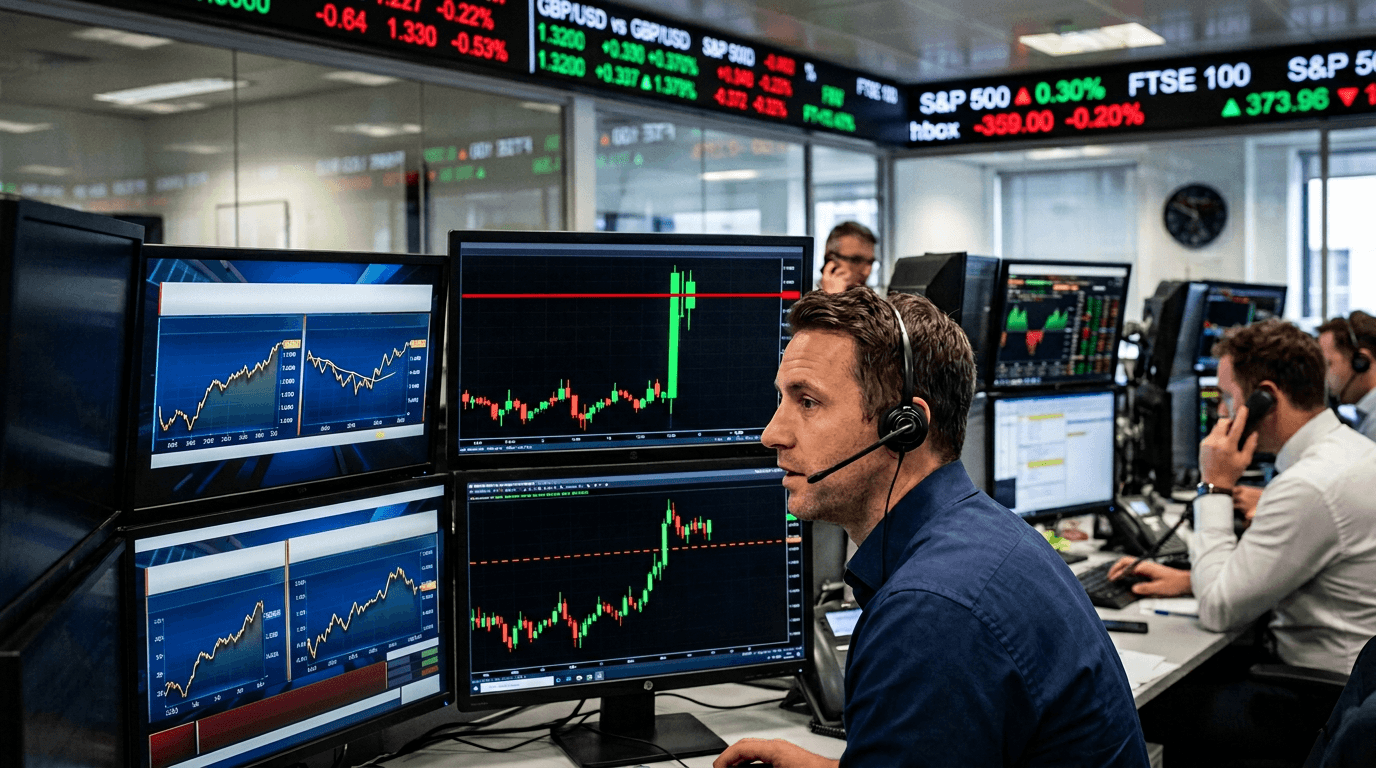
The British Pound has delivered one of its most decisive breakout performances of the year, decisively pushing past the critical 1.3600 resistance level against the US Dollar and signaling a fundamental shift in currency market dynamics. This surge reflects a powerful convergence of factors: widening monetary policy divergence between the Bank of England and the Federal Reserve, weakness in the Dollar stemming from yen intervention, and a reassessment of global economic risks following geopolitical developments. For traders monitoring cable, this move represents far more than a technical victory—it reflects a structural realignment in how markets are pricing central bank expectations for the remainder of 2026.
Understanding The Policy Divergence
The core driver behind GBP/USD's recent strength lies in the increasingly stark contrast between BoE and Fed monetary policy trajectories. The Bank of England, under Governor Andrew Bailey, has signaled a distinctly hawkish stance on interest rates, warning that prolonged energy price spikes could necessitate higher rates to prevent second-round inflation effects. Markets are now pricing approximately 60 basis points of tightening from the BoE by year-end, reflecting the central bank's determination to maintain domestic price stability.
Meanwhile, the Federal Reserve faces a different calculus. With US GDP growth coming in below expectations at 2.0% in Q1 2026, market expectations have shifted toward rate cuts rather than hikes. The Fed's cautious messaging has fueled expectations for approximately 16 basis points of easing by year-end 2026, creating a widening divergence from the BoE's tightening bias. This policy gap is precisely the macro environment that historically generates sustained strength in higher-yielding currencies like Sterling.
The yield-spread advantage now firmly favors the pound. Bond traders have recalibrated their expectations, recognizing that UK monetary policy will likely remain restrictive while US policy may ease, creating an increasingly attractive carry trade environment for GBP positions.
Technical Breakdown And Momentum Signals
The break above 1.3600 was not a casual move—it represented a clean breach of a level that had capped cable's advance for three consecutive weeks prior. This persistent resistance marked the 61.8% Fibonacci retracement of the broader trading range, making its violation technically significant and suggesting institutional conviction behind the rally.
Several technical indicators confirm underlying bullish momentum. The Relative Strength Index has entered overbought territory without showing divergence, suggesting sustained buying pressure rather than a potential reversal signal. The Moving Average Convergence Divergence histogram has printed increasingly positive values, reinforcing the bullish narrative. Most importantly, cable has established a firm support floor around 1.3530, defined by a tight cluster of the 50-day, 100-day, and 200-day simple moving averages.
Short-term technical targets now extend toward 1.3685 and 1.3749, representing the next significant resistance levels that bulls are targeting. Order flow analysis reveals that stop-loss orders triggered above 1.3580 may have accelerated the breakout, a sign that further extension remains possible if these technical levels break with conviction.
Geopolitical Catalysts And Dollar Weakness
The reopening of the Strait of Hormuz following ceasefire developments in Lebanon has fundamentally altered the geopolitical risk premium that had supported the US Dollar. For months, concerns about potential supply disruptions through this critical waterway had provided a bid to the dollar as traders sought safety in US assets. The resolution of these tensions has removed this pillar of Dollar support, creating space for a broader reassessment of global trade and inflation dynamics.
Concurrent with this geopolitical recalibration, suspected yen intervention by Japanese authorities has actively pressured the US Dollar Index to seven-week lows around 98.20. This intervention signals central bank concern about excessive yen weakness and represents external pressure on the greenback at a time when domestic US factors are already working against it.
Implications For Active Traders
For trading professionals, the current environment presents distinct challenges and opportunities. Long GBP/USD positions remain favored as long as the pair maintains support above the 1.3530 moving average cluster. However, traders should remain cognizant that overbought RSI readings and tightening technical conditions could produce corrective pullbacks before the next leg higher materializes.
Risk management becomes critical at these elevated levels. While the bullish case remains intact given the structural policy divergence, mean reversion dynamics could test the resolve of aggressively positioned bulls if unexpected economic data emerges. Watch closely for any Fed communications that signal surprise dovishness or any BoE officials moderating the recent hawkish tilt.
The break above 1.3600 is not merely a technical victory—it represents a reset in how markets are pricing monetary policy expectations between two of the world's most important central banks. This structural shift is likely to support further sterling strength over the coming months.
---