
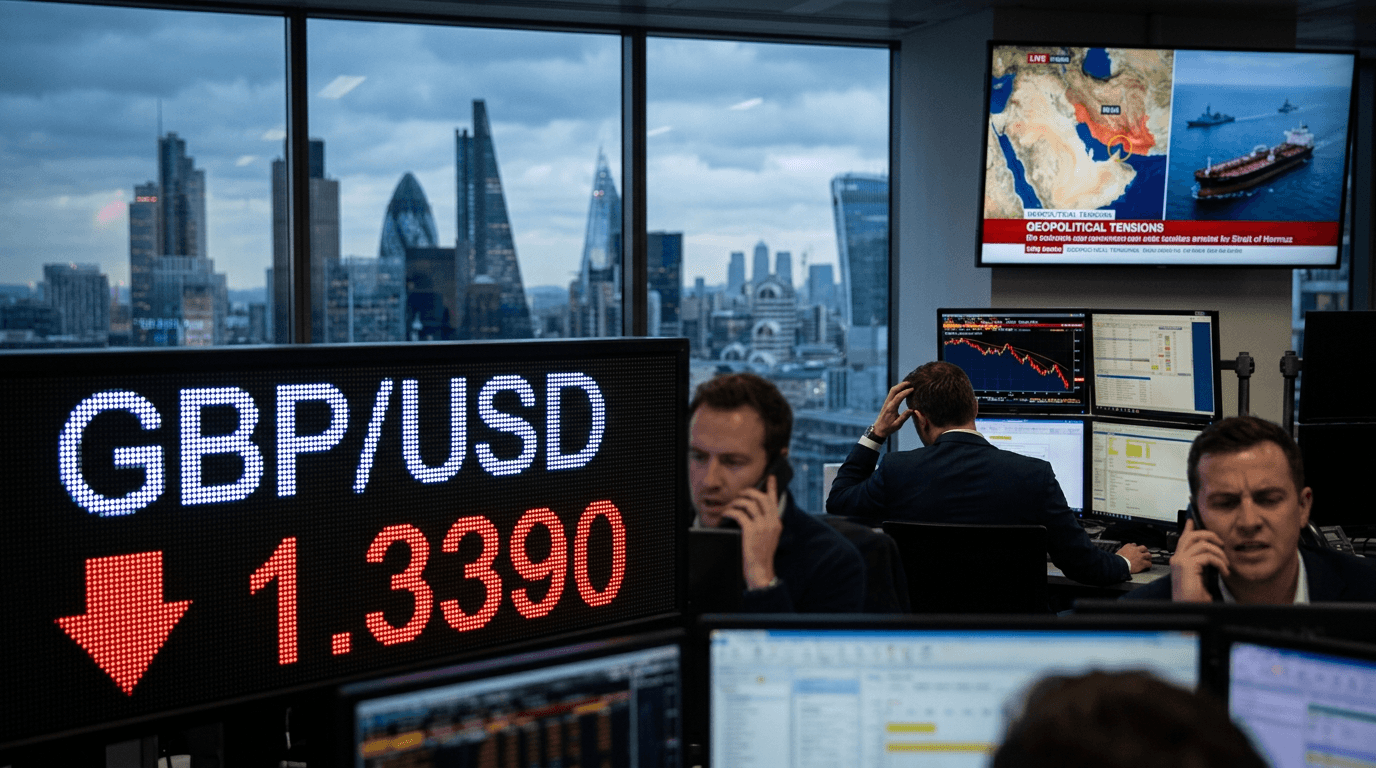
Pound Sterling's Five-Day Rally Comes to an Abrupt Halt Amid Hormuz Tensions
The Pound Sterling has hit a roadblock, reversing a promising five-day winning streak as geopolitical tensions surrounding the Strait of Hormuz fuel a surge in safe-haven demand across global currency markets. During Asian trading on Monday, April 13, 2026, GBP/USD dropped sharply to approximately 1.3390. This stark shift highlights a crucial reality in contemporary forex markets: sentiment can pivot quickly when geopolitical risks threaten global trade and energy security, placing the Pound Sterling in the crosshairs of such volatility.
Failed Peace Talks and Hormuz Blockade Fears: The Immediate Catalyst
The primary catalyst for Monday's decline was the collapse of US-Iran peace negotiations in Islamabad, which ended after 21 hours of intensive talks without reaching a deal. Vice President JD Vance confirmed the breakdown, sparking immediate concerns about potential military escalation in the Persian Gulf. In response, President Donald Trump announced that the United States would begin blockading all ships entering or leaving the Strait of Hormuz. US Central Command confirmed operations targeting maritime traffic to and from Iranian ports would commence at 10 AM ET on Monday. Iran's Revolutionary Guard warned of a decisive response to any military vessels approaching the strait, escalating an already tense situation.
These developments have created a textbook risk-off environment. When geopolitical threats emerge, especially those affecting critical infrastructure like oil transit routes, investors shift from higher-yielding or growth-linked assets to traditional safe havens. The Pound Sterling, classified as a risk-sensitive currency, bears the brunt of such rotations.
Why the Pound Sterling Falters on Geopolitical Stress
To understand why GBP/USD declined, one must recognize the structural vulnerabilities of the British economy in the face of global shocks. The UK has several interconnected weaknesses that amplify currency depreciation during risk-off episodes. First, the United Kingdom maintains a persistent current account deficit, making Sterling reliant on continuous foreign investment inflows to finance its external imbalance. When global risk aversion rises, these capital flows reverse rapidly.
Second, and perhaps more pertinent to the current situation, the UK's significant dependency on imported energy creates an acute vulnerability to oil price shocks. A blockade of the Strait of Hormuz threatens to spike oil prices substantially, given that approximately 21 million barrels pass through daily. Higher energy costs translate directly into inflation pressures and reduced consumer spending, damaging growth prospects and weakening the currency.
The mechanics are straightforward: oil price spikes trigger expectations of weaker economic growth, prompting investors to sell growth-linked currencies like Sterling and buy dollars, yen, or Swiss francs. Historical data reinforces this relationship, with research showing a 0.85 inverse correlation between Brent Crude spikes above 120 dollars per barrel and GBP/USD performance over the past decade. This dynamic creates what analysts call a risk-off cascade, where one shock triggers a chain reaction across correlated markets.
Broader Market Implications and Currency Rotation
The GBP/USD decline occurred within a broader rotation across risk-sensitive currency pairs. The Australian Dollar and Canadian Dollar, similarly exposed to growth concerns and commodity volatility, weakened in tandem. Conversely, traditional safe havens appreciated substantially. The US Dollar strengthened against most major peers as investors reallocated capital toward perceived safety. The Japanese Yen and Swiss Franc also benefited from the flight to quality, reinforcing the broader market narrative of heightened risk aversion.
This situation presents a particularly complex policy dilemma for central banks and investors due to potential oil price spikes. While higher oil prices are inherently inflationary, the resulting demand destruction and slower growth create deflationary pressure. This ambiguity complicates the Bank of England's monetary policy calculus and increases currency volatility as market participants struggle to anticipate the central bank's likely response.
Key Takeaways for Traders and Investors
For traders monitoring GBP/USD, several critical insights emerge from this episode. The Pound's recent five-day winning streak depended heavily on optimism over potential Russia-Ukraine peace progress, but geopolitical risks remain multifaceted and unpredictable. Any reversal in peace negotiations or escalation in the Persian Gulf can rapidly obliterate gains. Technical support levels have been violated, with the pair breaking below established thresholds, potentially opening further downside.
More broadly, this situation underscores the profound sensitivity of currency markets to geopolitical disruptions in critical global trade chokepoints. The Strait of Hormuz is not a minor footnote in global trade; it represents the world's most important oil transit route. Threats to this artery reverberate across all asset classes within hours.
For international payment facilitation and business planning, this volatility carries practical implications. Companies exposed to sterling-denominated transactions face significant exchange rate risk. Delaying transfers during such volatility can result in significantly weaker outcomes, making the case for proactive hedging or forward-rate agreements compelling.
In the coming weeks, GBP/USD is likely to respond sharply to any developments regarding US-Iran diplomacy, Hormuz shipping conditions, and oil market movements. Investors should remain vigilant, recognizing that the broad strokes of this story remain in flux.
NEWSIMPACTSCORE: 7