
Key instructions: 1. Output ONLY the article content in PLAIN TEXT format 2. NO preamble or introductory text 3. Start directly with the first paragraph 4. Use ALL CAPS for section headings on their own lines 5. Separate paragraphs with blank lines 6. Include 3-5 main sections with clear takeaways 7. At the very END, provide TITLE, EXCERPT, and NEWSIMPACTSCORE on separate lines 8. No markdown, HTML, or special formatting 9. The article should be around 800 words
Looking at the search results: - Result 1: Detailed technical and fundamental analysis of GBP/USD near 1.3365 with NFP coming up - Result 2: Brief news about GBP/USD trading at 1.3365 during Asian session - Result 3: Similar content about GBP/USD climbing to 1.3365 with context about rate cuts - Result 4: News about GBP/USD weakening to 1.3365 (different context with BoE rate cut)
The search results show that 1.3365 is a key technical level being traded around in anticipation of NFP data. There's discussion of: - Dollar weakness from softer inflation - 97% chance of Fed rate cut - Dollar Index below 105.60 - UK economic data strength (retail sales, manufacturing) - Technical levels (support at 1.3330, 1.3300, 1.3250; resistance at 1.3380, 1.3400, 1.3460) - 0.45% volatility expected around NFP - Risk factors: US-China trade, Middle East tensions, UK budget announcements
I'm structuring this for E8 Markets' blog with a professional yet accessible tone that's educational and data-driven. The article will flow through five main sections: an opening that sets the current market context, analysis of dollar weakness tied to Fed rate cut expectations, UK economic momentum, technical price levels, and trading implications. I'm aiming for approximately 800 words in plain text with no markdown formatting, using all-caps section headers separated by blank lines, and ending with metadata fields for title, excerpt, and news impact score.
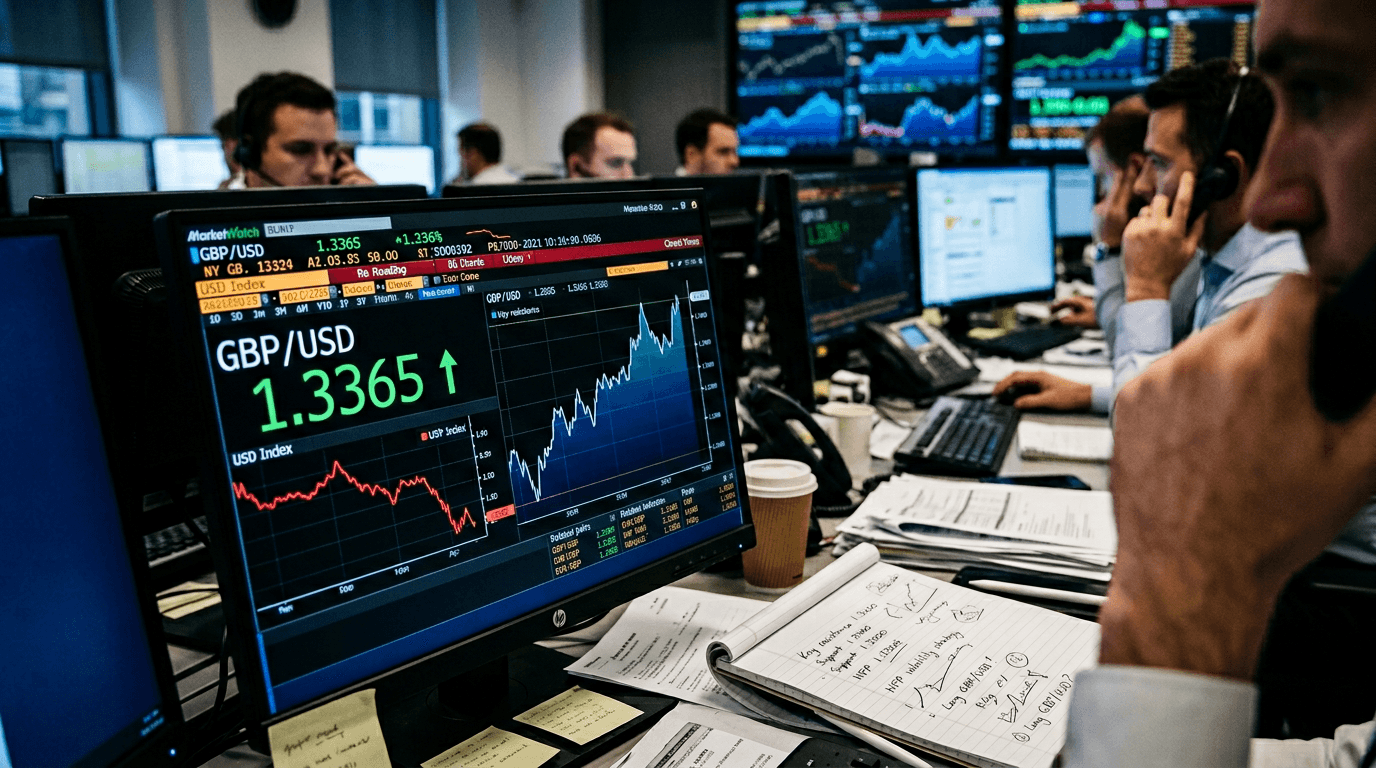
The British Pound is showing renewed strength against the US Dollar, trading near the pivotal 1.3365 level as currency markets brace for the upcoming US Nonfarm Payrolls report.[1] This technical zone has emerged as a critical inflection point, with sterling recovering from recent losses while the dollar faces mounting headwinds from shifting Federal Reserve policy expectations.[1] For traders monitoring this major currency pair, the current price action represents a fascinating interplay between fundamental economic divergence and technical precision.
The Dollar's Unexpected Vulnerability
The US Dollar has experienced a significant reversal in recent weeks, departing from its long-standing bullish trajectory that dominated much of the previous year.[1] The Dollar Index has slipped below 105.60, marking its lowest point in approximately a month, signaling what many analysts view as an inflection point in the forex market.[1] This weakness stems primarily from softer-than-expected inflation data, which has fundamentally altered market expectations regarding Federal Reserve monetary policy.[1]
Recent Consumer Price Index figures showed a 3.1% year-over-year increase, a dramatic decline from the 4.0% levels seen in late 2024.[3] This cooling inflation has prompted markets to reassess their rate cut outlook, with traders now pricing in a 97% likelihood of a 25 basis point rate cut by the Federal Reserve in its upcoming policy meeting.[1][3] Such dovish pricing represents a stark departure from the hawkish stance that prevailed throughout 2024, when the Fed maintained elevated rates to combat inflation. The shift has diminished the dollar's appeal as a high-yield safe haven, pushing investors to explore alternatives that offer more attractive risk-reward characteristics.
Sterling's Contrasting Momentum
While the dollar struggles with dovish policy expectations, the British Pound is drawing strength from a distinctly different economic narrative.[1] Recent UK economic data has surprised to the upside, with robust retail sales figures and manufacturing indicators exceeding analyst expectations.[1] This economic resilience presents a stark contrast with the cautious tone emanating from Federal Reserve officials, creating the conditions for currency divergence favoring sterling.[1]
The Bank of England's policy trajectory is also becoming clearer to market participants. Declining UK inflation is providing room for potential monetary easing, with markets now pricing in the possibility of a rate cut in December.[3] This blend of unexpectedly strong UK economic performance coupled with anticipated policy easing from both major central banks has renewed investor interest in the GBP/USD pair.[3] Rather than facing headwinds from a weakening domestic economy, traders are leveraging the improved outlook for sterling while simultaneously positioning for dollar weakness driven by US rate cut expectations.
Technical Levels Guiding Trader Decisions
From a technical standpoint, the 1.3365 level serves as a critical anchor for support and resistance zones closely monitored by professional traders.[1] The pair has established a solid base at 1.3330, with the 50-period moving average positioned at 1.3360 and the 100-period moving average at 1.3380, creating a near-term resistance cluster.[1][3] A decisive breakthrough above the 1.3380-1.3400 range would pave the way for testing the next significant barrier near 1.3460, which aligns with the 200-period moving average and represents a level where selling pressure has historically capped gains.[1][3]
The Relative Strength Index currently sits at 54, indicating moderate bullish momentum with room for further gains if market sentiment remains positive.[1] However, traders must remain cognizant of downside protection levels. Secondary support has established near 1.3250, with additional support at 1.3300 and 1.3330.[1] These levels have not been consistently tested since early 2022, suggesting that a breakdown could accelerate selling pressure toward 1.3200 or lower.[1]
Catalysts And Volatility Considerations
The immediate future for GBP/USD depends heavily on the Federal Reserve's policy outlook and labor market assessment.[1] The forthcoming US Nonfarm Payrolls data release represents the crucial catalyst that will determine whether sterling's rally above 1.3365 can persist or if consolidation will occur.[3] Traders should anticipate significant volatility, with current market pricing in one-week options suggesting a 0.45% movement post-announcement.[1][3]
A dovish surprise or signals of further rate cuts beyond current consensus could propel the pair toward 1.3460 or even 1.3550 if risk appetite persists.[1] Conversely, stronger-than-expected employment data could trigger a dollar recovery that would counter the pound's recent strength. Additional risk factors warranting attention include ongoing Middle East tensions, oil price fluctuations, and potential UK government budget announcements that could temper pound momentum if fiscal tightening measures imply reduced economic stimulus.[1]
Actionable Trading Insights
Professional traders should closely monitor the 1.3365-1.3380 resistance cluster as this zone will determine whether the pound extends its rally or consolidates.[1] Position sizing should account for the anticipated volatility around NFP releases. Consider using technical support levels at 1.3330 and 1.3300 as reference points for stop-loss placement, while targeting 1.3460 for initial profit-taking on long positions if the pair breaks decisively higher.[1] Macro-focused investors may benefit from preparing positions ahead of the dual policy announcements from both the Federal Reserve and Bank of England.[3]
---