
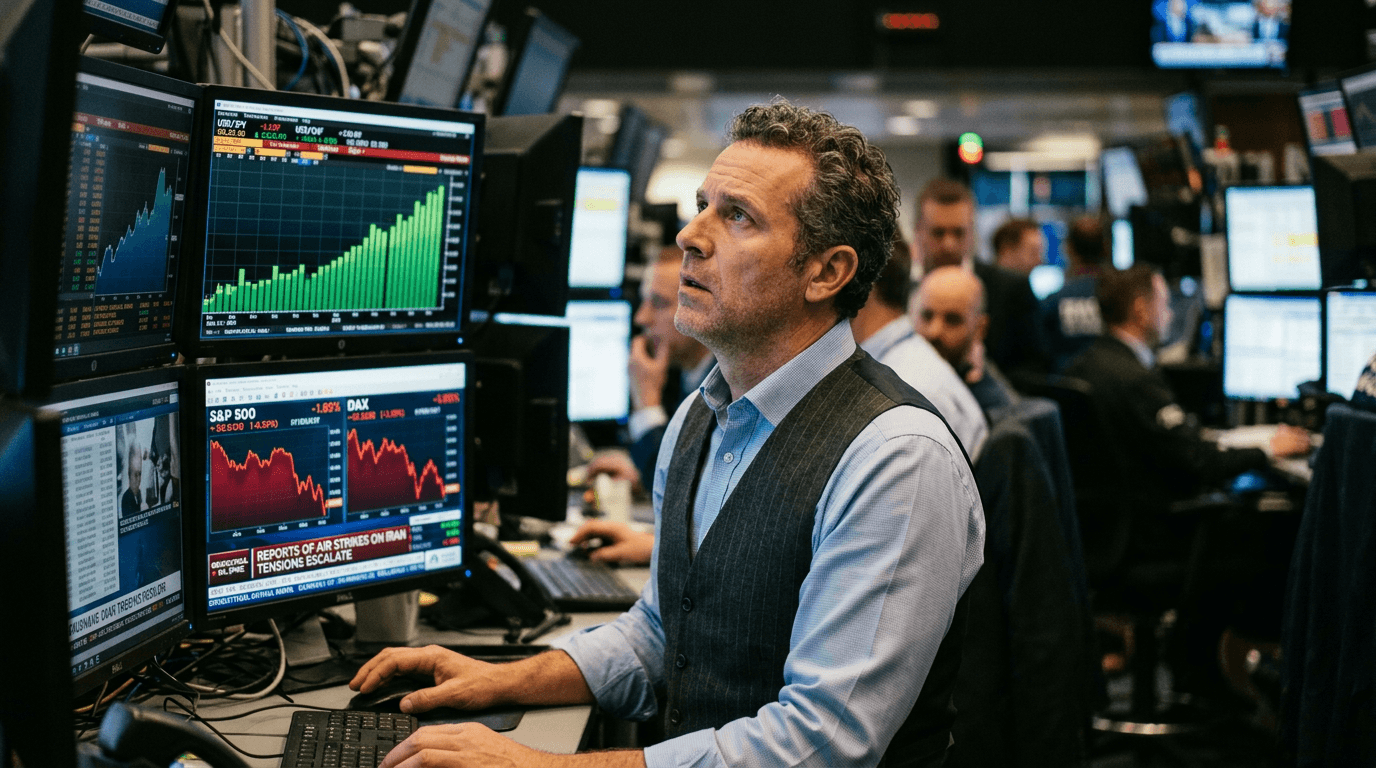
Geopolitical shocks have long served as powerful catalysts for currency market movements, and the weekend's military escalation in the Middle East exemplifies this dynamic in real time. On February 28, 2026, the United States and Israel launched coordinated strikes against Iran in an operation codenamed "Operation Roaring Lion" by Israel and "Epic Fury" by the U.S. Department of Defense.[1] The strikes targeted key military facilities, air defense systems, and resulted in the assassination of Iran's Supreme Leader Ali Khamenei and dozens of senior officials.[1] Within hours, Iran retaliated by launching missiles and drones against Israel and U.S. military bases across the Persian Gulf region, including facilities in Kuwait, Bahrain, Qatar, Saudi Arabia, and the United Arab Emirates.[2] This rapid escalation from initial strikes to direct Iranian counterattack has fundamentally shifted market sentiment, triggering the kind of risk-off behavior that typically sends capital flowing toward safe-haven assets—particularly the U.S. dollar.
Understanding The Geopolitical Catalyst
The military operations represent a dramatic escalation of tensions that had been building throughout early 2026. The Trump administration presented Iran with three core demands: permanent cessation of uranium enrichment, strict limits on ballistic missile programs, and a complete halt to support for regional proxy groups including Hamas, Hezbollah, and the Houthis.[1] When diplomatic channels failed to yield compliance, military action became the chosen path forward. Trump indicated that the operation's objectives—destroying Iran's missile and military capabilities, preventing nuclear weapons development, and achieving regime change—could be accomplished within four weeks or less.[1] However, multiple analysts have contested whether these ambitious goals can realistically be achieved within that timeframe, adding uncertainty to the outlook.
The speed and scale of the initial strikes were unprecedented. The Israeli Air Force deployed approximately 200 fighter jets to strike 500 military targets across western and central Iran in what was described as the largest combat sortie in Israeli history.[1] The U.S. military simultaneously launched strikes targeting air defense systems, command centers, and missile sites.[1] By March 2, additional waves of strikes were ongoing, with operations extending to targets in Tehran and surrounding regions, including reports that the Natanz nuclear facility was hit.[1] This sustained intensity, rather than a one-time operation, signals to markets that escalation may continue in coming weeks.
Market Mechanics In Geopolitical Crises
When geopolitical risks spike, market participants engage in portfolio de-risking. Emerging market currencies, commodity-linked currencies, and higher-yielding assets face selling pressure as investors retreat to perceived safety. The U.S. dollar benefits disproportionately during such episodes because the United States is considered the world's safest and most stable economic and political entity. Additionally, the dollar functions as the world's reserve currency and the primary medium for international oil transactions, making it the natural destination for flight-to-safety capital flows.
The EUR/USD currency pair has gapped lower as risk-off sentiment accelerates, reflecting the migration of capital from European assets toward dollar-denominated safe havens. The eurozone, already facing structural economic challenges, becomes less attractive when global risk appetite deteriorates. Meanwhile, Asian currencies and emerging market FX have also weakened against the dollar as the regional nature of the conflict creates direct economic exposure concerns for nearby economies.
Implications For Simfi Traders
For traders operating within simulated finance environments, this episode provides a textbook example of how macroeconomic shocks translate into price action. The initial shock created sharp, one-directional USD strength across multiple currency pairs. Positions that were profitable during periods of risk-on sentiment—such as long EUR/USD or long positions in higher-yielding currencies—faced immediate drawdowns. Conversely, traders positioned defensively or with USD long exposure captured significant gains.
The ongoing nature of the conflict creates additional trading opportunities and risks. If the military operations conclude more quickly than currently anticipated, markets could experience a violent reversal as traders cover risk-off positions. Conversely, if the conflict expands geographically—particularly if Hezbollah's reported attacks from Lebanon represent a broader engagement—volatility could intensify further. The unpredictability inherent in active military conflicts means that both directional traders and volatility traders can find opportunities, but position sizing and risk management become critically important.
Looking Ahead
The coming weeks will be crucial for determining whether Trump's optimistic timeline proves accurate or whether the conflict becomes more protracted. Iran's command structure appears to be operating more efficiently than in previous conflicts, evidenced by the speed of its retaliatory strikes.[2] This suggests that eliminating the regime quickly may prove more difficult than anticipated. Each new round of escalation—such as Hezbollah's reported involvement on March 2—increases the complexity and duration of the conflict.[1]
For traders monitoring this situation, the key takeaway is that safe-haven flows will likely persist as long as resolution remains uncertain. The USD will probably maintain strength against risk currencies, while traditional safe havens like Japanese yen and Swiss franc should also benefit. Volatility indices are likely to remain elevated, creating opportunities for both directional trades and options strategies. However, the potential for sudden reversals remains high, making this an environment that rewards disciplined risk management and flexibility in positioning.
The current environment underscores a fundamental principle in trading: geopolitical events don't just matter for news headlines—they move markets in measurable, consistent ways. Understanding the mechanics of safe-haven flows and how they interact with your trading positions is essential for navigating periods of heightened global tension.