
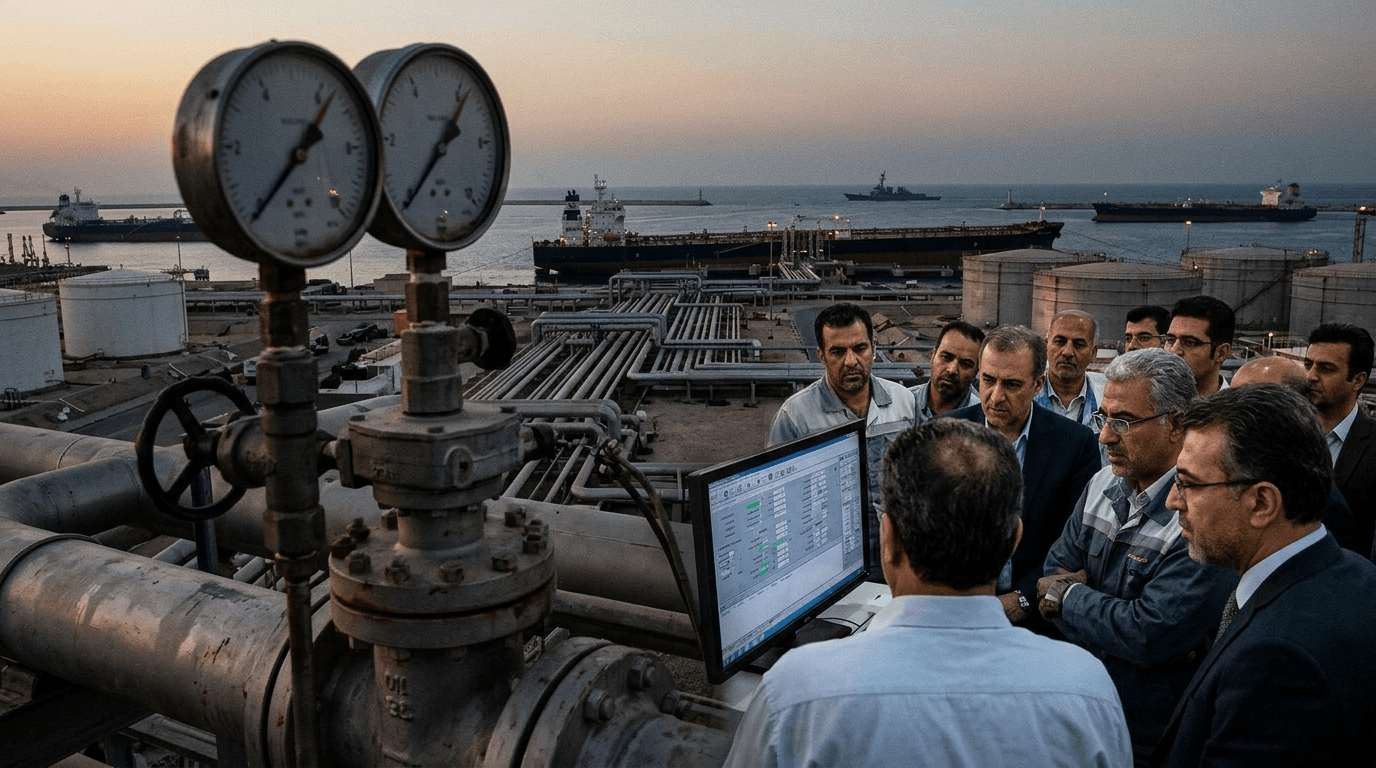
Crude oil futures have surged 9 percent to $81.64 per barrel, reaching their highest level since summer 2024, while Brent crude climbed to $85.85 per barrel. This dramatic spike isn't driven by speculative fervor or algorithmic trading quirks—it represents a genuine geopolitical shock rippling through global energy markets. The escalating military conflict between the United States and Iran has triggered the most significant oil supply disruption in recent memory, upending assumptions about energy stability and forcing traders, investors, and everyday consumers to reckon with the reality of supply-side shocks. Understanding the mechanics of this surge and its cascading effects across financial markets is essential for anyone navigating today's volatile landscape.
The Geopolitical Catalyst
At the epicenter of this oil shock lies intensifying military conflict between the United States and Iran. Iranian forces have targeted critical oil infrastructure and commercial vessels traversing vital shipping lanes, while U.S. airstrikes have persisted into their second week, sustaining a cloud of uncertainty that keeps energy markets in constant flux. The most consequential development is Iran's effective closure of the Strait of Hormuz, a strategic chokepoint responsible for approximately 20 percent of the world's daily oil supply. This isn't a hypothetical scenario discussed in academic circles—it's an active disruption affecting real infrastructure, port operations, and physical oil flows. Beyond the strait, Iranian military actions have severely damaged the nation's oil refineries, with facility owners publicly declaring their inability to fulfill existing supply contracts. The combination of infrastructure damage and shipping route disruption has created a supply crisis that cannot be easily wished away or resolved through conventional market mechanisms.
The Supply Shock
The magnitude of this energy shock demands serious scrutiny from market participants. Analysts estimate that combined U.S. and Iranian military actions have removed approximately 10 to 11 million barrels per day from global markets. In a world where roughly 100 million barrels trade daily, this represents a 10 percent shock to worldwide supply—a scale of disruption that cannot be easily absorbed by spare capacity or alternative sources. The physical crude market is experiencing severe stress as buyers scramble to secure supply through unconventional channels. Asian refiners are now paying record premiums for substitute crude supplies, with Norwegian Johan Sverdrup crude trading at $11.80 per barrel above Brent—a historic premium that underscores the desperation of international energy buyers. This isn't a temporary pricing anomaly but rather a reflection of genuine scarcity in a market suddenly deprived of critical supply volumes.
Market Implications
Rising energy costs represent one of the fastest transmission mechanisms for inflation into consumer prices, and this effect is already materializing across the U.S. economy. Average gasoline prices have spiked to $3.25 per gallon, representing a 9 percent increase from $2.98 just one week prior. More alarmingly, prices reached $3.58 per gallon by mid-March—a 60-cent surge concentrated into a single month—with some regions experiencing pump prices exceeding $4 per gallon, levels unseen since August 2022. The national average for regular gasoline jumped 14 percent in a single week to $3.41, according to AAA data. These rapid increases threaten to reignite inflation concerns that had been gradually moderating across developed economies. The implications extend beyond gasoline stations; elevated energy costs filter through supply chains, transportation costs, and production expenses, eventually reaching consumer prices across multiple sectors. This renewed inflation pressure directly challenges recent market narratives about economic softness and supportive monetary policy, potentially extending elevated interest rate environments and constraining equity valuations.
What This Means For Traders
Government interventions through strategic petroleum reserve releases provide meaningful short-term market support, but these measures cannot resolve the underlying geopolitical risks driving prices. Strategic reserve operations unfold over extended timeframes measured in months, while geopolitical tensions can escalate or deescalate rapidly. Should oil prices climb toward and sustain $100 per barrel—a threshold that no longer appears remote—analysts warn that the global economy could struggle absorbing the economic impact. Oil prices have already surged more than 40 percent since the start of the Iran conflict, with U.S. benchmark West Texas Intermediate crude closing at $99.64 a barrel, demonstrating the sustained elevation in energy costs. The trajectory depends heavily on geopolitical developments, U.S. military decisions, and Iran's willingness to reopen critical shipping routes.
Conclusion
Genuine supply disruptions—not mere speculation—are driving current oil market dynamics, lending credibility to sustained elevation in energy prices. This represents a structural shock rather than a bubble awaiting deflation. The inflation implications challenge assumptions about economic trajectories and monetary policy direction, with significant ripple effects across currency pairs, equity valuations, and fixed income markets. Traders should recognize that oil dynamics now hinge primarily on geopolitical risk rather than demand-side factors, requiring careful attention to military developments and diplomatic initiatives. Finally, while government interventions provide support, they cannot eliminate underlying risks, meaning sustained vigilance and adaptive positioning strategies remain essential in this unpredictable environment.