
---
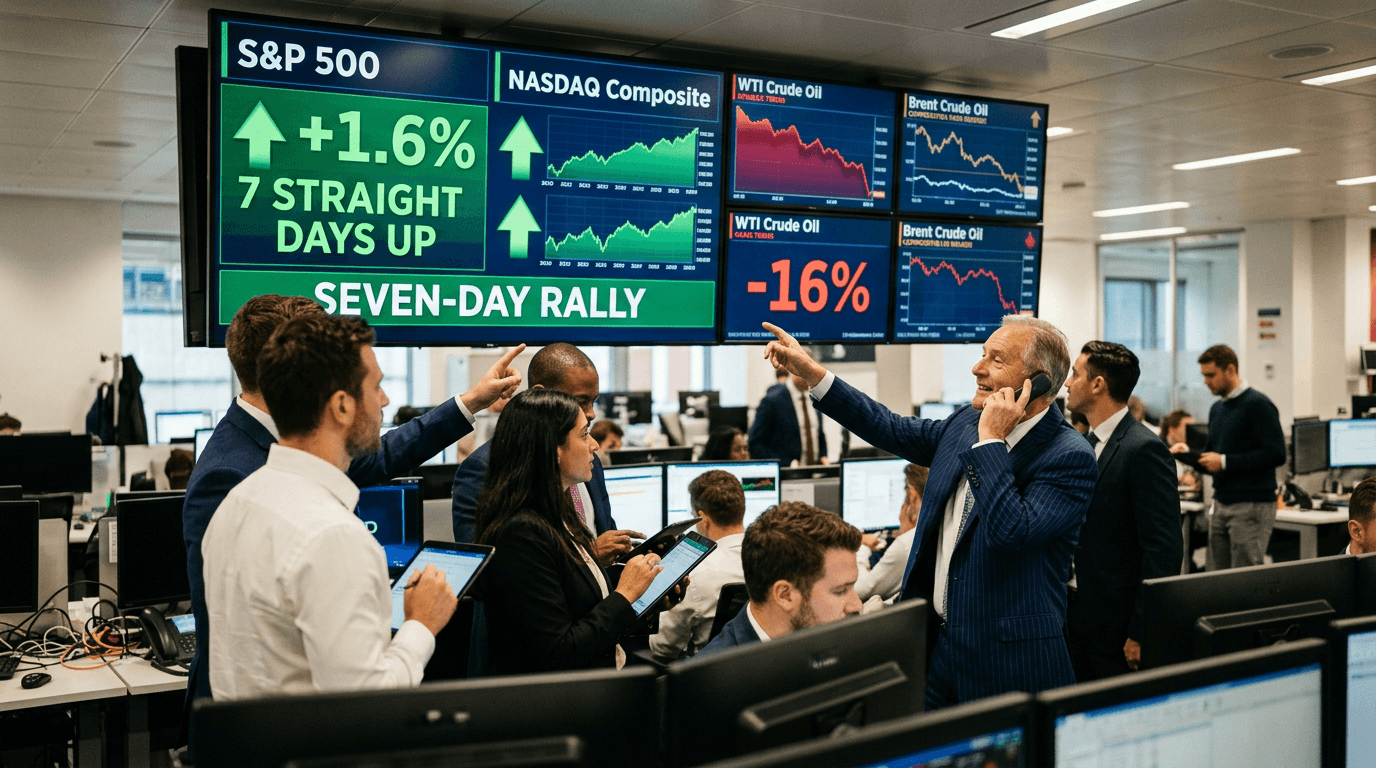
Markets experienced a notable relief rally this week as the announcement of a two-week ceasefire between the U.S. and Iran ignited optimism across major equity indices. The S&P 500 and Nasdaq extended their winning streaks to seven consecutive days, as the geopolitical de-escalation became a vital catalyst for risk sentiment. This shift allowed investors to move past months of tensions linked to Middle East conflicts and refocus on core economic fundamentals. The market reaction highlights how equity prices closely track global tensions and underscores the importance of understanding the interplay between geopolitical events and market behavior for traders navigating today's complex financial landscape.
The Catalyst: The Ceasefire's Impact
The U.S.-Iran ceasefire marked a crucial turning point in recent weeks, temporarily halting escalations that had eroded investor confidence. President Trump disclosed receiving a 10-point proposal from Iran, committing to further negotiations and indicating diplomatic progress over military confrontation. The agreement included a temporary reopening of the Strait of Hormuz, a vital artery for global oil and commerce. For traders, this announcement was a clear signal that the worst-case scenarios of widespread regional conflict might be averted, at least for now. The relief was evident as investors eagerly rotated back into risk assets they had been cautiously avoiding, sparking immediate buying across equities.
Equity Market Performance: A Surge in Confidence
The Dow Jones Industrial Average leaped over 1,300 points on Wednesday, reflecting institutional confidence in the ceasefire developments. Notably, both the S&P 500 and Nasdaq achieved their longest winning streaks in months, with the Nasdaq marking its most robust streak since January and the S&P 500 extending a run last seen in October. This sustained rally indicates broad-based buying interest, suggesting that investors across various segments viewed the ceasefire as a green light for renewed market participation. The psychological impact is significant; after enduring prolonged periods of volatility and uncertainty, traders often regain confidence as geopolitical risks diminish, creating momentum that fuels further buying pressure.
Commodity and Volatility Shifts: A New Landscape
The ceasefire announcement unleashed dramatic shifts in commodity markets, affecting investors with energy and precious metals exposure. Oil prices plummeted, with front-month West Texas Intermediate crude dropping over 16 percent to settle at $94.41 per barrel, marking its worst single day since April 2020. This sharp decline reflects the market's belief that war-related supply disruptions would ease, reducing the geopolitical risk premium in energy prices. Conversely, gold surged 2.6 percent to nearly $4,805.90 per ounce as investors reconsidered their inflation outlook. While the ceasefire dampened immediate crisis narratives that typically boost precious metals, gold still captured gains as investors assessed longer-term economic implications. Meanwhile, the Cboe Volatility Index, a key measure of market fear, declined alongside equity gains, indicating that reduced geopolitical anxiety translated into lower option premiums and diminished hedging demand.
Future Outlook: Vigilance Required
While the initial market response to the ceasefire is positive, traders must remain vigilant about several potential headwinds that could reverse this momentum. First, the agreement is temporary, and negotiations could stall, potentially extending current tensions. Second, oil traffic through the Strait of Hormuz remains below pre-war levels despite the temporary reopening, implying that full normalization may take time. Third, ongoing conflicts, such as the war between Israel and Lebanon, mean regional instability persists. Market participants should closely monitor development announcements, as any sign of diplomatic breakdown could swiftly reverse the relief rally witnessed this week.
For traders using platforms like SimFi, this week's action offers valuable lessons about how external macro events drive market cycles. The ability to quickly process news, assess the probability of different outcomes, and position accordingly remains a critical skill in modern trading. The rapid repricing of oil futures, the expansion of equity valuations on reduced risk premiums, and the shift in volatility all occurred within hours of the ceasefire announcement, demonstrating how quickly markets adjust when sentiment changes.
Conclusion: Sustaining Momentum
The extended winning streak of the S&P 500 and Nasdaq reflects a classic geopolitical relief rally, where markets rapidly reprice risk assets following reduced tensions. The ceasefire announcement served as the catalyst, but the rally's underlying strength suggests that investors were defensively positioned, waiting for an opportunity to re-engage with equities. As traders evaluate whether this momentum can sustain beyond the two-week negotiation period, staying attuned to diplomatic developments and their market implications remains crucial. Market success hinges on recognizing these inflection points where sentiment shifts, positioning appropriately, and maintaining discipline as events unfold.