
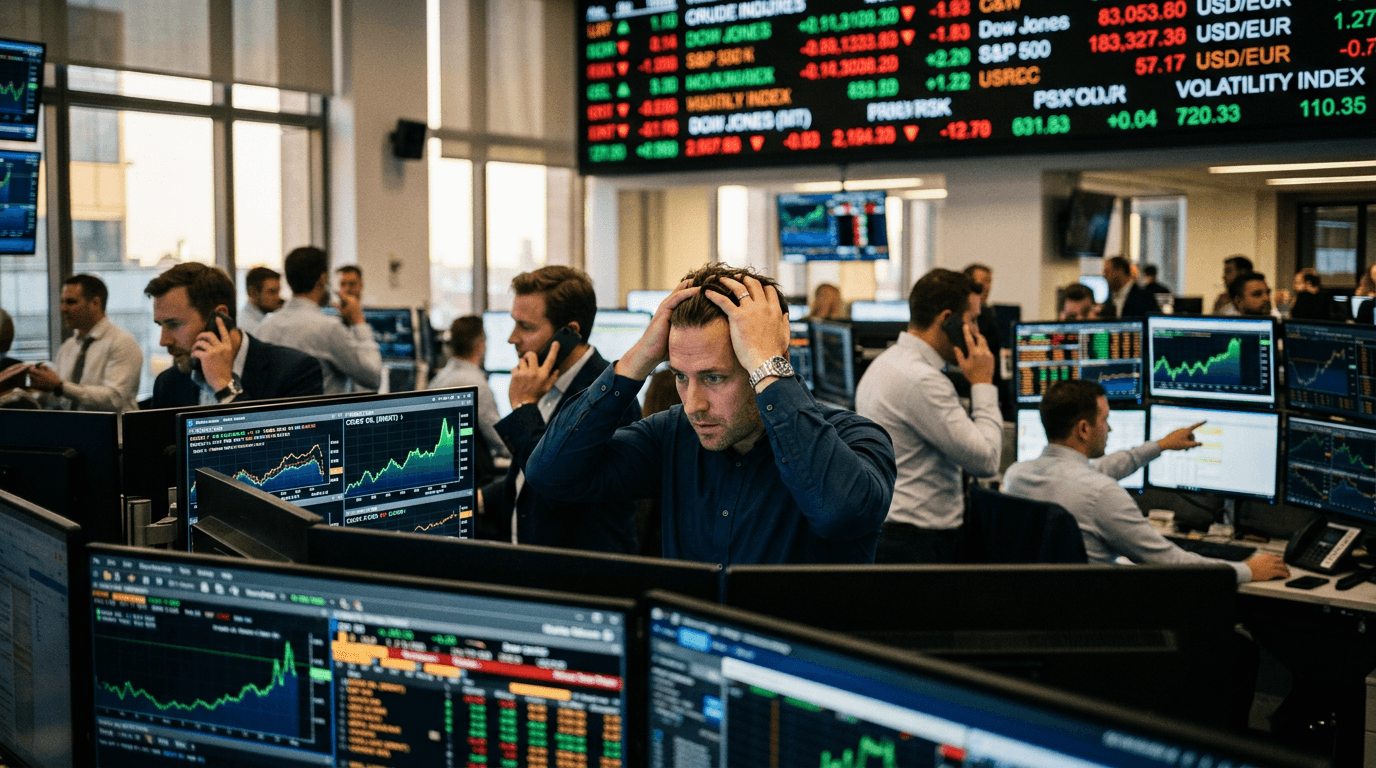
Oil’s 9% surge is the kind of move that instantly reshapes the global risk landscape. As military tensions between the United States and Iran intensify, traders are rapidly repricing the probability of meaningful supply disruptions from one of the most strategically important energy regions in the world. West Texas Intermediate (WTI) briefly pushed above $81 per barrel and Brent crude approached $86, igniting a broad risk-off reaction across equities, currencies, and commodities.
WHAT TRIGGERED THE 9% OIL SURGE?
The immediate catalyst is the escalation of direct and proxy conflict between the US and Iran, with markets suddenly assigning a higher probability to disruptions in Middle Eastern oil flows. The region’s vulnerability is concentrated in a single chokepoint: the Strait of Hormuz.
Roughly a quarter of global seaborne oil trade passes through this narrow waterway, along with significant volumes of liquefied natural gas and fertilizers. Any threat to shipping lanes in Hormuz, even without a full closure, can push up risk premiums through higher freight, insurance, and security costs. Traders understand that it doesn’t take a complete blockade to shock prices—mere uncertainty about safe passage is often enough.
The 9% spike shows markets moving from “geopolitical noise” to “credible supply risk.” WTI’s jump above $81 and Brent’s climb toward $86 are not ordinary intraday moves; they reflect a scramble to reprice futures curves, options volatility, and hedging costs in anticipation of potential physical disruptions.
Key takeaway: When a major supply chokepoint is in play, price moves can be fast and nonlinear, driven more by risk perception than by immediate changes in physical barrels.
How Geopolitics Translate Into Market Pricing
In energy markets, geopolitics typically show up through three main channels: supply expectations, risk premiums, and volatility.
First, supply expectations. Traders assess whether exports from key producers (including Iran and neighboring Gulf states) might be reduced by damaged infrastructure, sanctions, or shipping disruption. Even if actual flows haven’t fallen yet, futures markets price the probability that they will.
Second, risk premiums. Buyers are now willing to pay more for secure barrels from less-exposed regions or for prompt delivery. This can steepen parts of the futures curve and widen spreads between benchmarks or grades perceived as safer versus those more exposed to the conflict.
Third, volatility. Option-implied volatility in crude tends to spike during geopolitical crises as hedgers rush to buy protection and speculative players position for outsized moves. The same dynamic often appears in equity volatility indices like the VIX, which typically jump in a broad risk-off environment.
Key takeaway: The move in oil is not only about potential lost supply; it is about higher uncertainty being embedded into prices, curves, and volatility across the energy complex.
Winners And Losers Across Asset Classes
When oil surges on war risk, the ripple effects show up almost everywhere.
Equities felt the impact quickly. Global stock futures pulled back as investors rotated away from cyclical and growth-sensitive sectors and towards perceived havens. Higher energy costs threaten profit margins, particularly for transport, manufacturing, and consumer sectors, while sustained oil strength can also accelerate inflation pressures and complicate central bank policy paths.
In currencies, oil-linked FX gained ground. Producers like Canada and Norway tend to benefit when crude jumps, as higher export revenues and improved terms of trade support the Canadian dollar (CAD) and Norwegian krone (NOK). By contrast, energy-importing currencies come under pressure. The Indian rupee often weakens as higher oil import bills worsen the current account outlook, while Japanese yen crosses can be hit by both rising energy costs and broader risk-off sentiment.
At the same time, classic safe-haven assets such as US Treasuries and, often, gold attract fresh demand. Yields may fall on government bonds as investors seek safety, while gold’s role as a geopolitical hedge can come back into focus if tensions appear likely to persist or escalate further.
Key takeaway: Oil spikes tied to conflict rarely stay confined to the energy pit—they reshape relative performance across equities, bonds, FX, and commodities, rewarding exporters and perceived havens while pressuring importers and risk assets.
What Traders Should Watch Next
For traders, the next phase is less about the initial shock and more about how the story evolves. Several variables will drive whether this becomes a short-lived spike or the start of a more durable regime shift in markets.
First, watch for concrete evidence of supply disruption. Are tankers being delayed, rerouted, or attacked? Are insurance costs and freight rates through Hormuz rising sharply? Physical market reports and shipping data can offer early clues.
Second, monitor policy responses. Diplomatic efforts to de-escalate, efforts by other producers to increase output, or potential releases from strategic petroleum reserves can all influence how sustainable the price spike is. Central banks may also have to weigh higher headline inflation from energy against growth risks from tighter financial conditions.
Third, track volatility and positioning. Elevated implied volatility in crude and equity indices suggests demand for hedges is high. If positioning becomes crowded—either long or short—markets can become vulnerable to sharp squeezes when newsflow surprises in the opposite direction.
Key takeaway: The trajectory of oil and broader risk assets will be determined less by what has already happened and more by the pace, direction, and credibility of subsequent headlines and policy responses.
Using Simulated Trading To Navigate Geopolitical Shocks
For many traders, trading live capital through a geopolitical shock is emotionally and financially challenging. Price gaps, headline risk, and fast markets can exacerbate execution errors and risk management mistakes. This is where simulated finance (SimFi) environments can be particularly valuable.
In a simulated setting, traders can practice:
– Building and stress-testing scenarios around supply shocks and risk-off moves – Designing hedges that link crude exposure to equity indices, FX, or volatility products – Managing intraday risk when spreads widen and volatility spikes – Testing different position sizing and stop-loss frameworks under extreme conditions
You can, for example, simulate a portfolio that is long energy equities and short a broad equity index, or long CAD and short INR against a backdrop of rising oil. Observing how these relationships behave during a hypothetical extension of the Iran–US conflict can help refine both your macro framework and your risk controls.
Beyond strategy design, simulated trading also helps traders confront the psychological side of crisis markets—handling missed entries, sudden reversals, or news-driven gaps—without the pressure of real capital at risk.
Key takeaway: Practicing in a realistic simulation before sizing up in live markets can improve decision-making, risk management, and psychological resilience when genuine geopolitical shocks hit.
Conclusion
The 9% surge in oil as the Iran–US conflict escalates is a reminder of how quickly geopolitics can reorder market priorities. A single chokepoint, the Strait of Hormuz, sits at the center of global energy security, and any credible threat to its stability can ripple through crude prices, currencies, equities, and bond markets in a matter of hours.
For traders, the opportunity lies not in guessing headlines, but in understanding transmission channels, monitoring key indicators, and building robust strategies that can adapt as the narrative evolves. Whether you are an energy specialist, a macro trader, or an equity investor, this episode underscores the need to integrate geopolitical risk into your process—and to use tools like simulated trading to sharpen your edge before real capital is on the line.