
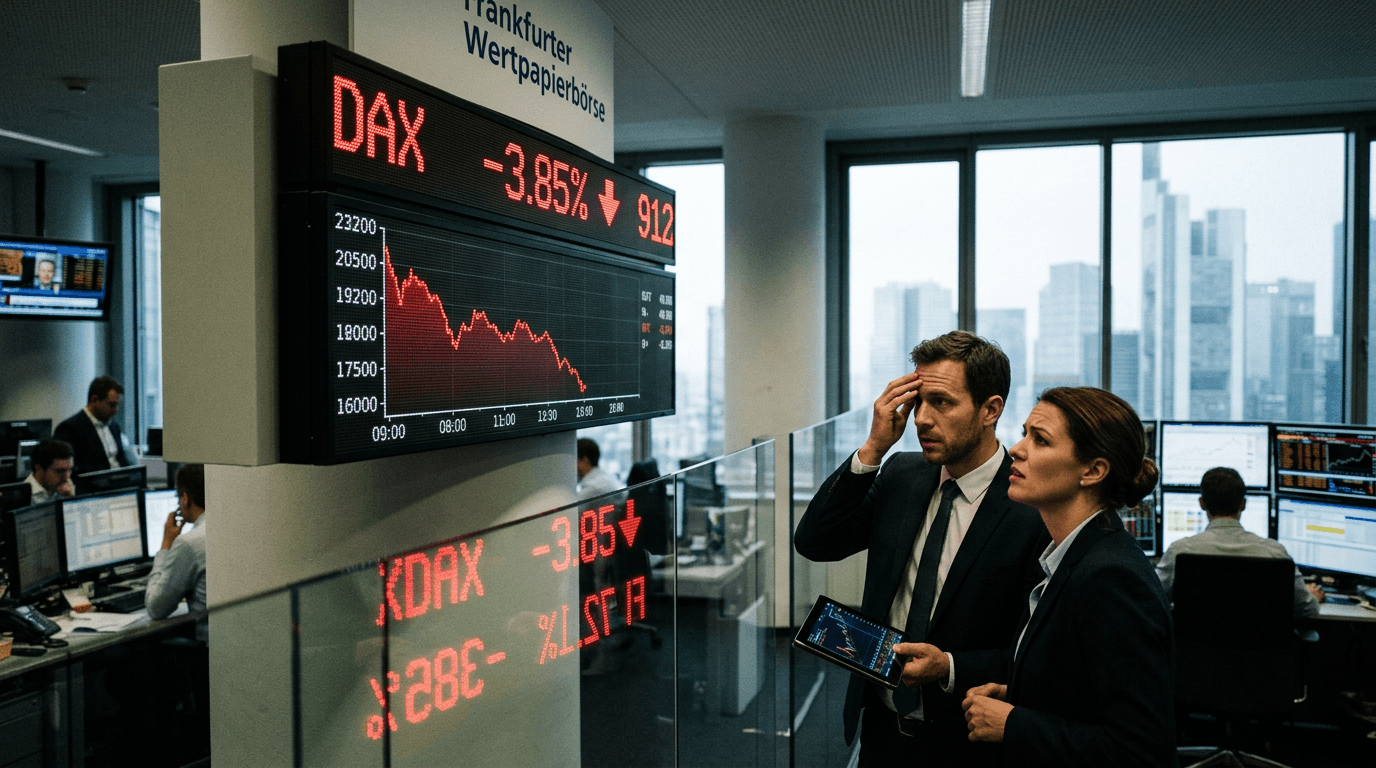
Germany's DAX Index Plummets: A Perfect Storm of Rising Rates and Energy Crises
Germany's DAX index has breached critical support levels, echoing the turmoil of rising interest rates and a persistent energy crisis in Europe. On March 20, 2026, the index fell to 22,380 points, its lowest since April 2025, signaling more than just a technical breakdown—it's a harbinger of intensifying economic headwinds reshaping Europe's largest economy.
The Collision of Rates and Energy Pressures
The recent fragility of the DAX underscores a toxic mix of macroeconomic stressors. With interest rates on the rise, corporate valuations and businesses burdened with debt are feeling the squeeze. Simultaneously, Europe's energy crisis, fueled by LNG supply constraints and soaring oil prices, threatens to rekindle inflationary fears just as policymakers aimed to subdue them. This dual challenge is particularly injurious to German equities, which bear a heavy burden from energy costs due to both direct consumption and supply chain dependencies.
German exporters and industrial companies face a perfect storm. Higher financing costs diminish the allure of long-term growth stocks, while energy uncertainties gnaw at profit margins across various sectors. The result is a widespread selloff impacting not just cyclical stocks but also traditionally defensive holdings.
Technical Breakdown and Market Weakness
The March 20 plunge, with the DAX losing 446 points or 1.95% to settle at 22,394 points, was more than a single-day slump; it marked the third consecutive session of declines. Over the month, the DAX has shed 10.45%, with a year-to-date loss of 8.62%. One-week losses of 4.55% highlight an accelerating downward trend, shaking investor confidence in a near-term recovery.
Losses were concentrated among heavyweight sectors. SAP, the software giant, fell 4.26% amid concerns over corporate IT spending in a high-rate climate. E.ON, the energy utility, dropped 3.78%, reflecting its vulnerability to the energy crisis. Zalando's 3.61% dip pointed to broader consumer discretionary weakness as household purchasing power declines.
The Energy Crisis Dimension
Europe's energy crisis, once thought to be easing, has resurfaced as a fresh catalyst for market volatility. The U.S. is bolstering its military presence in the Middle East amid rising tensions with Iran, raising fears of further supply disruptions. For Germany, an energy-intensive economy despite renewable energy advancements, this is a critical vulnerability. Any disruption in oil and LNG supplies could drive energy prices even higher, threatening the competitiveness of German manufacturers.
Germany's industrial backbone relies heavily on affordable, stable energy. Manufacturers cannot easily absorb sustained energy cost hikes without cutting production or raising prices—both unattractive options. This structural vulnerability makes German equities particularly sensitive to energy market volatility, a dynamic evident as the DAX underperformed its regional peers.
Gazing Toward the 20,000-Point Threshold
Analysts are watching closely for a potential drop toward the 20,000-point level if selling pressure endures. Such a decline would erase gains since April 2025. While dramatic, the mix of technical and fundamental pressures suggests that the downside risk warrants serious attention from investors with German equity exposure.
Trading Economics' macro models project the DAX to trade at 23,320 by quarter-end, hinting at possible stabilization. Yet, a 12-month forecast of 20,868 points underscores expectations of continued weakness, supporting concerns of further downside in consensus forecasts.
Navigating the Turbulence: Key Takeaways for Investors
German equity investors are navigating a challenging environment that demands strategic portfolio positioning. Rising rates affect valuations across the board, while energy uncertainties introduce additional operational risks. Cyclical sectors are under the most pressure, but even defensive areas have proven vulnerable to the broad selloff.
Investors should monitor energy market developments closely, as any escalation in Middle Eastern tensions could exacerbate DAX weakness. Keep an eye on policy responses from German and European authorities addressing energy affordability. Lastly, track corporate earnings guidance for insights into margin resilience—this will determine whether any DAX recovery is sustainable or just a technical bounce.
The DAX's breach of support levels is a clear warning for European investors. The convergence of rate and energy pressures suggests cautious positioning until a clearer resolution emerges on both fronts.
---
NEWSIMPACTSCORE: 7