
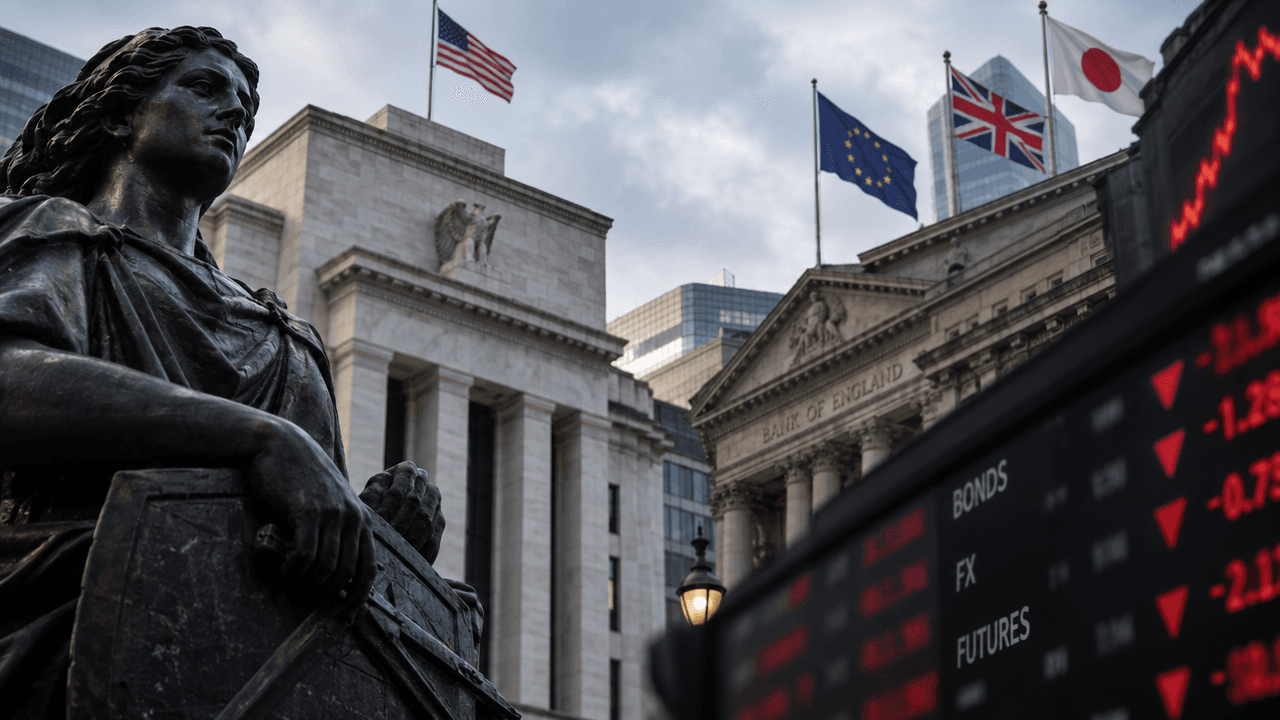
Global markets are entering another tense phase as top central banks renew their warnings that inflation risks remain elevated, even after the initial post-pandemic surge has faded.[1][3][7][13] With officials from the Federal Reserve, European Central Bank, Reserve Bank of Australia and Reserve Bank of New Zealand slated to speak, traders are on alert for any hint that interest rates could stay restrictive for longer than previously assumed.[2][7][10] These signals matter because they can quickly ripple through bond markets, currency valuations and futures pricing, reshaping the trading landscape in a matter of hours.[3][4][10][14]
Why Central Bank Inflation Warnings Matter
The renewed inflation warnings are rooted in a familiar but potent mix: higher energy prices, geopolitical tension and lingering price pressures across major economies.[1][2][7][13][14][15] The war in the Middle East and related disruptions to oil and gas supply have pushed energy costs higher, reviving fears of a new cost-of-living squeeze just a few years after the last inflation shock.[1][2][9][13][14] Central banks are particularly worried about second-round effects, where households and firms respond to rising prices with higher wage demands and broader price increases, making inflation more persistent.[9][11][13]
Recent data show inflation in developed markets drifting back toward the 2–4% range, led by the United States at around 3.5%, but still above target in key regions such as the euro area.[6][13] Euro zone inflation recently accelerated to 3.3%, driven largely by energy, keeping it well above the ECB’s 2% target.[13][14] This combination of moderate but sticky inflation and renewed energy shocks has raised concerns about a “stagflation cocktail” of slower growth and higher prices, a scenario policymakers are determined to avoid.[13][15] As a result, even when central banks leave rates unchanged, they are now careful to signal that further tightening remains firmly on the table if inflation re-accelerates.[2][5][7][10]
How Bond Yields, Currencies And Futures React
Markets digest these warnings through three main channels: bond yields, foreign exchange and interest-rate futures. Government bond yields have already moved higher as investors price in the risk that rates will stay restrictive for longer, or even rise further in response to persistent inflation.[3][4][10][13][14] September has recorded one of the largest increases in average G10 interest rates since mid-2023, highlighting how sensitive fixed-income markets are to shifts in central-bank tone.[4][10] Higher yields push borrowing costs up across the economy and typically weigh on equity valuations, especially in rate-sensitive sectors.[3][4][13][14]
Currency markets respond quickly to perceived differences in policy stance. When a central bank adopts a more hawkish posture than its peers—signaling higher-for-longer rates or fresh hikes—its currency tends to appreciate as investors seek higher real returns.[7][10][12] Conversely, any sign that inflation risks are being downplayed or that cuts might come too soon can weaken a currency relative to those backed by more aggressive inflation fighters.[2][7][11]
Interest-rate futures and swaps are where traders express explicit views on the path of policy rates. Current pricing shows markets expecting more tightening from some major central banks than their official projections suggest, particularly in the United States and euro area.[10][13] These instruments are highly sensitive to central-bank speeches: a few carefully chosen words about inflation risk can shift the entire expected rate path, affecting everything from mortgage pricing to corporate funding costs.[3][10][14]
Different Central Banks, Shared Concerns
While each central bank faces its own domestic challenges, their messaging on inflation has converged around a few key themes. The Federal Reserve has recalibrated its stance to be more restrictive, indicating that at least one more rate hike may be necessary and that any future cuts will depend on clear evidence that inflation is firmly under control.[3][10][15] The European Central Bank has recently raised rates and upgraded its inflation forecasts, suggesting that price pressures will remain above target for longer than previously thought.[1][13][14][15]
In Australia, the Reserve Bank has already lifted rates again, warning of a “material” inflation risk driven by the energy shock and broader cost pressures.[2][4][12] Other central banks, including the Reserve Bank of New Zealand, have signaled that while they prefer a wait-and-see approach, they stand ready to act decisively if inflation expectations start to drift higher.[7][10][11] Across these institutions, the message is consistent: the priority is price stability, even if that means tolerating slower growth or delaying any hoped-for easing in financial conditions.[1][2][5][12][13]
For traders, the upcoming remarks from Fed, ECB, RBA and RBNZ officials are therefore not routine communication events. They are key data points in an evolving narrative about how seriously policymakers view the inflation threat, and how far they are willing to go to contain it.[2][7][10][11]
What This Means For Traders And Simulated Finance
For active traders and SimFi participants on platforms like E8 Markets, central-bank inflation warnings offer both risk and opportunity. In live markets, sharp moves in yields, FX rates and index futures can unfold in minutes as speeches cross the wires. In a simulated environment, those same dynamics can be studied and traded without capital at risk, providing a powerful laboratory for building macro trading skills.
Traders should focus on three practical angles. First, pay attention to language around inflation expectations—phrases like “second-round effects,” “energy shock,” and “higher-for-longer” often precede meaningful repricing in rates.[9][11][13] Second, monitor the spread between market-implied rate paths (via futures and swaps) and official projections; when that gap widens, volatility tends to rise in bonds and FX.[10][13] Third, use scenario analysis: ask how portfolios might respond if the Fed signals another hike, the ECB warns of extended above-target inflation, or the RBA and RBNZ stress renewed upside risks.[1][2][4][10][12]
In a SimFi setting, traders can practice reacting to hypothetical central-bank speeches by adjusting duration exposure, rotating between currencies, or hedging equity risk through index futures. This builds familiarity with the mechanics of macro-driven moves before deploying strategies in real markets.
Practical Takeaways
1) Treat major central-bank speeches on inflation as market events, not background noise; they can reprice yields, FX and futures quickly.
2) Watch energy markets and geopolitical headlines alongside central-bank commentary, as these often trigger the inflation concerns driving policy shifts.[1][2][7][13][14][15]
3) Use rate futures and bond curves to gauge whether markets are ahead of or behind official guidance; discrepancies can signal potential trading opportunities.[10][13]
4) In both live and simulated trading, plan risk management around surprise hawkish or dovish signals, including wider stops, reduced leverage and diversified hedges.
Conclusion: Navigating An Inflation-focused Market
Renewed central-bank inflation warnings are a reminder that the battle against price instability is not yet over, and that policy may remain tighter for longer than markets once hoped.[1][3][7][13] As energy prices and geopolitical risks keep inflation on the radar, the speeches from Fed, ECB, RBA and RBNZ officials will help shape expectations across bonds, currencies and futures for months to come.[2][4][7][10][12] For traders, the challenge is to translate this evolving macro story into disciplined strategies—using both real and simulated environments—to navigate volatility without losing sight of risk. Mastering how markets respond to inflation warnings is now a core skill, not a niche expertise, for anyone trading in a world where central banks continue to set the tone.