
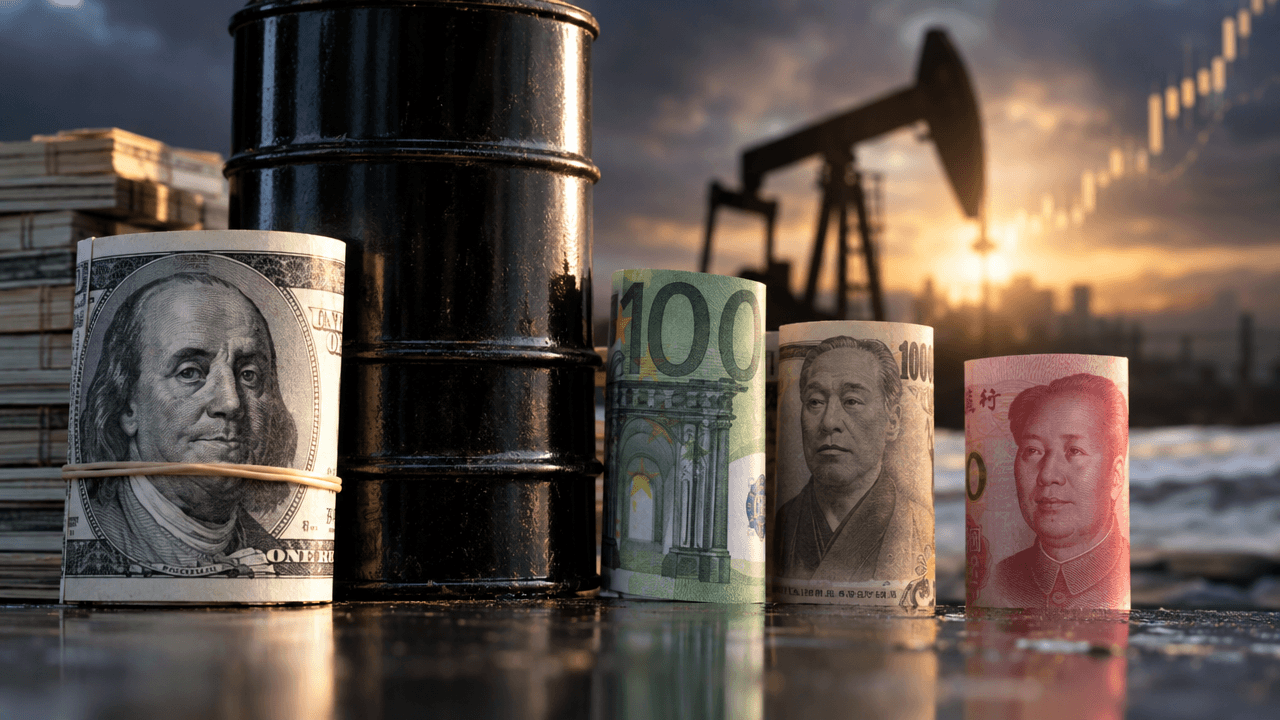
A fresh energy shock is reshaping the currency market. The dollar is broadly firm as traders weigh whether higher oil prices will keep inflation elevated, delay monetary easing, and force central banks to maintain restrictive interest rates for longer. The greenback has been little changed to slightly stronger, while investors remain alert to the possibility that energy disruptions could turn a temporary price spike into a broader inflation problem.
Recent trading left the euro near $1.1204, the yen around 158.20 per dollar, and the offshore yuan close to 6.6921. These levels reflect a market caught between two competing forces: concern about weaker global growth caused by expensive energy and support for the dollar from higher U.S. rate expectations and safe-haven demand.
Why Energy Matters For Currencies
Oil affects foreign exchange markets through several channels. The most direct is inflation. When crude prices rise, transportation, electricity, manufacturing, food distribution, and household fuel costs can all increase. Businesses may pass those expenses to consumers, creating pressure that extends beyond the energy sector.
Central banks then face a difficult choice. Higher interest rates can restrain demand and help prevent inflation from becoming entrenched, but tighter policy can also weaken economic growth. If policymakers signal that rate cuts will be delayed—or that additional increases may be necessary—the country’s currency often benefits because investors can earn more by holding assets denominated in that currency.
This is why the dollar has remained supported even as the oil shock creates a risk to the U.S. economy. Markets are focusing less on the immediate hit to consumption and more on whether inflation will prove persistent enough to keep the Federal Reserve cautious. Previous market analysis has also linked renewed oil gains with increased expectations for Federal Reserve tightening and higher Treasury yields. [14]
THE FEDERAL RESERVE’S DIFFICULT BALANCE
The energy shock complicates the Federal Reserve’s policy outlook. A central bank would generally prefer to look through a one-time increase in gasoline or crude prices. However, the response becomes more complicated when supply disruptions last for months, inflation expectations rise, or companies and workers begin adjusting prices and wages in anticipation of higher costs.
Recent Federal Open Market Committee minutes described higher oil prices during the Middle East conflict as a factor that lifted nominal interest rates, largely because investors expected a higher policy path. The minutes also noted that the dollar edged higher during the period. [2] That combination—higher yields and a firmer dollar—is a familiar market response when traders believe inflation risks will keep U.S. monetary policy restrictive.
The next phase will depend on the data. Investors will watch inflation reports, employment figures, consumer spending, and surveys of household expectations. A sharp rise in energy prices that fails to spread into core inflation could eventually fade from the market narrative. But evidence of broader price pressure would make a near-term easing cycle less likely and could provide another leg higher for the dollar.
Why The Euro, Yen, And Yuan Face Different Pressures
The euro’s position near $1.1204 illustrates how energy exposure can influence currency performance. Europe is sensitive to imported energy costs, particularly when supply routes become uncertain. Higher oil prices can worsen the region’s trade balance by increasing the amount it pays for imported commodities. If the European Central Bank remains less hawkish than the Federal Reserve, the interest-rate gap may also favor the dollar.
The yen faces an additional challenge near 158.20 per dollar. Japan is a major energy importer, so higher oil prices can increase import costs and weigh on the trade balance. At the same time, a wide difference between U.S. and Japanese interest rates can encourage investors to borrow yen and buy higher-yielding dollar assets. That flow can keep the yen under pressure, although extremely weak yen levels may increase the risk of official intervention or stronger policy signals from Japanese authorities.
The offshore yuan near 6.6921 is being shaped by China’s domestic economic outlook, trade conditions, and the authorities’ preference for currency stability. China’s inflation environment has remained comparatively subdued, with property-sector weakness limiting price pressures even as energy costs have increased abroad. [13] That contrast may reduce the need for aggressive monetary tightening, but it also means China must manage the effects of more expensive imported energy and global demand uncertainty.
What Traders Should Watch
First, monitor the relationship between oil prices and bond yields. If crude rises while Treasury yields climb, markets are probably emphasizing inflation and delayed rate cuts. That combination can be supportive for the dollar. If oil rises but yields fall sharply, traders may instead be pricing a severe growth shock, which can produce a more complicated currency response.
Second, compare headline and core inflation. Energy can push headline inflation higher quickly, but persistent strength in services, wages, and other core categories would be more important for central-bank policy.
Third, watch market positioning and volatility. A crowded long-dollar trade can reverse if geopolitical risks ease, supply routes reopen, or economic data weakens. Strong currencies rarely move in a straight line, especially when the original catalyst is a geopolitical shock.
For SimFi traders, the practical lesson is to avoid treating a firm dollar as an automatic one-way signal. Build scenarios around oil rising, stabilizing, or falling, then consider how each scenario could affect yields, central-bank expectations, and individual currency pairs. Use defined risk, avoid excessive leverage, and pay attention to scheduled data releases.
The Bigger Market Lesson
The dollar’s strength is not simply a reaction to higher oil prices. It reflects the interaction between energy, inflation, interest rates, economic growth, and investor risk appetite. For now, the market is leaning toward the view that persistent energy pressure will keep the Federal Reserve cautious and preserve the dollar’s yield advantage.
That outlook can change quickly. A sustained fall in crude prices, softer inflation data, or signs of weakening U.S. demand could revive expectations for monetary easing. Until then, energy markets remain a key driver of foreign exchange pricing—and a crucial variable for anyone trading the dollar, euro, yen, or yuan.