
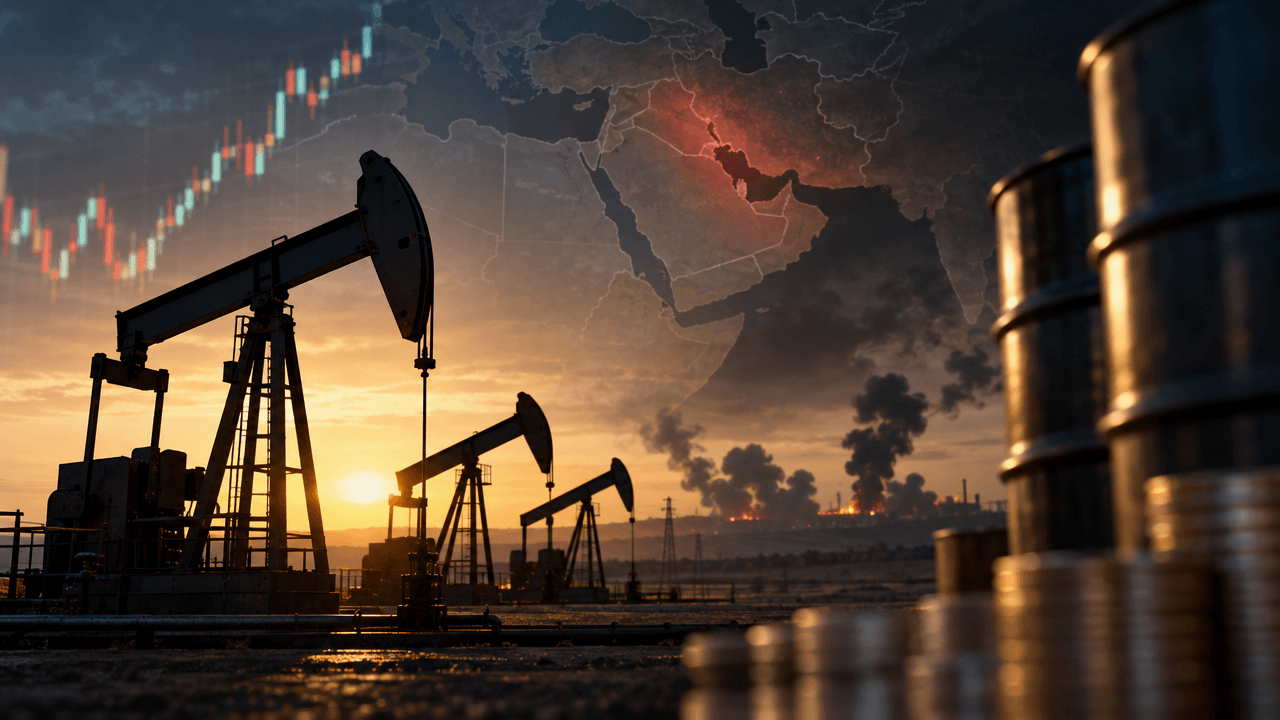
Oil remains elevated near $93 per barrel as renewed tensions in the Middle East increase concern about disruptions to global energy supplies. Brent crude has been supported by attacks on shipping routes, uncertainty surrounding Iran, and the strategic importance of the Strait of Hormuz, even as traders weigh signs that the broader oil market could move into surplus. [1][2]
The latest price action highlights a familiar feature of energy markets: oil does not need an immediate supply loss to rise. The possibility of disrupted exports can be enough to add a geopolitical risk premium. For consumers, businesses, traders, and central banks, that premium matters because energy prices influence transportation, manufacturing, utility bills, and inflation expectations.
Why Middle East Risks Are Supporting Oil
The Middle East remains central to global energy markets because a large volume of crude and refined products passes through the region. The Strait of Hormuz, located between Iran and Oman, is particularly important. Any threat to tanker traffic through the waterway raises concerns about delays, higher insurance costs, rerouted shipments, and potential shortages.
Recent attacks on shipping and renewed U.S.-Iran tensions have encouraged traders to price in a greater possibility of further disruption. Brent crude recently traded around $92 to $93 per barrel, with prices rising when reports suggested that military escalation could threaten the gradual recovery of Middle Eastern exports. [1][3]
This does not mean that all regional supply has stopped. In fact, oil flows through Hormuz increased significantly in the third quarter compared with the previous quarter, although they remained below year-earlier levels. [14] The market is reacting to uncertainty over what could happen next rather than responding only to confirmed production losses.
That distinction is important. Oil prices can move sharply when traders believe a disruption is becoming more likely, but those gains can reverse quickly if shipping resumes, diplomatic efforts improve, or additional barrels reach the market.
The Supply Surplus Is Limiting The Rally
Geopolitical risk is supporting oil, but it is not the only force shaping prices. The International Energy Agency has warned that the global oil market could return to surplus as Middle Eastern exports recover more quickly than demand. [7][9]
A supply surplus means that production is exceeding consumption, allowing inventories to build. Under normal conditions, rising inventories create downward pressure on prices because buyers have less urgency to secure new cargoes. This helps explain why oil has remained volatile rather than moving steadily higher.
The current market is therefore balancing two opposing narratives. The first is a potential supply shock caused by attacks, military action, or restrictions on shipping. The second is a return to more comfortable supply conditions as production recovers and demand growth remains uncertain.
For traders, this creates a market where headlines can have an outsized impact. A report of an attack can push crude higher within minutes, while evidence of restored exports can produce an equally sharp decline. Price direction may depend less on current production data and more on whether traders believe the risk is temporary or likely to worsen.
Why Higher Oil Matters For Inflation
Energy prices affect inflation directly and indirectly. Direct effects appear in gasoline, diesel, heating, and electricity costs. Indirect effects emerge as companies pass higher transportation and production expenses to customers.
If crude oil stays near $93 for an extended period, the impact could become more visible in economic data. Airlines, logistics companies, manufacturers, agricultural businesses, and retailers may face higher operating costs. Households could also reduce spending elsewhere if fuel and utility bills consume more of their income.
This creates a challenge for central banks. Policymakers may want to ease interest rates to support economic growth, but persistent energy inflation can make that decision more difficult. Higher oil prices can lift headline inflation and influence inflation expectations, even when underlying price pressures are moderating.
The result is not automatic. Central banks generally look through short-lived energy shocks, especially when they do not affect wages or broader demand. However, a prolonged rise in oil prices could complicate expectations for monetary easing and encourage markets to reassess the timing or scale of future rate cuts.
What Traders Should Watch
The most important indicators are developments around the Strait of Hormuz, the security of commercial shipping, and the direction of Middle Eastern exports. Traders should also monitor official statements from the United States, Iran, and regional governments because diplomatic or military signals can quickly change the perceived risk premium.
Inventory data, refinery activity, and demand from major importers such as China are also important. Recent reporting suggested that stronger Chinese crude imports were adding pressure to available supplies at a time when regional exports faced uncertainty. [2]
From a technical perspective, traders should avoid treating $93 as a guaranteed floor or ceiling. A round-number price can attract attention, but fundamentals and headlines remain more influential. Risk management is especially important in oil markets because overnight gaps and sudden volatility can be substantial.
A practical approach is to define position size before entering a trade, use stop levels that reflect volatility, and avoid increasing exposure simply because a geopolitical headline appears convincing. Scenario planning can also help: consider what happens if tensions escalate, if exports normalize, or if surplus conditions become the dominant market theme.
The Broader Market Takeaway
Oil’s elevated price is a reminder that financial markets price both present conditions and future possibilities. Supply may be recovering, yet the threat of disruption can keep crude prices high. At the same time, surplus expectations prevent geopolitical fears from producing an unchecked rally.
For consumers and businesses, sustained energy costs would represent a potential inflation risk. For traders, the market offers opportunity but demands discipline because the balance between supply concerns and surplus expectations can shift rapidly.
The central question is whether Middle East tensions create a lasting reduction in oil availability or only a temporary risk premium. Until that question is answered, crude is likely to remain sensitive to shipping developments, military headlines, inventory data, and changing expectations for global monetary policy.