
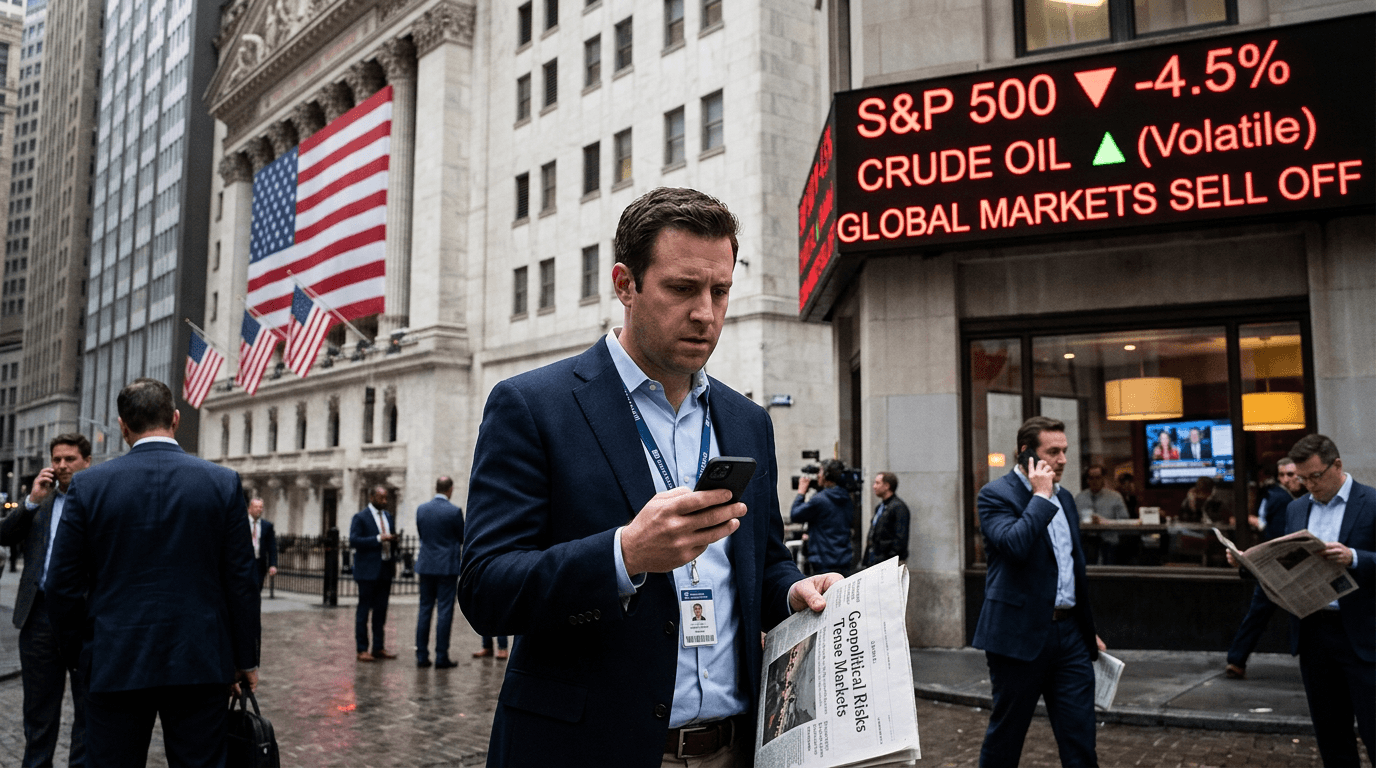
Global Markets Face Turbulence Amid Rising Iran-US Tensions
In today's interconnected world, geopolitical tensions can rapidly transform the landscape of global financial markets. The mounting strain between the United States and Iran serves as a stark reminder for traders and investors of how swiftly such developments can impact investment portfolios and economic strategies. Understanding the intricate dynamics of this conflict is crucial for those exposed to equities, commodities, or international assets.
Initial Market Shock: The Crisis Unfolds
The Iran crisis was sparked by a bold ultimatum from the White House, as President Trump threatened strikes on Iranian power plants unless Tehran reopened the strategically vital Strait of Hormuz, a maritime chokepoint responsible for about 20% of global oil shipments. This announcement sent shockwaves through energy markets, with crude oil prices soaring above $110 per barrel as traders braced for potential supply disruptions. The immediate market reaction was one of heightened anxiety, evidenced by a spike in the VIX volatility index as investors pulled away from riskier assets.
The economic repercussions were swift. Global stock markets took a hit, with the Dow Jones dropping over 400 points and the S&P 500 declining by 0.7% on March 2. Over the following weeks, the S&P 500 fell from 6,816.63 to 6,506.48, marking a 4.55% decrease. Energy stocks surged, anticipating increased costs, while airline and transportation sectors faced pressure from the prospect of prolonged high fuel prices.
Energy Markets in Disarray
The Strait of Hormuz stands as one of the most critical geographic locations for the global energy market. It is a lifeline for the energy exports of Arab states, Iran, and Iraq, with only Saudi Arabia and the UAE possessing limited alternative routes. This concentration of energy traffic through a single chokepoint renders the region highly susceptible to disruptions, whether from military action or blockade threats.
Iran's warning of retaliation should U.S. attacks proceed exacerbated uncertainties surrounding energy supplies. A potential closure or disruption of the strait could severely impact economies reliant on it for energy imports, particularly in Asia and Europe. This supply-side shock, combined with speculative demand, posed a significant challenge for inflation expectations and economic growth forecasts.
Volatility and Uncertainty: The Whipsaw Effect
The markets have experienced intense volatility as mixed signals triggered a whipsaw effect across asset classes. President Trump's decision to postpone strikes on Iranian infrastructure led to a sharp rally in equities, with oil prices plummeting over 13% in a single session. The S&P 500 rose by 1.1%, while Brent crude fell from above $110 to around $101 per barrel, underscoring global markets' sensitivity to geopolitical developments.
Nevertheless, this apparent de-escalation masks underlying uncertainties. Iranian officials disputed Trump's claims of "productive conversations," creating a disconnect between diplomatic rhetoric and reality. Such conflicting narratives have emerged in past U.S.-Iran tensions, resulting in persistent volatility as investors struggle to ascertain the true state of affairs. Market experts suggest that peak uncertainty may occur in the fourth week of the conflict, potentially setting the tone for subsequent trading weeks.
The implications extend beyond stock prices. Anticipated interest rate cuts may be delayed or increased due to inflation fueled by supply shortages and speculation. This creates a challenging environment for central banks, which must balance inflation control with economic growth concerns, constrained by geopolitical events.
Navigating Uncertainty: Wall Street's Response
Despite the acknowledged macroeconomic fragility from the Iran conflict, persistent inflation worries, and the Federal Reserve's hawkish stance, major financial institutions are adjusting their outlooks. Barclays raised its year-end S&P 500 target to 7,650 from 7,400, reflecting more than 16% potential upside, albeit with an explicit acknowledgment of heightened macro fragility.
The Morningstar US Market Index ended the week 1.6% lower, following rallies spurred by de-escalation hopes, with stocks down approximately 4.2% since the conflict's onset in late February. This resilience, amidst elevated volatility, indicates that some investors view current price levels as opportunities rather than points of capitulation.
Key Insights for Investors
The rapid price movements reinforce a vital truth: in our interconnected global economy, military conflicts, even those far removed geographically, can instantly alter portfolio valuations across asset classes. For market participants, the takeaway is clear: geopolitical risk premiums may have compressed too rapidly given the unresolved nature of the conflict. While the immediate threat may seem reduced, broader tensions remain significant, highlighting the importance of risk management for portfolios with substantial exposure to energy prices or Middle Eastern assets.
---
Headline: Iran-US Tensions Send Global Markets Tumbling: Navigating Geopolitical Risks in Trading
News Impact Score: 8