
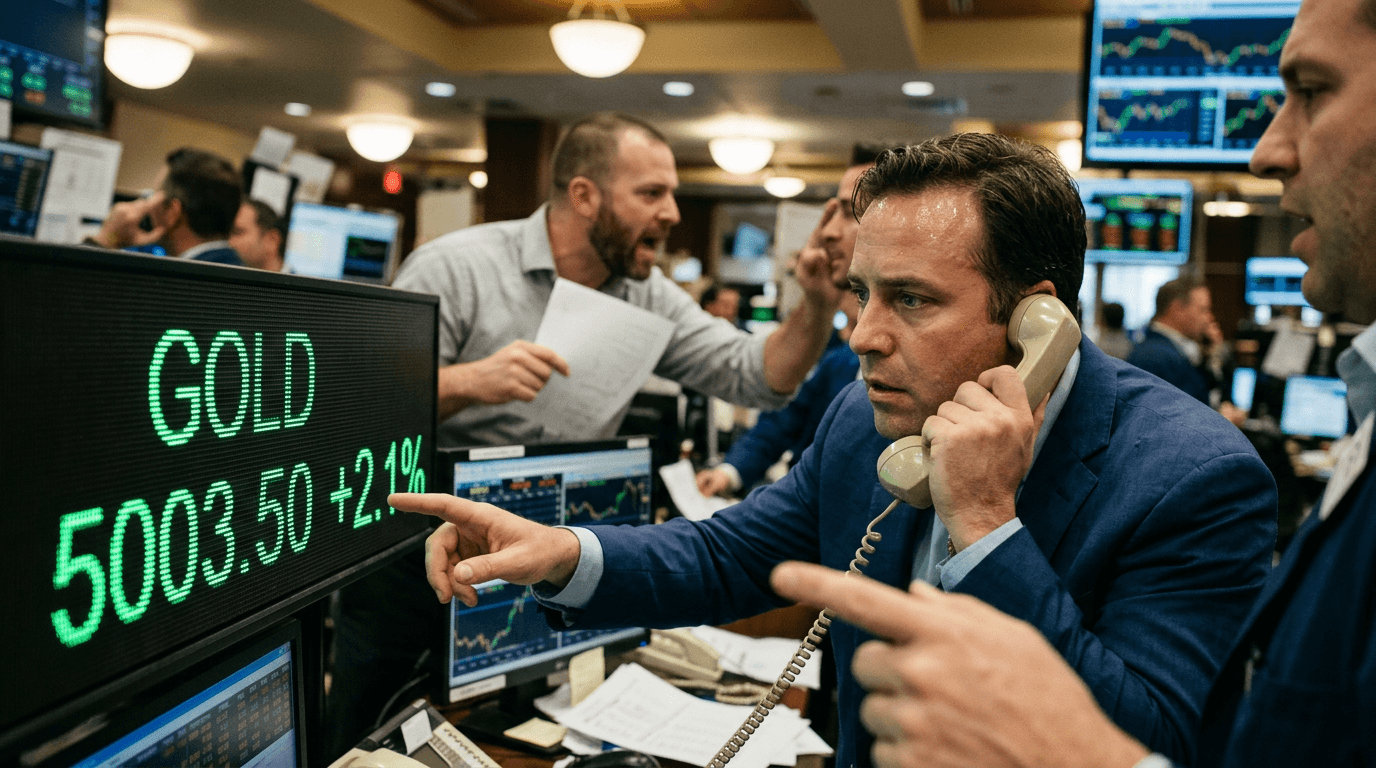
Gold has staged a remarkable comeback this week as escalating tensions between the United States and Iran create the precise market environment where precious metals traditionally thrive. The yellow metal, which experienced its first weekly decline in five weeks, has bounced back decisively as investors flee riskier assets and seek the portfolio stability that gold provides. Trading above the psychologically important $5,000 per ounce level and testing heights not seen in recent months, gold's current rally demonstrates an enduring truth about financial markets: when geopolitical uncertainty spikes, investors instinctively move toward safe-haven assets.
The Geopolitical Catalyst
The current rally's foundation rests squarely on escalating military tensions in the Middle East. Joint US and Israeli strikes against Iranian targets have triggered retaliatory responses, creating a conflict dynamic that shows no immediate signs of de-escalation. President Trump has indicated the conflict could persist for a month or considerably longer, while Iran has announced the closure of the Strait of Hormuz and threatened attacks on shipping vessels in this strategically vital energy corridor. These developments represent precisely the kind of tail risks that drive investors toward gold regardless of technical price levels or traditional valuation metrics.
What makes this particular conflict especially significant for gold prices is the cascading effect it has on broader market dynamics. Beyond the direct geopolitical risk premium, the conflict is creating secondary market impacts through energy prices. Oil has surged on concerns about supply disruptions, reigniting inflation fears that had been dormant across much of the developed world. This inflation resurgence creates a complex environment where traditional assets struggle while non-yielding gold becomes increasingly attractive.
Monetary Policy Repricing
Perhaps the most important secondary effect of Middle East tensions involves how markets are reassessing Federal Reserve monetary policy. The oil-driven inflation concerns have prompted traders to substantially push back expectations for the first Federal Reserve rate cut, now projected for September rather than the earlier anticipated timeline. This repricing of rate cut expectations fundamentally alters gold's value proposition.
When interest rate expectations decline or move further into the future, the opportunity cost of holding non-yielding gold decreases materially. Real interest rates, which measure the return on government bonds adjusted for inflation, have fallen to levels not seen since mid-2023. In this environment, holding gold becomes increasingly competitive relative to fixed-income investments. Additionally, the US dollar has weakened amid these dynamics, making gold cheaper for international buyers and boosting demand from overseas investors. These factors create multiple layers of support for gold at elevated price levels, with each component reinforcing the others.
Structural Demand From Official Sectors
Looking beyond immediate market reactions and technical trading patterns reveals a powerful structural foundation supporting gold prices. Central banks worldwide continue purchasing gold at near-record pace, with expectations pointing toward 900 to 950 metric tons of central bank purchases during 2025. This official sector demand reflects a deliberate strategy by monetary authorities to diversify away from dollar reserves and build insurance against economic uncertainty.
Global gold demand is trending toward approximately 4,850 metric tons for the year, the highest level since 2011. This robust investment demand combines with physical scarcity and official sector purchases to create multiple support layers at elevated price levels. Physical gold demand in major trading centers like Dubai is spiking amid supply constraints, indicating that the current demand surge reflects both portfolio allocation decisions and genuine physical investment demand rather than pure speculative positioning.
Price Targets And Technical Outlook
Analyst forecasts suggest gold could trade within a range of $5,078 to $6,234 depending on how Middle East tensions develop and how the Federal Reserve ultimately responds. More aggressive scenarios involving direct US-Iran military escalation could push gold approximately 15 percent higher within two weeks as safe-haven demand intensifies, potentially targeting the $5,500 to $5,800 range. These price targets reflect built-in premiums for geopolitical tail risks, though traders should remain aware that significant corrections could follow such strong upward moves.
The short-term technical picture appears decidedly bullish, with gold building positive momentum across consecutive trading sessions. However, the strength of the current rally suggests prudent risk management remains essential for traders positioning within this market.
Key Takeaways For Investors
The current gold rally represents a textbook example of how geopolitical uncertainty drives safe-haven demand and reshapes market dynamics across multiple asset classes. For portfolio managers, the durability of this rally depends on whether Middle East tensions persist or resolve, whether oil prices maintain elevated levels, and how the Federal Reserve ultimately responds to inflation concerns. Diversification into precious metals during periods of elevated geopolitical risk remains a time-tested approach to portfolio protection, though position sizing and risk management should reflect individual circumstances and time horizons.