
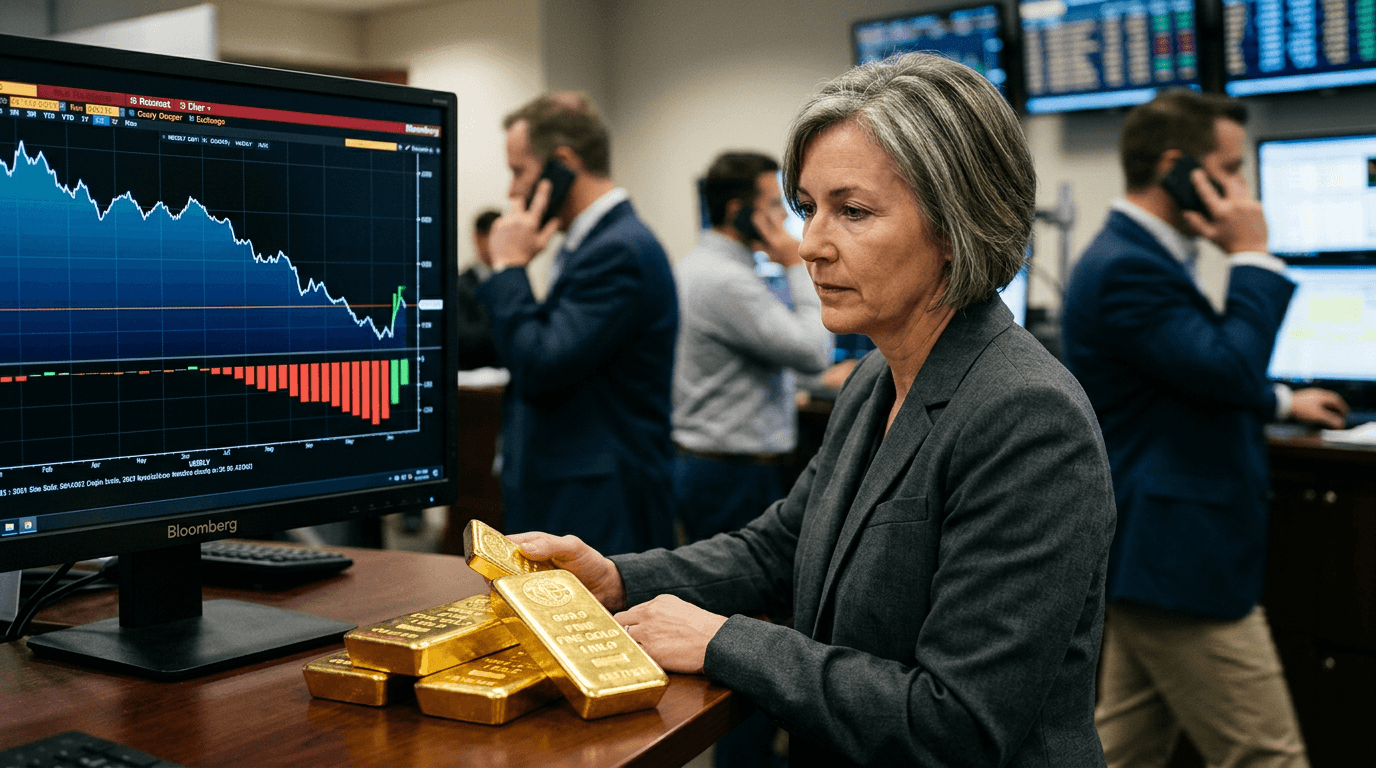
A Complex Week for Gold: Navigating the Markets in 2026
This week, the gold markets reveal a complex landscape, highlighting the intricate dynamics influencing precious metals pricing in 2026. Despite experiencing its first weekly decline in five weeks, gold continues to draw strength from persistent safe-haven demand as investors contend with escalating Middle East tensions and surging oil prices. This combination of short-term weakness and underlying resilience offers crucial insights for traders navigating today's environment.
Gold's Enduring Appeal Amid Short-Term Pressures
Gold's fundamental appeal as a risk-mitigation tool remains robust, even as short-term pressures arise. Recently, gold has become the go-to asset for those seeking refuge from equity volatility and currency instability. Central banks worldwide, particularly in China and India, have ramped up their gold purchases, moving away from dollar-denominated assets. This institutional demand forms a solid foundation for gold prices, suggesting temporary dips may present buying opportunities rather than indicate trend reversals.
Safe-Haven Demand Fuels Gold Appreciation
The surge in safe-haven buying reflects genuine concerns over global financial stability and geopolitical risks. The World Gold Council reported record gold demand in 2025, with total consumption surpassing 5,000 tonnes, largely driven by investment motives. Despite this week's decline, safe-haven flows continue to bolster demand. Geopolitical uncertainty acts as a catalyst, prompting both retail and institutional investors to shift their portfolios toward politically neutral and universally accepted assets.
ETF accumulation provides a compelling narrative. Western gold ETFs have absorbed around 500 tonnes since early 2025, surpassing historical patterns based on traditional interest rate models. U.S.-listed ETFs alone hold record levels nearing 2,019 tonnes, with over $280 billion in assets under management. This accessibility through ETFs has democratized precious metals investing, attracting retail participation previously absent from gold markets. As geopolitical tensions persist, this dynamic is likely to continue.
Understanding the Weekly Decline
The recent decline does not indicate a breakdown in gold's upward trajectory but rather reflects the natural volatility of commodity markets. Rising U.S. Treasury yields and a stronger dollar have created temporary headwinds that overwhelmed safe-haven buying pressure. These competing forces highlight the importance of distinguishing between structural trends and tactical price movements.
When evaluating gold's short-term weakness, context is vital. Price consolidation following a sustained rally is a healthy market dynamic, often preceding further appreciation. Central bank demand, projected to reach approximately 60 tonnes monthly through 2026, provides a safety net beneath any decline. This institutional support contrasts with speculative rallies, which are prone to rapid reversals. Durable structural demand reduces the risk of sharp selloffs.
Geopolitical Tensions and Oil Price Implications
Middle East tensions have introduced fresh uncertainty into global markets, manifesting through elevated oil prices, which remain above $110 per barrel. These dynamics have a dual impact on gold. First, escalating tensions boost safe-haven demand as investors recognize increased downside risks to equity portfolios. Second, higher oil prices heighten inflation concerns, which historically support gold valuations as investors seek inflation hedges.
The relationship between oil prices and gold is not always straightforward, yet current circumstances favor precious metals. When geopolitical risks drive up energy costs and undermine growth expectations, gold benefits from its dual role as both a safe-haven asset and an inflation hedge. This combination provides multiple demand drivers that can support prices even during periods of economic concern.
Strategic Considerations for Traders
In this market environment, a sophisticated approach to gold trading is essential. Short-term traders should view weekly declines within a broader uptrend as tactical opportunities rather than warning signs. Establishing positions around key support levels from previous price action enables traders to capitalize on safe-haven flows when risk sentiment deteriorates.
Long-term portfolio managers should consider current prices through the lens of structural demand. With central banks accumulating gold at projected rates and ETF accessibility continuing to attract retail capital, the environment favors maintaining positions through normal volatility. Goldman Sachs has raised its year-end 2026 gold price target to $5,400 per ounce, reflecting confidence among major market participants in sustained upside potential.
Risk management remains crucial. While safe-haven demand and central bank buying provide structural support, geopolitical developments can change unexpectedly. Traders should maintain disciplined position sizing and clearly defined stop-loss levels to navigate inevitable volatility.
Looking Ahead
Gold's weekly decline should not overshadow the strong fundamental tailwinds supporting prices. Safe-haven demand, central bank accumulation, and currency concerns create multiple support mechanisms absent in typical commodity rallies. As Middle East tensions persist and oil prices remain elevated, conditions favoring gold appreciation are likely to intensify. The convergence of geopolitical uncertainty, monetary policy dynamics, and structural institutional demand suggests the weekly pullback may ultimately represent a brief pause in a longer-term appreciation trend.
For traders monitoring precious metals, the key takeaway is clear: temporary weakness should not distract from the underlying strength of structural demand dynamics reshaping gold's role in global portfolios.