
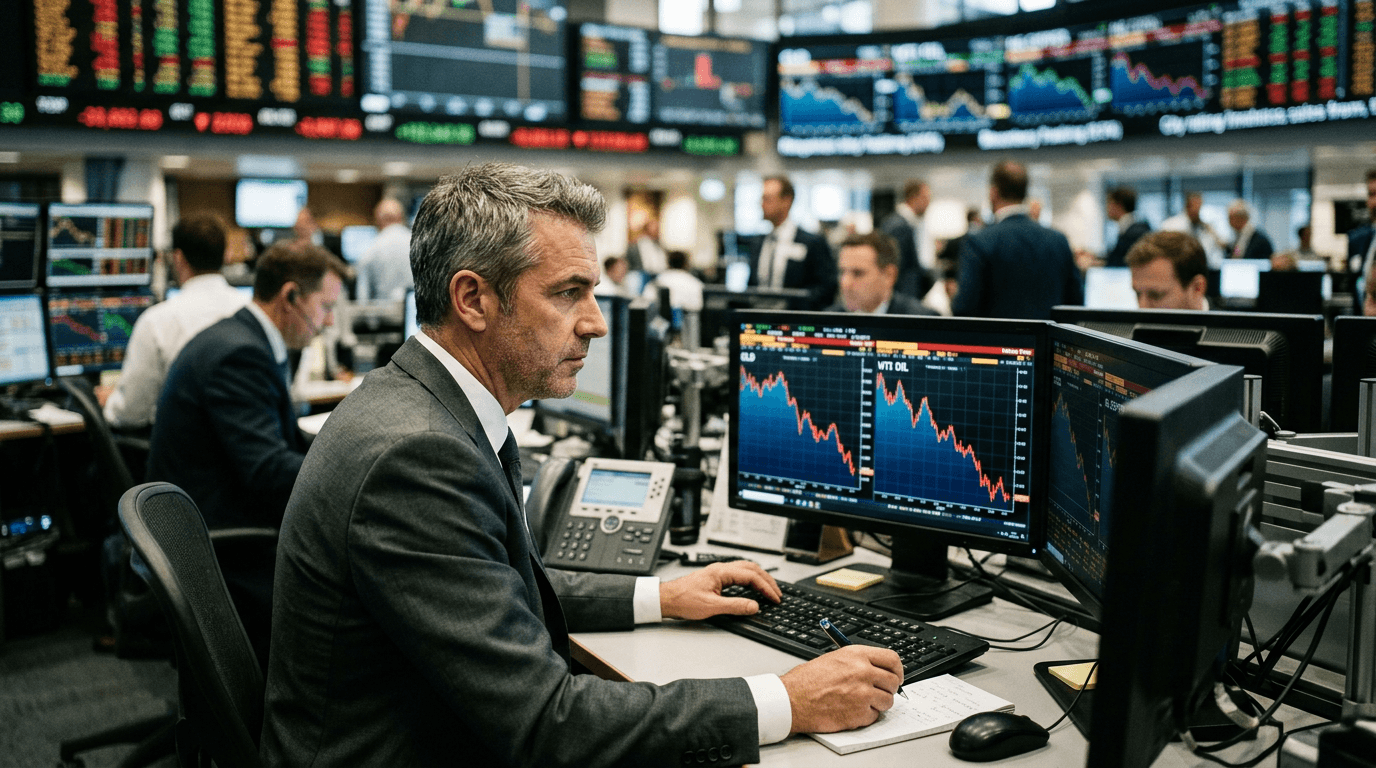
Gold and crude oil slipping in tandem is often more than a simple price move; it is a signal that global markets are reassessing risk and growth expectations. With gold, Brent crude, and copper all trading lower in the latest cross-asset snapshot, the message is clear: investors are leaning defensively, cutting exposure to risk-sensitive assets and reassessing macro assumptions[11]. For traders, this environment demands tighter risk controls, better scenario planning, and a sharper focus on correlations across asset classes.
Macro Backdrop: Why Commodities Are Softening
A synchronized move lower in gold, crude oil, and industrial metals typically reflects a blend of stronger dollar dynamics, shifting interest rate expectations, and concerns about global demand[2][9][11]. When macro sentiment turns cautious, flows often rotate out of cyclical assets—like energy and base metals—into cash or shorter-duration fixed income, dampening prices across the commodity complex[9][11]. At the same time, gold’s traditional role as a safe haven can be complicated by higher real yields and a firm dollar, both of which tend to pressure bullion even when geopolitical risks remain elevated[2][7].
Recent sessions have seen gold retreat as traders increase bets that major central banks will keep rates higher for longer to contain inflation, a pattern that has already driven multiple weekly losses for the metal this year[2][7][8]. Crude oil benchmarks, including Brent, have also pulled back as markets digest clues about future monetary policy and shifting supply expectations, with recent weekly declines underscoring how quickly sentiment can swing from scarcity fears to demand worries[13][14]. Copper edging lower despite longer-term bullish narratives is another sign that near-term macro concerns—growth uncertainty, geopolitical tensions, and policy risk—are outweighing optimism about structural demand[9][11].
For traders, the key takeaway is that this is not simply an idiosyncratic move in one commodity. It is a broad, sentiment-driven adjustment that can ripple across equities, credit, FX, and futures positioning.
What Lower Commodity Prices Signal For Risk Sentiment
When risk-sensitive commodities weaken together, it often reflects and reinforces a broader “risk-off” bias in global markets[9][11]. Oil is closely tied to expectations for real economic activity, so lower prices can signal that traders are less confident about future growth or that they see policy tightening as a drag on demand[13][14]. Copper, widely viewed as a proxy for industrial momentum, tends to soften when manufacturing, construction, and trade flows are expected to cool[9][10]. Gold’s decline, in turn, highlights the growing cost of holding non-yielding assets in a world of elevated interest rates[2][7][8].
This reset in commodities can feed back into equity sectors that depend on resource pricing, such as energy and materials, and can dampen inflation expectations if traders believe weaker demand will tame price pressures[13][14]. Lower inflation expectations may eventually alter rate paths, but the immediate effect is usually tighter financial conditions, higher uncertainty, and more cautious positioning across portfolios[2][7][11].
The practical takeaway: when several commodities move lower together, treat it as a sentiment indicator rather than isolated noise. It is a signal to revisit assumptions about growth, inflation, and policy, and to stress-test your trading strategies under more defensive scenarios.
Implications For Fx Traders
FX markets tend to respond quickly to shifts in commodity prices because they directly affect terms of trade and capital flows. A broad move lower in gold and oil typically supports currencies of importers while pressuring the currencies of export-dependent economies[11][13]. For example, sustained weakness in oil can weigh on commodity-linked FX such as CAD and NOK, while benefitting net importers that see their energy bills fall. Similarly, countries heavily exposed to metals exports can see their currencies soften when copper and other industrial metals decline[9][10][11].
At the same time, gold’s performance often interacts with the U.S. dollar and real yields. When gold prices fall in response to a stronger dollar and expectations of higher-for-longer rates, it reinforces the dollar’s role as the primary safe haven and funding currency[2][7][8]. This can amplify carry trades into higher-yielding currencies but also increases the risk of sharp reversals if risk sentiment deteriorates abruptly.
FX traders should focus on three practical steps in this environment:
1. Map commodity exposures to specific currencies and monitor those pairs for amplified volatility. 2. Track the interaction between gold, real yields, and the dollar to anticipate shifts in risk appetite. 3. Use options or structured trades to hedge tail risks, particularly for commodity-linked FX.
How Futures Traders Can Adapt To A Cautious Tone
For futures traders, a cautious macro backdrop with commodities moving lower invites a reassessment of leverage, holding periods, and hedging strategies. Lower prices often come with elevated intraday volatility and sharper responses to data releases or policy headlines[13][14]. Trend-following systems may struggle if markets oscillate within choppy ranges, making position sizing and risk budgeting even more critical.
One key adjustment is to pay closer attention to cross-asset signals. Equity index futures, bond futures, and commodity futures are increasingly driven by the same macro factors—rate expectations, growth data, and geopolitical news[9][11][13]. Monitoring correlations can help traders avoid unintended concentration risk, such as being long cyclical assets across multiple products when sentiment turns negative.
Practical takeaways for futures traders include
1. Reduce gross leverage when multiple risk assets signal caution. 2. Use volatility-based position sizing rather than fixed contract counts. 3. Incorporate macro event calendars into trading plans to avoid being overexposed during key releases. 4. Consider relative-value trades (e.g., long one commodity, short another) when broad directionality is unclear but spreads offer opportunity.
Role Of Simulated Finance: Practicing Under Stress
Simulated Finance (SimFi) platforms such as E8 Markets give traders a controlled environment to practice navigating exactly this kind of cautious macro backdrop. Because gold, crude oil, and copper are all sensitive to changes in sentiment, they provide rich case studies for building and testing multi-asset strategies without putting real capital at risk[9][11][13]. In simulated markets, traders can experiment with how commodity shocks affect FX pairs, index futures, and volatility instruments, and refine their risk management frameworks accordingly.
SimFi environments allow traders to
1. Run scenario analyses where commodities drop simultaneously and observe portfolio effects. 2. Test hedging strategies, such as using equity or bond futures to offset commodity exposure. 3. Develop rules for adjusting leverage and exposure when sentiment indicators—like broad commodity weakness—flash caution. 4. Build and iterate playbooks for different macro regimes, from risk-on rallies to risk-off drawdowns.
By practicing in a simulated setting, traders can convert abstract macro concepts into concrete, rules-based behavior, improving discipline when live markets turn volatile.
Conclusion: Turning Caution Into A Plan
A day when gold, crude oil, and copper all move lower is a clear reminder that sentiment, not just fundamentals, drives markets in the short term[9][11][13]. For traders across FX, commodities, and futures, the correct response is not panic but preparation: reassess exposures, tighten risk management, and pay closer attention to cross-asset signals.
Using simulated environments to rehearse these scenarios can turn a cautious macro tone into a learning opportunity. By treating broad commodity weakness as a structured stress test rather than a surprise, traders can build more resilient strategies—and be better positioned for the next inflection point in global markets.