
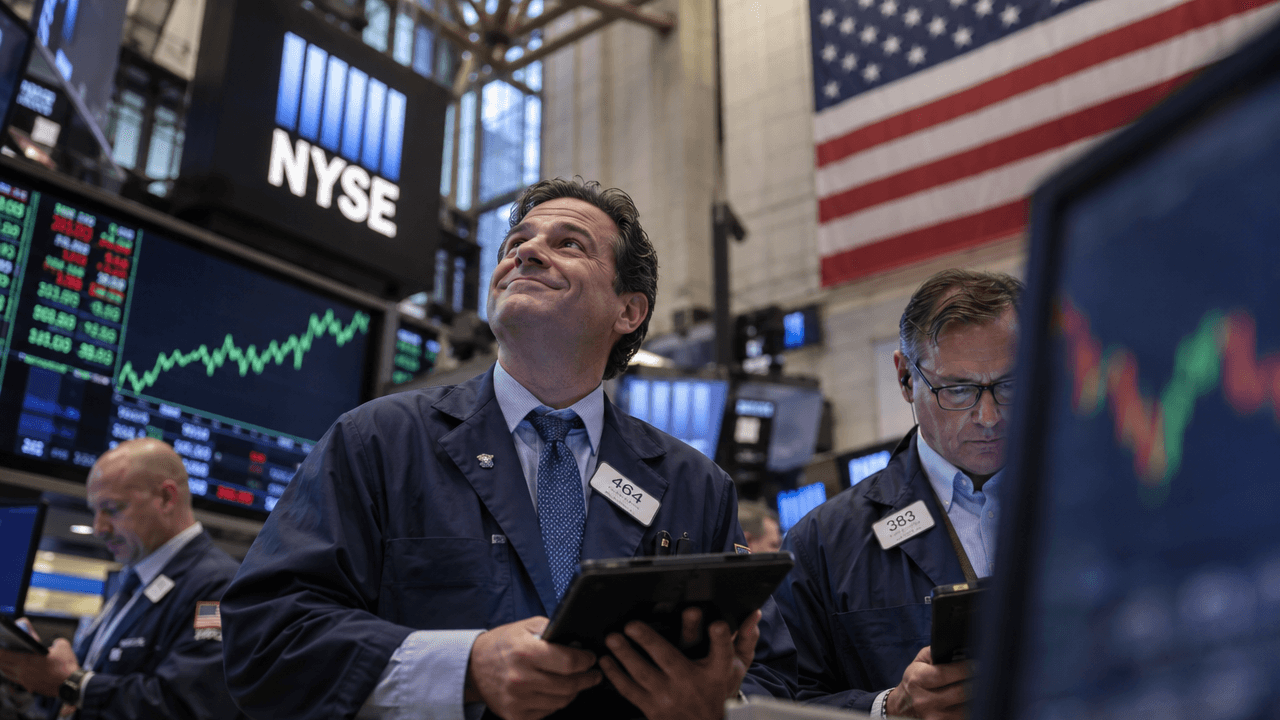
U.S. stock futures were steady to modestly higher on Friday as investors attempted to regain their footing after a turbulent technology-led sell-off. The early recovery on Wall Street showed that buyers were still willing to step in, but the muted futures reaction also revealed how quickly confidence can change when inflation, interest rates, and artificial-intelligence valuations collide.
S&P 500 futures were little changed, while Nasdaq 100 futures edged slightly higher in premarket trading. The Nasdaq had reversed steep intraday losses during the previous session, yet AI-related shares remained under pressure. Chipmaker weakness and concerns about the cost of financing large AI infrastructure projects continued to limit enthusiasm for technology stocks. [3][5]
THE MARKET’S ROTATION BENEATH THE SURFACE
The most important development was not simply whether the major indexes rose or fell. It was the rotation taking place underneath the headline numbers.
Investors moved away from some of the market’s most expensive technology and AI-linked shares and sought opportunities in small caps, defensive industries, and other non-technology assets. This shift reflects a broader debate about whether the earnings and cash flows generated by AI will ultimately justify the enormous capital being committed to data centers, chips, and related infrastructure.
When a market is led by a narrow group of high-growth companies, even a modest change in interest-rate expectations can produce an outsized reaction. Companies whose profits are expected far in the future are particularly sensitive to higher borrowing costs because those future cash flows become less valuable when discounted at elevated rates.
For traders, the lesson is clear: index performance can conceal significant sector-level stress. A stable S&P 500 does not necessarily mean market conditions are calm. Monitoring breadth, sector leadership, and the relative performance of technology, small caps, and defensive groups can provide a more complete picture.
Treasury Yields Remain The Key Transmission Channel
Bond markets played a major role in Thursday’s recovery. The benchmark 10-year Treasury yield fell more than 10 basis points at one point to roughly 5.09%, while the 30-year yield also declined sharply. Investors initially moved toward the perceived safety of government bonds as technology shares sold off. [1]
Lower yields can support stock valuations by reducing the discount rate applied to future corporate earnings. They can also make bonds relatively less attractive compared with equities. That relationship helped stabilize stocks during the session.
However, the bond rally later faded. On Friday, the 10-year yield hovered near 5.08%, while the 30-year yield moved slightly higher and the two-year yield remained near 4.73%. [3] The reversal matters because it shows that investors have not abandoned concerns about inflation or the path of Federal Reserve policy.
Recent wholesale inflation data came in stronger than expected, reinforcing the possibility that interest rates may remain restrictive for longer. Fed funds futures were pricing in at least one additional quarter-point rate increase by year-end, according to market commentary. [1] If yields rise again, technology and other long-duration growth stocks could face renewed pressure.
What Traders Should Watch Next
The next phase of trading will likely be driven by the interaction between inflation data, Treasury yields, and corporate earnings. A decline in yields could give growth stocks temporary relief, but a sustained technology recovery requires more than a single favorable bond-market session.
Investors will also be watching whether the rotation into small caps can continue. Smaller companies often benefit when economic growth remains firm and financing conditions improve. Yet they can be vulnerable when borrowing costs rise because many smaller businesses have less access to capital and thinner financial cushions.
This makes earnings quality increasingly important. Traders should distinguish between companies that are converting AI investment into revenue, earnings, and free cash flow and companies whose valuations depend mainly on projected future demand. Highly leveraged businesses may face additional pressure if debt costs remain elevated.
Market participants should also avoid interpreting every sharp reversal as a confirmed trend. Thursday’s recovery demonstrated that buyers remain active, but it did not eliminate the underlying risks. A useful approach is to define levels, position sizes, and exit points before entering a trade rather than reacting emotionally to every intraday headline.
Practical Takeaways For Simfi Traders
For SimFi traders, this environment offers a valuable opportunity to practice disciplined decision-making without confusing market movement with certainty.
First, track the 10-year Treasury yield alongside the Nasdaq and S&P 500. If yields rise while technology stocks weaken, the relationship may indicate that interest-rate pressure is driving the move. If yields fall and growth stocks recover, the market may be responding to improved valuation conditions rather than a change in company fundamentals.
Second, compare index direction with market breadth. A rising index supported by only a few mega-cap stocks can be less durable than a gain supported by multiple sectors and a larger number of advancing companies.
Third, plan for volatility around inflation releases, Federal Reserve communication, and major technology earnings. Use smaller simulated positions when uncertainty is elevated, and record whether each trade was based on price action, macroeconomic expectations, or a specific catalyst.
Finally, study the difference between a reversal and a trend change. One strong session can interrupt a sell-off, but confirmation generally requires follow-through, improving breadth, and a more stable bond market.
Conclusion
U.S. futures are stabilizing, but Friday’s cautious tone suggests that Wall Street has not fully moved past the technology volatility. The recovery in stocks, the rotation into non-technology assets, and the movement in Treasury yields all point to a market reassessing risk rather than simply returning to business as usual.
For investors and SimFi traders, the central message is to look beyond the index close. Interest rates, valuation, earnings quality, and market breadth are now tightly connected. The traders best prepared for the next move will be those who measure these relationships objectively, manage risk consistently, and remain flexible as leadership shifts.