
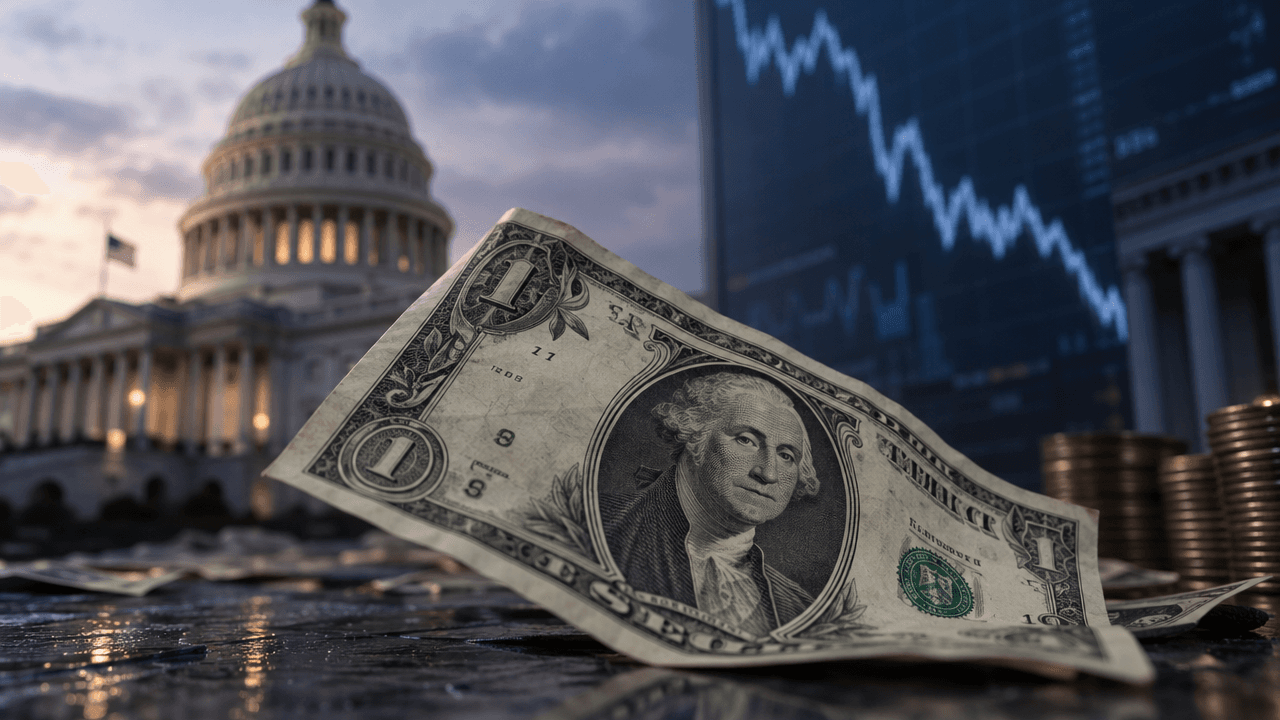
The U.S. dollar weakened after Democrats swept both chambers of Congress, as traders reassessed the outlook for fiscal spending, regulation, economic growth and Federal Reserve policy. The immediate market reaction was clear: Treasury yields declined, the dollar fell against major currencies and investors began pricing in tighter limits on the administration’s economic agenda. The dollar index dropped to a one-month low, while the benchmark 10-year Treasury yield declined toward 4.92%. [1][4]
The move illustrates how quickly political developments can influence foreign exchange markets. Currency prices do not respond only to election results themselves. They respond to what those results imply for interest rates, government borrowing, economic growth, inflation and investor demand for U.S. assets.
Why The Dollar Fell
The dollar’s recent strength had been supported partly by expectations of continued U.S. economic resilience and potentially higher interest rates. A Democratic-controlled Congress, however, could make it more difficult for the administration to pass large tax cuts, expansive spending plans or other measures that would increase fiscal stimulus.
Markets interpreted that possibility as a reduction in future government borrowing and a potential moderation in economic growth. Less fiscal stimulus could reduce upward pressure on inflation and Treasury yields. When U.S. yields fall relative to those available elsewhere, international investors may have less incentive to hold dollar-denominated assets.
That relationship helps explain the simultaneous decline in the dollar and Treasury yields. The two-year Treasury yield, which is particularly sensitive to expectations for Federal Reserve policy, fell to a two-month low during the session before recovering modestly. [7] The 10-year yield also declined across the curve, reinforcing the view that investors were reassessing the outlook for fiscal expansion and interest rates.
The currency reaction was broad rather than limited to a single exchange rate. The dollar weakened against all major developed-market currencies, while the euro rose to approximately $1.133 and the pound advanced to around $1.348. [4] Such broad-based weakness suggests that the market was responding to a shift in the perceived U.S. policy outlook rather than to an isolated technical move.
Fiscal Policy And Treasury Supply
One of the most important market questions is whether congressional control will constrain the growth of the federal deficit. Investors have been concerned about the long-term supply of Treasury debt and the possibility that larger deficits could require the government to issue more bonds.
A Democratic sweep may reduce the likelihood of additional major tax cuts or spending increases. Political gridlock can be economically frustrating, but bond investors may view it as a form of fiscal restraint. If the government borrows less than previously expected, Treasury supply could become less burdensome, supporting bond prices and pushing yields lower.
The Treasury Department also adjusted its guidance on future note and bond sales, raising expectations that issuance of longer-dated debt could be reduced in 2027. That development added to the rally in Treasuries, with 30-year yields falling by roughly two basis points to about 5.31%. [2]
Lower long-term yields can remove an important source of support for the dollar. Global investors often buy U.S. currency when they expect attractive returns from Treasuries. If yields decline while political uncertainty remains elevated, the dollar’s relative appeal can fade.
Regulation, Ai And The Growth Outlook
Fiscal policy is only one part of the market response. Traders are also considering possible changes to regulation, particularly in technology and artificial intelligence.
Some analysts argued that the election result could lead to greater scrutiny of AI-related investment and business activity. If new rules slow the pace of investment or reduce expectations for productivity gains, investors may lower their forecasts for U.S. economic growth. A slower growth outlook could further reduce expectations for higher interest rates and place additional pressure on the dollar. [1][14]
This interpretation is more specific than a simple “risk-off” reaction. U.S. stocks and bonds rose in parts of the session even as the dollar declined, suggesting that investors were not necessarily abandoning American markets altogether. Instead, they were rotating between assets and sectors based on the expected policy consequences.
Technology shares and companies closely linked to the administration’s economic agenda could face greater volatility. Meanwhile, businesses that benefit from lower interest rates or reduced borrowing costs may receive support. The market’s next task will be determining whether the election changes long-term economic expectations or simply produces a short-term adjustment.
What Traders Should Watch Next
The election result does not immediately change monetary policy. The Federal Reserve still controls the federal funds rate, and economic data will remain central to its decisions. Inflation reports, employment figures, consumer spending and productivity data could either reinforce or challenge the market’s initial interpretation.
Traders should also monitor Treasury auctions, congressional negotiations and official statements from the administration and Federal Reserve. A failure to pass major spending measures could support bonds and weigh on the dollar. Conversely, signs of bipartisan agreement on large programs or evidence of stronger-than-expected growth could push yields and the dollar higher again.
For currency traders, the most important levels may be found in the dollar index and major pairs such as EUR/USD, GBP/USD and USD/JPY. However, technical signals should be combined with an understanding of interest-rate differentials and policy expectations. A headline-driven move can reverse quickly if subsequent data points to persistent inflation or stronger U.S. growth.
Conclusion
The dollar’s decline after the Democratic sweep reflects a changing expectation for the U.S. policy mix. Markets are pricing in less fiscal expansion, potentially lower Treasury issuance and a greater possibility that regulation could slow parts of the growth outlook. Those expectations have contributed to lower Treasury yields and reduced demand for the greenback.
The initial reaction is significant, but it is not a final verdict on the dollar. The currency’s next direction will depend on whether Congress limits fiscal expansion, how regulation evolves and whether U.S. economic data continues to justify relatively high interest rates. For SimFi traders, the event offers a valuable lesson: political news matters most when it changes the expected path of yields, growth and capital flows.