
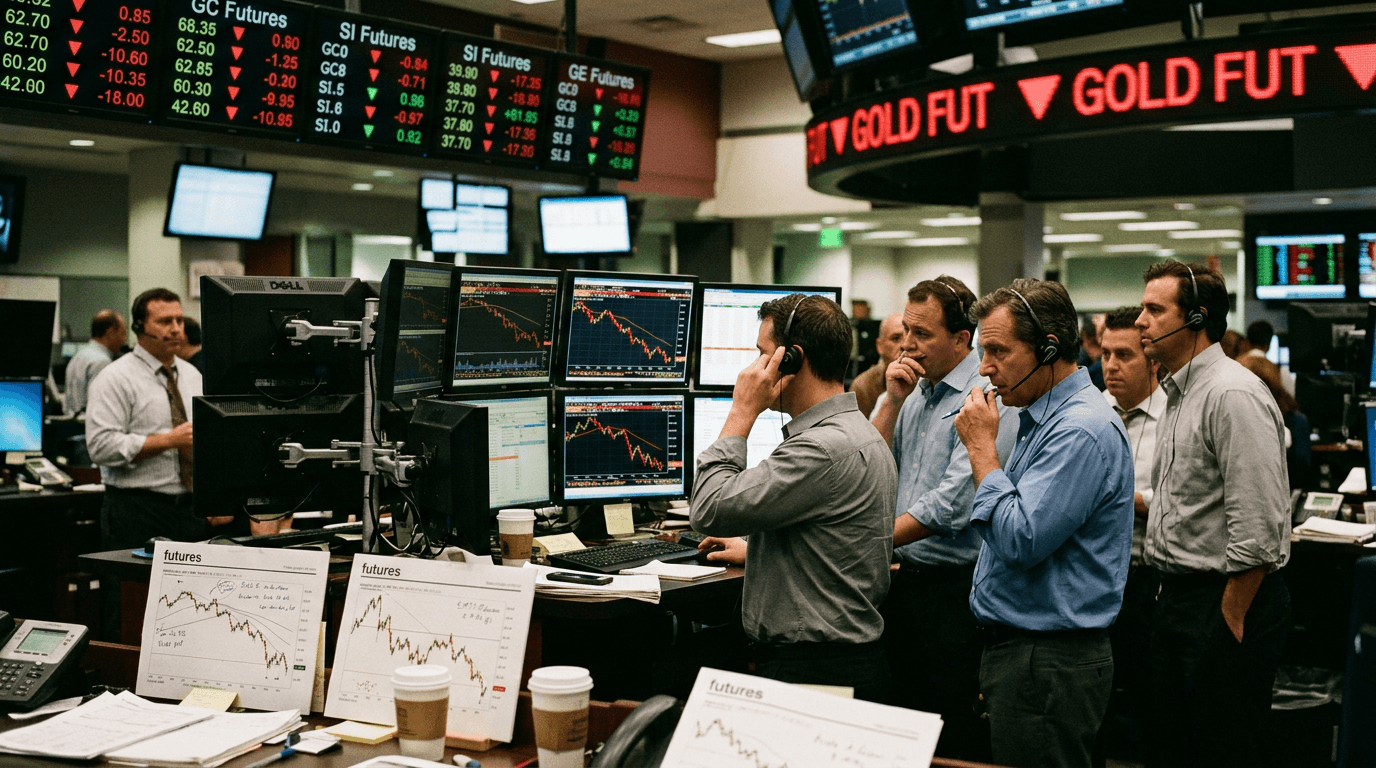
Gold and silver futures came under heavy selling pressure as a resurgent U.S. dollar and renewed interest-rate fears eroded demand for non-yielding assets, triggering sharp intraday losses across the precious metals complex.[2][4][10][11] COMEX gold futures dropped toward the $4,000 per ounce mark, while silver futures saw outsized percentage declines, reinforcing how quickly sentiment can turn when the macro backdrop shifts against metals.[5][10][14]
Market Move: Precious Metals Under Pressure
Recent trading saw gold record declines in the 1.5–2% range, with spot prices slipping and U.S. futures contracts registering similar pullbacks as investors reassessed the path of Federal Reserve policy.[3][4][5] Silver, traditionally more volatile than gold, fell even harder, with futures dropping nearly $2 per ounce from recent levels and posting some of the steepest single-day losses in the complex.[8][10][14]
The latest move builds on a series of downside sessions in June and July, where gold and silver weakened whenever rate hike expectations intensified or the dollar pushed to new short-term highs.[1][2][7][10] In one notable earlier episode, silver futures plunged over 30% in a single day, highlighting the potential for extreme moves when macro narratives flip and liquidity pockets thin out.[14] For traders, these historical swings are a reminder that price action in precious metals can quickly overshoot as positioning is unwound.
The sell-off did not occur in isolation; strength in the dollar and higher-rate expectations also weighed on broader commodities, particularly assets typically used as inflation hedges.[9][10][15] When gold and silver retreat sharply, some funds and macro traders reassess cross-asset hedging strategies, shifting exposures between metals, energy, and inflation-linked securities. That dynamic can amplify intraday volatility as correlations temporarily spike across futures markets.[9][15]
Why A Stronger Dollar Hurts Gold And Silver
Gold and silver are priced in U.S. dollars globally, so a stronger dollar mechanically makes them more expensive for investors operating in other currencies.[5][7][10] When the dollar index pushes toward one-month or one-year peaks on the back of hawkish Fed expectations, demand from non-U.S. buyers often softens, removing an important pillar of support from the market.[2][7][13]
At the same time, rising interest-rate expectations lift yields on cash and short-term bonds, directly competing with non-yielding assets like gold and silver.[2][4][11][15] If investors can earn higher nominal and real yields with relatively low risk in government or high-grade corporate bonds, the opportunity cost of holding metals purely as a store of value rises. This shift tends to trigger reallocations out of precious metals, particularly among systematic and macro-balanced portfolios.
The combination of a firm dollar and higher yields also affects leveraged futures traders, who must fund positions and manage margin requirements.[5][10] As funding costs rise, carrying a long gold or silver futures position becomes more expensive, especially if volatility increases margin demands at clearing houses. This can lead to forced position reductions, accelerating downside momentum.
For E8 Markets users, understanding this dollar channel is essential: in simulated environments, tracking the relationship between dollar strength, yields, and precious metal prices helps build intuition around macro-driven correlation regimes. SimFi trading offers a sandbox to test how different hedging approaches perform when the dollar breaks out or reverses.
Rate Fears And The Fed Policy Narrative
The latest decline in gold and silver futures coincided with a shift in market expectations toward a more hawkish Federal Reserve, with traders increasingly pricing the risk of additional rate hikes.[2][4][5][15] Commentary from policymakers, combined with persistent concerns about inflation and strong labor data, has kept the possibility of higher-for-longer rates on the table.[5][6][11]
Upcoming Fed meetings have become focal points for metals markets, with gold and silver often softening ahead of decisions when the dollar trades near recent highs.[7][10][13] Even when the Fed holds rates steady, a hawkish tone in the statement or press conference can reinforce expectations of future tightening, which in turn pressures precious metals.[15] This pattern has repeated several times in recent months as guidance has emphasized vigilance on inflation.
Energy-driven inflation risks add another layer to the story. Episodes of heightened tensions in key regions and rising oil prices have pushed markets to factor in potential second-round inflation effects, which may prompt a firmer policy stance.[6][9] Ironically, while inflation fears might seem supportive for gold as a hedge, the prospect of aggressive rate responses has, at times, overshadowed that benefit, weighing on prices.[5][9]
For futures traders, this policy narrative underscores the importance of monitoring not only headline decisions but also expectations embedded in interest-rate futures and swap curves. Changes in implied policy paths can precede moves in gold and silver, providing early signals for risk management.
Implications For Inflation Hedging And Commodity Positioning
Today’s sharp slide in gold and silver has direct implications for how investors think about inflation hedging.[9][10][15] When real yields rise and metals fall, some portfolios may choose to lean more on inflation-linked bonds, commodity baskets, or active option structures rather than outright long positions in gold or silver futures.[9][15]
The move in precious metals also feeds into cross-commodity sentiment. If gold and silver are selling off on rate fears, traders may question whether other inflation-sensitive assets—such as industrial metals or energy futures—are priced appropriately for the evolving macro backdrop.[9][10] This can trigger rebalancing across futures curves, with spreads and relative-value trades becoming more attractive as outright directional conviction decreases.
Simulated traders on platforms like E8 Markets can use this environment to explore diversified hedging frameworks that go beyond a single asset.[14][15] For example, simulated strategies might pair gold futures with positions in oil, inflation swaps, or equity index futures to model how multi-asset hedges behave under different combinations of dollar strength and policy outcomes. Learning to think in terms of portfolios rather than isolated trades is a critical step toward more robust risk management.
Practical Takeaways For Futures And Simfi Traders
First, treat gold and silver futures as macro instruments, not just commodity plays. Price action is heavily driven by the dollar, rate expectations, and global risk sentiment, so any trading plan should start with a view on these drivers rather than purely technical levels.
Second, build scenarios around upcoming macro events. In a SimFi environment, traders can predefine paths such as “stronger dollar and hawkish Fed,” “dovish surprise,” or “inflation shock with policy lag,” then test how gold and silver futures, along with correlated assets, might respond. This approach helps stress-test strategies before committing real capital.
Third, pay attention to leverage and position sizing. The recent slide shows how quickly metals can move when positioning is crowded and the macro narrative flips. Using simulated accounts to practice disciplined sizing, dynamic stop placement, and options-based hedges can help traders avoid outsized drawdowns when volatility spikes.
Finally, remember that sharp moves often create both risks and opportunities. For those looking to trade reversals or mean reversion, simulated environments are ideal for experimenting with entry and exit rules, volatility filters, and confirmation signals across time frames. Over time, this experimentation builds a playbook that can be adapted when similar macro episodes recur.
Conclusion
The sharp drop in gold and silver futures underlines how sensitive precious metals remain to the twin forces of dollar strength and interest-rate expectations.[2][4][10][11] As the market continues to debate the path of inflation and central bank policy, metals are likely to stay reactive to every shift in guidance and data. For traders and SimFi participants alike, the lesson is clear: understanding macro drivers, managing leverage, and thinking in portfolio terms are essential to navigating the next leg of the precious metals cycle.