
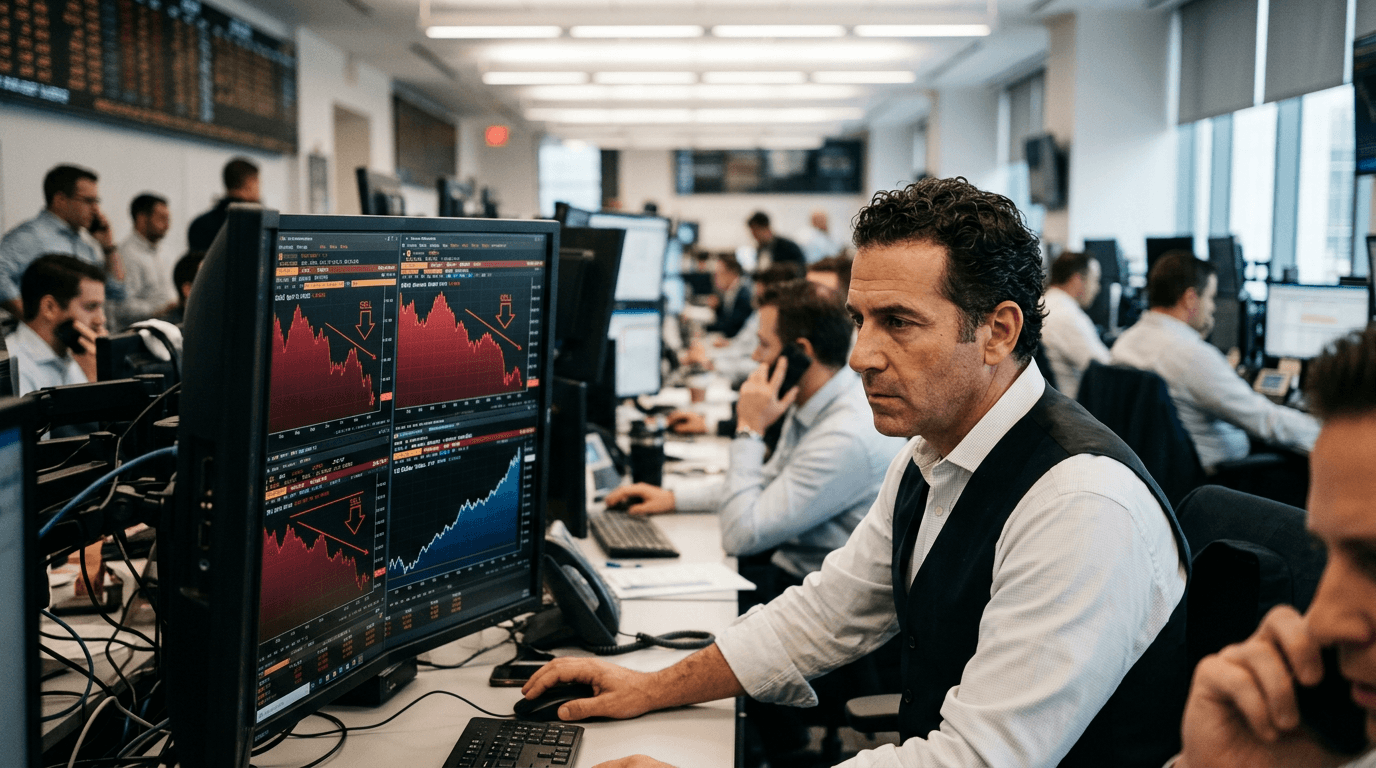
Gold and silver are back under pressure as traders revive expectations of further US rate hikes and bid the dollar higher, capping recent gains in precious metals.[5][8] After a strong run-up driven by safe-haven demand and momentum buying, the latest pullback reflects profit-taking and a shift toward cash and short-term fixed income as real yield expectations climb.[4][5] For active traders, the move is less a surprise and more a reminder that in the current regime, central bank expectations and dollar dynamics often matter more than headlines.
WHAT’S DRIVING THE PULLBACK IN GOLD AND SILVER
The immediate trigger for the retreat is a renewed reassessment of the Federal Reserve’s path, with markets once again pricing in the risk that rates could stay higher for longer—or even rise again—if inflation data re-accelerates.[5][8] As those odds increase, the opportunity cost of holding non-yielding assets like gold and silver rises, prompting some investors to lock in profits and rotate into short-duration bonds and money market instruments.[4][5] At the same time, a stronger US dollar is weighing on metals by making them more expensive in other currencies, dampening international demand.[3][6] The result is a synchronized pressure on both spot prices and derivatives such as futures and metals-linked ETFs, which tend to amplify underlying moves as flows reverse.[4][6]
This is not the first time the combination of rate anxiety and a firmer dollar has knocked precious metals off recent highs. Earlier episodes this year saw similar corrections, with gold and silver giving back sizable portions of prior rallies when the dollar strengthened and yields rose.[6][7][10] The pattern reinforces a key lesson: in the current macro environment, metals traders ignore the rates and FX backdrop at their peril.
Why Rate-hike Fears Matter So Much For Precious Metals
Gold and silver are often thought of as pure inflation hedges, but in practice they are highly sensitive to expectations for real interest rates—that is, nominal yields minus inflation.[3][9] When real yields move higher, interest-bearing assets such as Treasury bills and short-term bonds become relatively more attractive compared with non-yielding gold and silver, which offer no coupon or dividend.[5][8] This shift in relative appeal can trigger systematic selling from investors who allocate based on models that compare real yields to metals valuations.[4][9] As expectations for another Fed move tick up, those models increasingly point toward higher discount rates, pressuring metals prices.
The forward path of policy also feeds directly into market psychology. If traders believe the Fed might raise rates to combat persistent inflation, they may anticipate tighter financial conditions, a stronger dollar, and higher real yields—all negative factors for metals in the near term.[5][14] Conversely, when markets sense an approaching rate-cut cycle, gold and silver often catch a bid as investors position for falling yields and potential currency debasement.[3][9] Understanding where the market sits along this expectations spectrum is critical for timing metals trades.
Dollar Strength: The Other Side Of The Trade
The US dollar is the second major driver behind the current pullback. Precious metals are priced globally in dollars, so when the dollar strengthens, it takes fewer units of metal to equal the same amount of currency, mechanically pushing dollar-denominated metal prices lower.[3][15] At the same time, a stronger dollar makes gold and silver more expensive for buyers whose incomes are in other currencies, which can dampen physical demand from key importing regions.[3][9] Historically, the relationship is clear: periods of pronounced dollar strength often coincide with softer metals prices, while sustained dollar weakness tends to support broad metals rallies.[3][9][12]
Recent price action in other asset classes reinforces this dynamic. As the dollar index has firmed, other commodities and risk assets have also faced headwinds, particularly those that benefited from earlier expectations of looser policy.[6][9] For metals traders, monitoring the dollar is not just a macro curiosity; it is a practical input into trade selection, sizing, and risk management.
How Traders Are Positioning: From Momentum To Mean Reversion
The latest slide in gold and silver has prompted a notable rotation in positioning. Some trend-following players who entered late in the rally are being forced to cut exposure as technical levels break and volatility spikes, accelerating the move lower.[4][10] Others are proactively taking profits, reallocating into short-term fixed income to capture higher yields with lower perceived risk.[4][5] On the other side, value-oriented traders and some institutional desks are watching for oversold signals and key support zones to consider “buy-the-dip” strategies, particularly if they believe the longer-term case for metals remains intact.[4]
Derivatives markets offer a window into sentiment. Rising open interest in short-dated options and futures around key event dates—such as upcoming Fed meetings or major inflation releases—suggests traders are increasingly using metals for tactical macro bets rather than long-term hedges.[1][8] This shift can both magnify short-term swings and create opportunities for intraday and swing traders who understand how flows around options expiries and positioning squeezes can move prices.
Practical Takeaways For Simulated And Live Traders
For traders using a simulated finance environment, this episode is a rich case study in macro-driven volatility. One practical exercise is to map recent metals moves against changes in Fed funds futures, Treasury yields, and the dollar index to see how closely price action has tracked shifting rate expectations.[5][8][9] Another is to test different strategies—trend-following, mean-reversion, or options hedging—across past periods when rate-hike fears and dollar strength dominated, and compare performance and drawdowns.
Risk management deserves particular focus. Simulated trading offers a low-pressure setting to experiment with position sizing rules tied to volatility, wider or tighter stop placements depending on macro event risk, and diversification across metals timeframes (for example, combining longer-term swing positions with shorter-term intraday trades). Practicing how to reduce exposure ahead of major central bank decisions, or how to gradually scale into a high-conviction view instead of going all-in at once, can build habits that translate directly to real capital.
Conclusion: Turn Volatility Into A Learning Edge
The latest retreat in gold and silver is a reminder that even in strong secular uptrends, macro headwinds like renewed rate-hike fears and dollar strength can trigger sharp, sudden reversals.[5][6][8] For traders, the key is not predicting every Fed move, but understanding how shifts in policy expectations and the currency backdrop feed into metals pricing. By systematically tracking real yields, the dollar, and positioning data—and by rehearsing responses in a simulated environment—traders can turn episodes of volatility from sources of stress into sources of insight.
Ultimately, gold and silver will continue to play a central role in portfolios as hedges, diversifiers, and trading instruments. What changes from cycle to cycle is the macro narrative and the speed at which sentiment shifts. Traders who stay focused on the interplay between rates, the dollar, and metals—and who practice robust risk management—will be better positioned not only to survive these rotations, but to capitalize on them when opportunity emerges.