
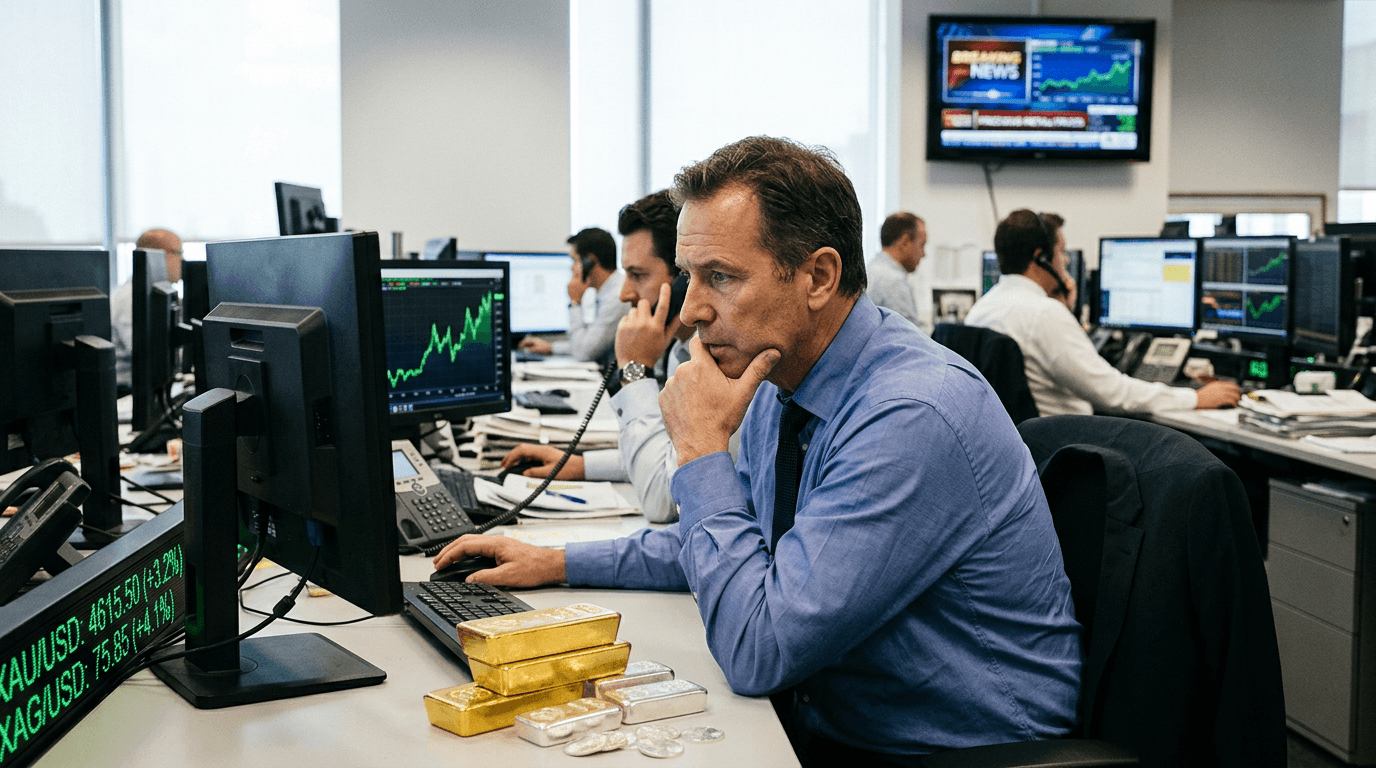
Gold has surged past $4,600 per ounce to reach fresh all-time highs, marking another significant milestone in the precious metal's impressive rally. This breakthrough reflects a powerful convergence of factors that are reshaping market dynamics and investor sentiment across global financial markets. As spot gold climbs toward $4,650 and silver follows with strength above $75.70, understanding the drivers behind this precious metals resurgence is essential for traders looking to navigate the current environment.
Understanding Safe-haven Demand
The primary catalyst for gold's ascent is the classic safe-haven trade. When uncertainty permeates financial markets, investors pivot toward assets perceived as stores of value that maintain purchasing power regardless of economic conditions. Gold, with its millennia-spanning history as wealth insurance, remains the ultimate expression of this sentiment. The current rally demonstrates that despite digitalization and alternative investments, precious metals continue to fulfill their traditional role during periods of financial or geopolitical stress. Unlike government bonds or equities, gold generates no yield, yet its capital appreciation during uncertain times often exceeds the opportunity cost of holding a non-yielding asset. This paradox highlights how fear and protective instinct can override rational return calculations in investor decision-making.
Federal Reserve Concerns And Monetary Policy Uncertainty
One of the most significant drivers of recent gold strength is the erosion of confidence in central bank independence. Reports that the Trump administration threatened Federal Reserve Chairman Jerome Powell with criminal indictment sent shockwaves through markets and accelerated safe-haven flows. This development strikes at a fundamental pillar of modern monetary systems—the expectation that central banks operate free from political interference. When investors question the integrity of monetary policy frameworks, they lose confidence in fiat currency stability. Gold becomes attractive precisely because it operates outside political systems and cannot be devalued through policy decisions. The broader implications extend beyond headline news; they challenge assumptions about interest rate trajectories and future inflation dynamics. If the Federal Reserve's independence is compromised, traditional monetary policy tools become less reliable, and inflation hedging becomes more urgent for portfolio managers.
Weakening Dollar Dynamics
The US Dollar's sustained weakness against a basket of global currencies provides additional tailwinds for gold prices. This relationship operates in multiple directions simultaneously. A weaker dollar makes gold cheaper for international buyers using other currencies, expanding the pool of potential purchasers and boosting demand. Conversely, dollar strength typically attracts capital into dollar-denominated assets, reducing gold demand. The current dollar decline signals that global investors are moving capital away from US-denominated investments, preferring the stability associated with precious metals. Market observers note that the weak dollar combined with economic uncertainty suggests investors anticipate further currency depreciation. For traders, this creates a self-reinforcing cycle where dollar weakness feeds gold demand, which further supports gold prices while pressuring the dollar.
Geopolitical Tensions And Iran Concerns
Beyond monetary policy, escalating tensions involving Iran continue to elevate geopolitical risk premiums. Unresolved geopolitical conflicts create headline risk that can trigger sudden market disruptions. Even mixed truce signals fail to eliminate the underlying tensions entirely, keeping investors cautious. Historically, geopolitical crises provide powerful support for precious metals as market participants seek protection against the unpredictable outcomes of international conflicts. The combination of political uncertainty at home and instability abroad creates a perfect environment for precious metals appreciation.
Implications For Traders And Investors
The convergence of these factors suggests that gold's strength rests on multiple pillars rather than a single catalyst. This multi-factor support provides durability to the uptrend, though it also means the trend could reverse quickly if any major catalyst shifts. Traders should recognize that extreme valuations often precede significant corrections, even in bull markets. Silver's outperformance, with gains above $75.70, suggests industrial demand remains robust alongside safe-haven positioning. This strength across both precious metals indicates broad-based commodity sector strength rather than isolated gold speculation.
For portfolio managers, the current environment warrants serious consideration of precious metals allocation. While gold's record prices might seem like a reason to reduce exposure, the underlying drivers—monetary policy concerns, dollar weakness, and geopolitical risks—show no signs of abating. The question becomes not whether gold belongs in portfolios, but in what allocation sizes given current valuations.
Takeaways For Market Participants
Traders should monitor Federal Reserve communications closely, watching for any policy shifts that could reduce safe-haven demand. Currency markets deserve equal attention, as dollar stabilization could pressure gold prices. Finally, geopolitical developments warrant daily review, as any significant de-escalation could trigger rapid profit-taking.
The current gold advance reflects genuine macroeconomic concerns rather than speculative excess. This distinction matters significantly for determining whether current prices represent sustainable levels or exhaustion points ripe for correction.
---