
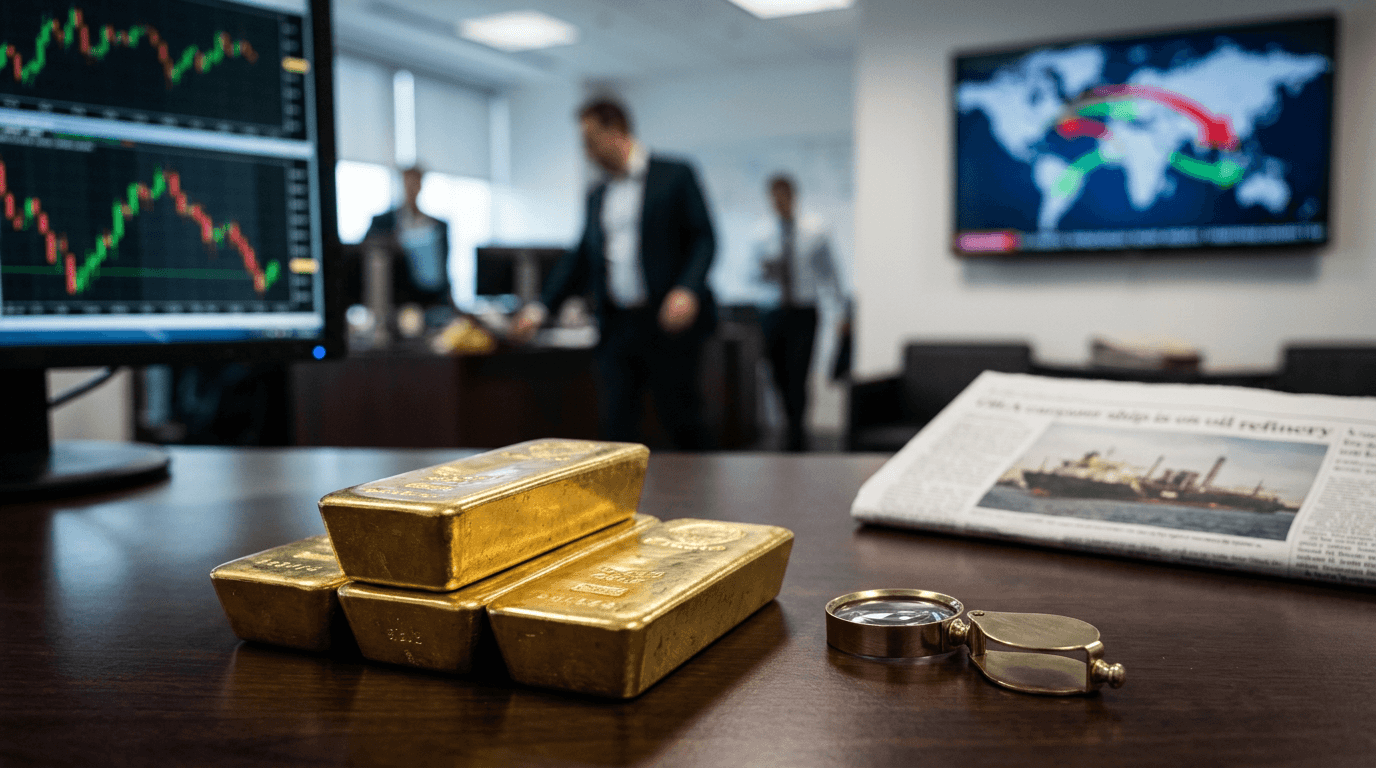
Gold has recently achieved unprecedented highs, surging past the $4,700 per ounce threshold as global investors seek the safety of traditional haven assets amidst escalating geopolitical tensions and economic uncertainty. This remarkable ascent, which has seen gold rise over 70% since the start of Trump's second term, highlights a complex blend of risk-aversion, trade-related anxieties, and anticipation of monetary policy easing[4]. Yet, this surge conceals a more intricate narrative—one where inflation fears and rising commodity prices pose potential challenges to the expected trajectory of Federal Reserve rate cuts and the long-term valuation of precious metals.
The Anatomy Of A Safe-haven Rally
Gold's meteoric rise is largely fueled by its role as a safe-haven asset. In times of geopolitical strife or economic turbulence, investors naturally gravitate towards assets perceived as stable stores of value[1][2]. Gold, which lacks yield but carries minimal counterparty risk, becomes particularly appealing during periods of heightened volatility. Recent weeks have underscored this trend, with spot gold prices climbing to approximately $4,727 per ounce as market sentiment shifts sharply towards risk aversion[1].
The mechanics behind safe-haven demand are simple yet potent. When investors fear potential losses in equities or other risk assets, they turn to precious metals as a protective measure against portfolio declines. This flight to safety extends beyond gold; silver, often seen as a gauge of investor risk sentiment, has also surged to new highs near $95 per ounce, indicating that safe-haven demand permeates the entire precious metals sector[1]. These concurrent rallies reflect widespread anxiety about broader economic stability rather than isolated demand for specific metals.
Geopolitical Flashpoints Igniting Gold Demand
A confluence of geopolitical flashpoints has created a highly favorable backdrop for gold prices. The ongoing Russia-Ukraine conflict remains a persistent driver of safe-haven demand[2]. However, newer catalysts have emerged to capture market focus. President Donald Trump's threats to impose escalating tariffs on European nations as part of his bid to acquire Greenland have rattled global markets[3][4]. Such tariff threats pose direct risks to international trade and corporate earnings, prompting traders to reevaluate their portfolio strategies.
The mix of trade tensions and geopolitical risks amplifies the psychological incentive for holding gold. When policymakers indicate a willingness to disrupt established trade networks or when international tensions simmer, institutional investors and central banks tend to increase their allocations to precious metals[4]. This pattern has been evident throughout 2026, with gold gaining 9.6% in the year's first twenty days as these risks crystallized[4].
Inflation Concerns Create Complexity
While safe-haven flows have dominated the headlines, the underlying inflation narrative adds complexity. Rising oil prices, driven by economic optimism in China and supply concerns, are challenging assumptions about the Federal Reserve's policy path[5]. If inflation persists or accelerates due to higher oil prices, the Fed might hesitate to implement aggressive rate cuts[8]. This creates a fundamental tension in gold markets: while geopolitical concerns buoy prices, ongoing inflation could limit the monetary easing that typically supports precious metals.
Interest rates and inflation exert opposing forces on gold valuations. Lower rates diminish the opportunity cost of holding non-yielding assets like gold, supporting prices[3]. Conversely, inflation erodes real returns across all asset classes, including gold, potentially capping upside potential[8]. Market participants face uncertainty over which factor will prevail, contributing to volatility around the current $4,700 price level.
Strategic Implications For Traders And Investors
For traders on both SimFi platforms and in real markets, the current scenario offers both opportunities and risks. The record-high prices reflect genuine macroeconomic concerns rather than speculative excess, suggesting some durability to the rally. However, the recent weekly decline, despite safe-haven inflows, indicates that momentum could be fragile[6]. Market participants should differentiate between short-term trading strategies aimed at capitalizing on volatility and long-term allocations to precious metals for portfolio stabilization.
Investors contemplating exposure to precious metals should recognize that current pricing factors in significant geopolitical risk premiums. Should tensions de-escalate unexpectedly or Fed rate cuts occur more aggressively than anticipated, downside corrections are possible[7]. Conversely, an escalation in trade disputes or new geopolitical flashpoints could sustain or even extend the rally beyond $4,700.
Looking Ahead
The future trajectory of gold prices hinges on several critical variables: the progress of U.S.-European trade negotiations, Federal Reserve communications on rate cut timing, inflation data releases, and developments in geopolitical hotspots[2]. While $4,700 marks a psychological and record milestone, gold's ability to maintain these levels depends on the persistence of underlying support factors. Market participants should closely monitor these indicators, as changes in any of these areas could swiftly alter the fundamental outlook for precious metals at current elevated prices.