
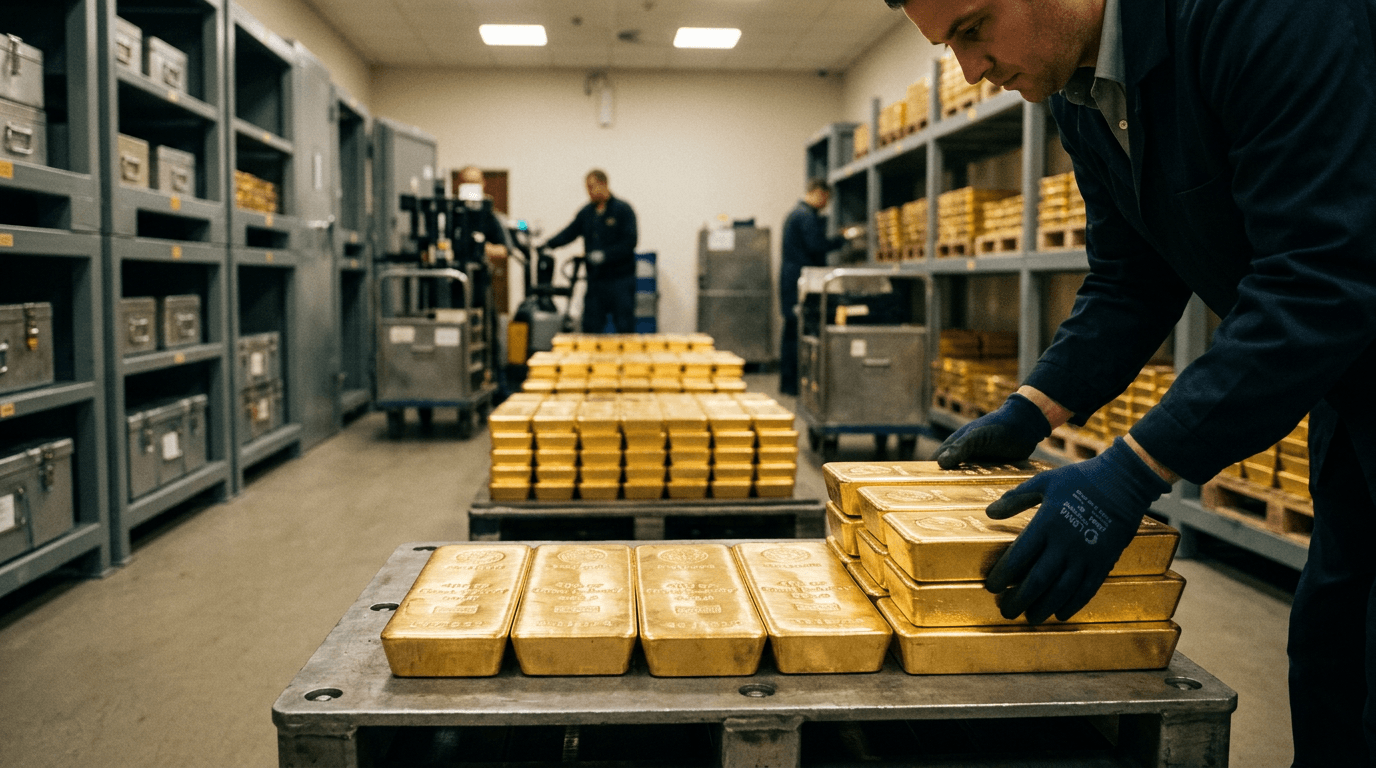
The precious metals market is undergoing a profound transformation that extends beyond mere price fluctuations. Gold futures have climbed to impressive heights as investors worldwide increasingly opt for physical delivery over cash settlements—a shift that signals a structural evolution in market operations and portends significant implications for the future of trading. This surge is fueled by a confluence of factors, including rising policy uncertainty, trade tensions, and a growing institutional appetite for tangible assets over paper contracts.
The Physical Delivery Revolution
A significant trend has emerged: more gold futures contracts are being settled through physical delivery rather than cash. This represents more than a fleeting market preference—it marks a fundamental shift in investor behavior and market dynamics. Investors are moving away from traditional paper gold positions in favor of direct ownership of the metal itself. This transition reflects mounting concerns about counterparty risk and the reliability of paper gold markets amid unprecedented scrutiny of financial institutions.
The data paints a compelling picture. Exchange inventories are rapidly dwindling, with registered stocks at major trading venues plummeting to critically low levels. At COMEX, registered gold stocks fell from 45.1 million ounces to 43.6 million ounces, a notable outflow of 1.5 million ounces in just eight trading days. Warehouse inventory levels have reached multi-year lows across key trading centers, creating bottlenecks that threaten to reshape the entire precious metals ecosystem. Challenges in transportation and logistics are causing delivery queues, while insurance costs continue to rise as physical holdings increase. These structural pressures suggest that the current environment demands investors plan deliveries well in advance and prepare for extended processing times.
Policy Uncertainty Driving Safe Haven Flows
The present geopolitical and economic climate is proving fertile ground for gold demand. Trade policy uncertainty, particularly surrounding recent US tariff announcements, has catalyzed significant movements in the gold market. Gold futures climbed approximately 3.31 percent to reach $5,249 per ounce, driven by renewed concerns over tariff implementations. Following recent Supreme Court rulings on tariff authority, market participants are increasingly anxious about potential escalations in trade barriers and their broader economic repercussions.
Simultaneously, the Federal Reserve faces mounting pressure from conflicting economic signals. Weak GDP growth coupled with rising inflation has created a stagflationary scenario that complicates monetary policy decisions. Market participants now speculate that the Federal Reserve may need to maintain restrictive policy rates for longer than previously anticipated. While higher interest rates typically create headwinds for non-yielding assets like gold, the current intensity of geopolitical and trade risk appears to be the dominant driver for bullion demand. Geopolitical tensions in the Middle East, compounded by increased US naval deployments, have further bolstered risk premiums and supported safe-haven inflows.
Central Banks Reshaping Global Demand
Perhaps the most significant force reshaping the gold market is central bank behavior. Global central bank gold purchases reached 244 tonnes in the first quarter of 2025 alone, continuing an aggressive diversification strategy away from traditional reserve currencies. This institutional buying represents a coordinated effort by major economies to reduce dependence on dollar-denominated assets while building tangible reserve foundations. Central banks are systematically reducing their exposure to fiat currency reserves in favor of gold holdings, reflecting growing concerns about currency debasement and the desire for monetary sovereignty in an increasingly fragmented global financial system.
This coordinated institutional accumulation has fundamentally altered supply dynamics and price formation mechanisms. When central banks enter the market seeking physical delivery, they do not simply accept whatever settlement methods are available. Their purchasing power and policy objectives drive structural changes throughout the market infrastructure. The combination of central bank buying, hedge fund positioning shifts, and retail investor demand for physical delivery has created what some analysts describe as a perfect storm for physical gold demand.
Navigating The New Market Reality
For traders and investors, adapting to these new market conditions requires strategic planning and realistic expectations. Delivery requests should be planned well in advance to accommodate extended processing times and potential delays. Understanding seasonal demand patterns can help optimize acquisition timing. Monitoring inventory levels at preferred delivery locations provides valuable intelligence for making strategic decisions about when and where to execute physical purchases.
The long-term trend for gold remains decidedly bullish, with prices trading consistently above the 50, 100, and 200-period Simple Moving Averages. However, traders should brace for volatility in the short term following recent sharp gains. While structural factors support gold in the medium term, ongoing developments with trade policy and geopolitical situations could create price fluctuations. Market positioning data shows net-long positions for gold futures have fallen to their lowest levels in nearly a year, suggesting potential room for further position upside as more investors recognize the shift toward physical ownership and begin repositioning accordingly.
---