
---
Gold's Meteoric Rise Amid Ceasefire and Market Dynamics
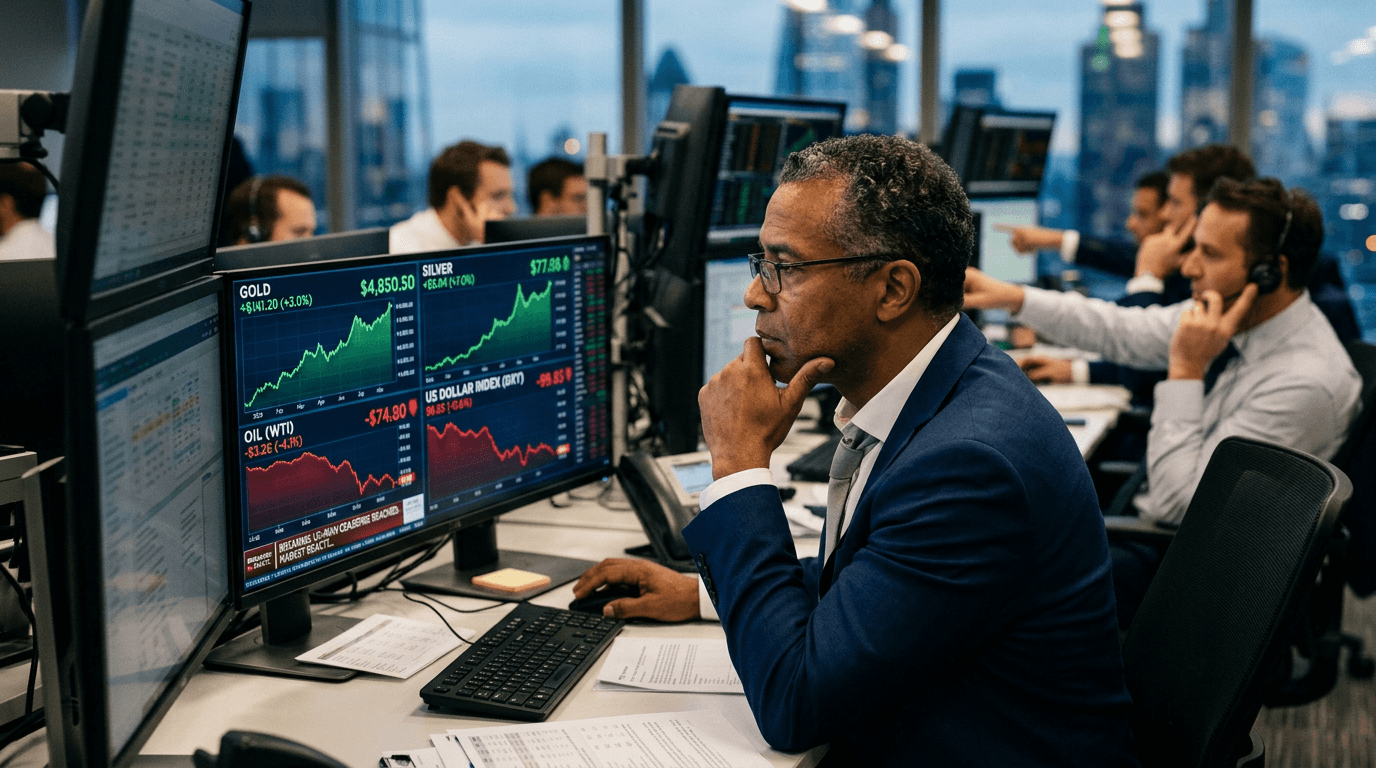
On Wednesday, April 8, 2026, precious metals markets experienced a remarkable surge, driven by easing geopolitical tensions following a US-Iran ceasefire. Gold soared 3%, reaching $4,850 per ounce—its highest in three weeks—while silver outperformed with a stunning 7% rally to $77 per ounce. This sharp reversal highlights a key insight: geopolitical events and monetary policy expectations can dramatically shift trading dynamics within hours. For traders and investors on the SimFi markets, understanding this rally's mechanics provides invaluable insights into converting real-world news into trading opportunities.
The Catalyst Behind the Market Reversal
The surge in precious metals was triggered by President Donald Trump's announcement of a two-week bilateral ceasefire with Iran, brokered by Pakistan. This deal was reached just hours before an 8:00 p.m. ET deadline, which markets were closely watching as a potential escalation flashpoint. Under the ceasefire terms, Iran agreed to ensure the safe reopening of the Strait of Hormuz, a crucial shipping lane responsible for approximately 20% of global oil flows. This diplomatic breakthrough swiftly reduced the geopolitical risk premiums that had been embedded in energy and currency markets since late February, when tensions initially flared.
The market's reaction was swift and multifaceted. Oil prices plunged over 15%, dipping below $100 per barrel for the first time since the conflict's onset. The US Dollar Index fell nearly 1% in Asian trading, with EURUSD strengthening by about 0.8%. These shifts created the ideal environment for precious metals to reclaim their safe-haven appeal while simultaneously benefiting from dollar weakness.
The Inflation and Rate Cut Connection
Understanding the dramatic rise in gold and silver requires examining the inflation dynamics at play. In preceding weeks, surging oil prices had posed significant challenges for precious metals, despite their traditional role as crisis hedges. Higher energy costs stoked inflation concerns, raising market expectations that the Federal Reserve might maintain elevated interest rates longer than anticipated. This rate expectations trap had pressured gold and silver, as higher real interest rates reduce the appeal of non-yielding assets.
The ceasefire announcement fundamentally altered this calculus. With oil prices falling below $100 per barrel, inflation pressure eased significantly. Market participants quickly reassessed Federal Reserve policy expectations, shifting toward scenarios where rate cuts become more likely rather than further hikes. This rate cut narrative provided substantial support for precious metals. Lower interest rates reduce the opportunity cost of holding bullion, making gold and silver more attractive relative to fixed-income investments. Analysts at XTB noted that the prospect of lower oil prices and improved energy market stability appeared to ease inflation risks and consequently the prospect of monetary policy tightening by central banks.
Silver's Outperformance: The Turbo-Gold Effect
While gold's 3% gain was noteworthy, silver's 7% rally deserves particular attention. This outperformance reflects silver's dual nature as both a precious metal and an industrial commodity. As inflation expectations declined and rate cut probabilities rose, investment demand for silver strengthened. Simultaneously, the prospect of stabilized energy prices and restored shipping through the Strait of Hormuz raised hopes for more stable industrial demand for silver. Market analysts have characterized silver as "turbo-gold" for its tendency to amplify precious metals rallies during risk-off episodes.
Broader Market Context for Traders
This ceasefire-driven rally unfolded within a broader market environment where traders awaited critical economic data. The US March consumer price index report was scheduled for release on Friday, April 10, with economists expecting headline inflation to have accelerated on a monthly basis. The timing created additional pressure for markets to reprice rate expectations immediately following the ceasefire announcement, before concrete inflation data could be evaluated.
The rally also highlighted how currency movements amplify precious metals trends. A weaker US dollar makes gold and silver cheaper for international buyers using other currencies, creating additional demand. This currency dynamic has made dollar weakness a consistent ally for precious metals investors.
Implications for Traders
For SimFi market participants, this episode illustrates several important trading principles. First, geopolitical risk premiums can compress rapidly once diplomatic solutions emerge, creating strong directional moves across multiple asset classes simultaneously. Second, the relationship between energy prices, inflation expectations, and monetary policy creates complex trading chains where a single announcement can trigger multi-asset realignment. Third, precious metals maintain their safe-haven status but are also subject to rate expectation shifts that can create counterintuitive dynamics relative to traditional risk-off behavior.
The next critical point for traders to monitor is whether the two-week ceasefire evolves into a lasting peace agreement or deteriorates into renewed tensions. Any signs of breakdown could quickly reverse the dollar weakness and oil price declines that currently support precious metals.