
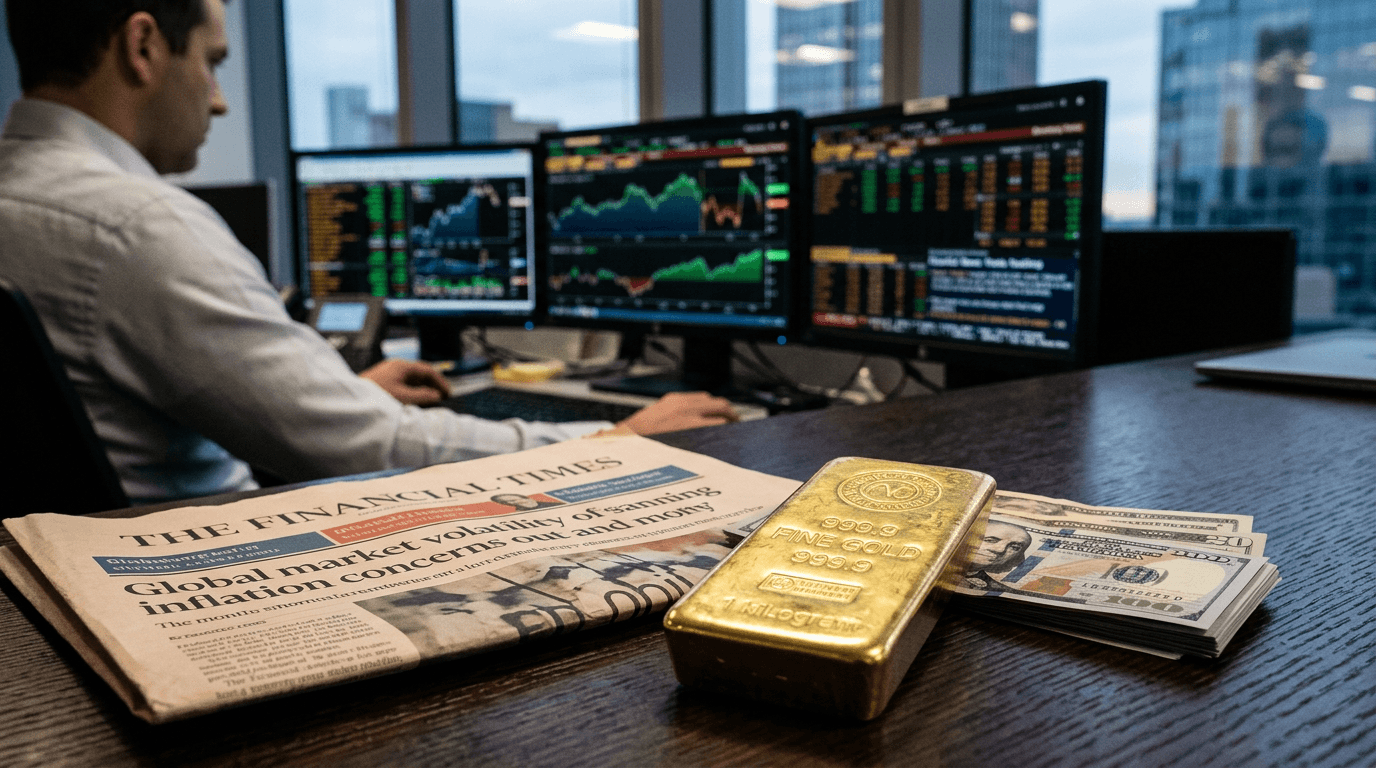
Gold's allure as a safe haven is once again capturing the attention of investors, as escalating tensions in the Middle East drive prices higher amid global market uncertainty. Currently, gold futures are trading at $5,391.60, marking a 2.74% increase from the previous close. Despite facing potential for its first weekly decline in five weeks due to oil-driven inflation concerns, the precious metal is benefiting from the geopolitical turmoil, underscoring the multifaceted forces influencing gold markets in 2026.
The Geopolitical Catalyst
The latest surge in gold prices is largely driven by heightened geopolitical risks. Recent military actions by the US and Israel against Iran, followed by retaliatory strikes from Tehran, have intensified instability in the Middle East. This environment of uncertainty prompts investors to shift their portfolios away from equities and other riskier assets toward safer investments like gold, government bonds, and the US dollar. Gold's upward movement reflects these capital flows as investors seek refuge from geopolitical turmoil.
The Middle East's strategic significance, particularly regarding global oil supply through the Strait of Hormuz, adds another layer of complexity. Disruptions in oil supply can lead to increased energy prices, influencing inflation expectations, currency values, and central bank policies. Historically, such uncertainty has bolstered gold's appeal, a trend that continues to hold true today.
Safe-haven Dynamics In Action
Gold's reputation as a reliable safe-haven asset is well-established through decades of market behavior. During periods of geopolitical tension, investors gravitate toward assets that retain value or appreciate amid uncertainty. Gold's lack of counterparty risk and ability to maintain purchasing power make it a prime candidate for such situations.
Current market data supports this trend. Gold futures are trading significantly above their 50-day moving average of $4,883.25 and are nearing a 52-week high of $5,626.80. Analysts from major financial institutions like JPMorgan and Bank of America project that gold prices could reach as high as $6,000 if geopolitical tensions persist or escalate. This reflects confidence in gold's role as a safe-haven asset and suggests potential for further price increases if the situation worsens.
Additionally, gold serves as a hedge against inflation, particularly the type that often follows military conflicts. Disruptions in supply chains, increased government spending, and central bank policies in response to geopolitical crises can create inflationary pressures, enhancing gold's attractiveness as a hedge.
Technical Picture And Momentum
From a technical standpoint, gold is demonstrating promising signals. The 2.74% daily increase shows strong buying momentum, and prices remaining above key moving averages indicate a solid rebound. Approaching the 52-week high of $5,626.80 provides a clear target for traders and investors monitoring gold's progress.
Silver is also experiencing safe-haven demand, with prices up over 4% and trading at historically high levels. Some analysts predict silver may outperform gold due to tighter supply conditions, suggesting the entire precious metals sector is benefiting from the current risk sentiment. This widespread strength indicates a broader move toward hard assets, not limited to gold alone.
The Complicating Factors
Despite the positive outlook for gold, several challenges remain. Concerns over oil-driven inflation are creating headwinds, contributing to gold's potential for a weekly decline despite recent gains. Rising oil prices can increase inflation expectations, potentially attracting capital to the US dollar as investors anticipate higher interest rates. A stronger dollar makes gold more expensive for foreign buyers, potentially capping its upside momentum.
Central bank actions further complicate the scenario. Some emerging market central banks have sold gold reserves to support their currencies and finance rising energy import costs. If this trend continues, it could exert supply-side pressure, mitigating some of the demand-driven gains from safe-haven flows.
Key Takeaways For Traders And Investors
The current landscape highlights gold's importance as a portfolio component. Safe-haven rallies, driven by geopolitical risks, can be swift and substantial. However, they often coexist with other market dynamics that introduce complexity and volatility. Elevated oil prices contributing to inflation concerns represent legitimate risks alongside the potential for safe-haven gains.
For traders and investors, the focus should be on whether Middle East tensions escalate or stabilize, as this will significantly influence gold's near-term trajectory. Technical levels are well-defined, historical evidence supports the fundamental case, and analyst projections offer a structured framework. Carefully managing position sizes and remaining vigilant to geopolitical and monetary policy shifts are crucial in navigating this environment.