
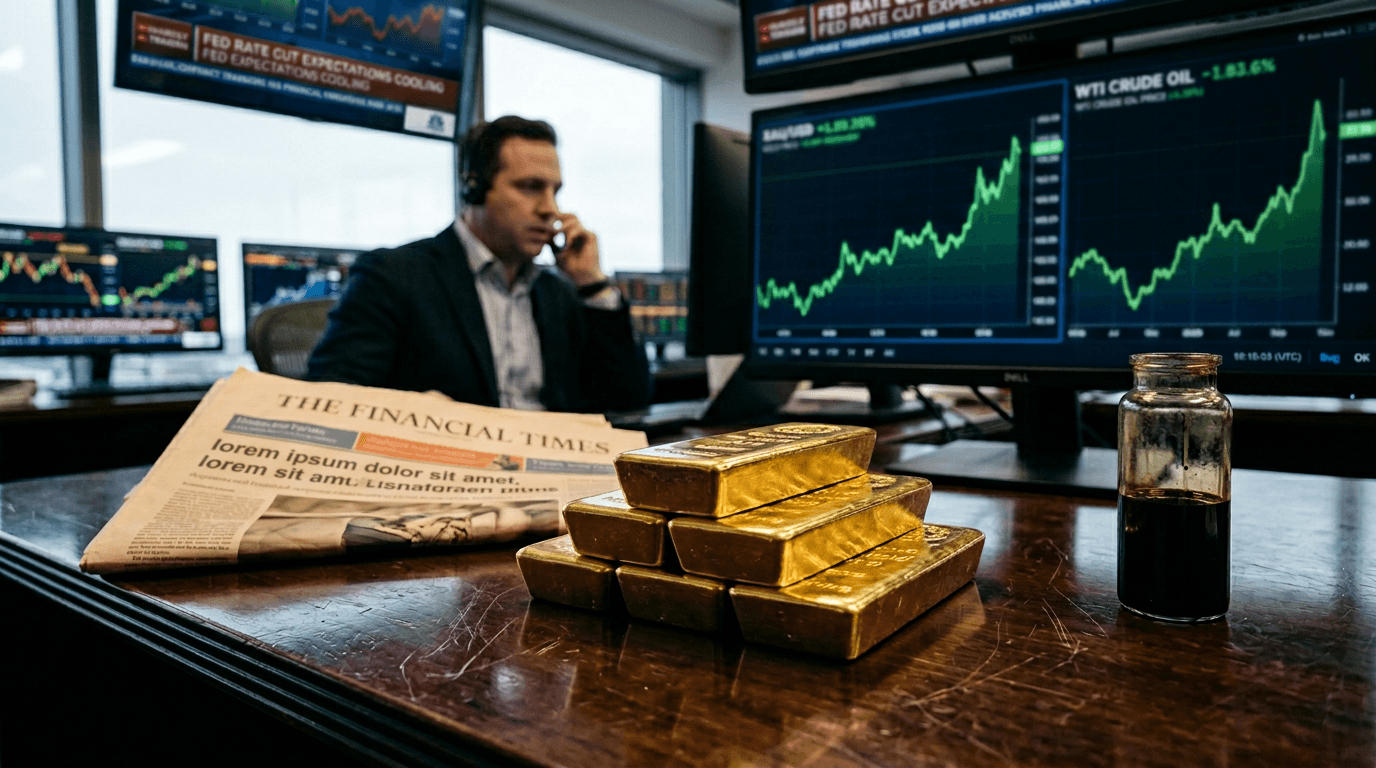
Gold prices have climbed back to nearly $4,700 per ounce, propelled by persistent demand from investors seeking safe havens amidst geopolitical tensions and economic uncertainty. Yet, despite this upward movement, gold futures are set for a weekly decline as soaring oil prices stoke inflation worries and dampen prospects for Federal Reserve rate cuts. This creates an intriguing tension in the precious metals market, where traders and investors must navigate short-term rallies against the backdrop of longer-term macroeconomic challenges.
The Interplay Of Safe-haven Drivers
Gold's recent ascent is the result of a confluence of risk factors bolstering the precious metals sector. Geopolitical tensions, particularly in the Middle East and Eastern Europe, have led investors to seek safety in traditional assets. This has been exacerbated by concerns over US Federal Reserve independence following threats of criminal indictment, which weakened the US dollar, further bolstering gold prices. ING commodity experts describe this as a convergence of supportive factors, including heightened fiscal uncertainty and robust central bank buying demand.
The strength spans the precious metals complex, with silver surging past $85 per ounce, up roughly 20 percent this year after an almost 150 percent increase last year. This has pushed the gold-to-silver ratio below 60, levels not seen since 2013, indicating that investors are shifting aggressively into more speculative precious metals positions. Silver's industrial uses add to its appeal beyond its role as a store of value.
The Inflation Dilemma
Gold's narrative is complicated by the interplay between oil prices and inflation expectations. Rising crude oil costs are heightening inflation concerns, paradoxically reducing the likelihood of Federal Reserve rate cuts. This affects gold in two ways: higher real yields from maintained or elevated interest rates reduce gold's appeal compared to yield-bearing assets, and inflation concerns shift market focus to assets benefiting from higher interest rates, like the US dollar.
As a traditional hedge, gold faces additional challenges. Recent market behavior shows gold and equities rising together, breaking the historical pattern where gold serves as a hedge against stock market declines. Since the development of gold ETFs in 2004, particularly after the 2008 financial crisis, gold has increasingly been viewed as a financial asset rather than purely as insurance against systemic risk, rising alongside equities during growth optimism.
Structural Support From Central Bank Demand
Despite weekly weakness, there are deeper structural factors supporting gold prices. Central banks have been accumulating gold reserves at elevated rates, seeing it as an alternative reserve asset amid questions about US dollar dominance. This institutional buying sets a price floor and helps explain why gold has traded near all-time highs around 5,260 to 5,330 per troy ounce as of late March. This shift towards gold as a reserve asset reflects geopolitical realities and monetary policy uncertainty unlikely to dissipate soon.
These central bank purchases provide long-term structural support that can offset short-term weakness from inflation-driven interest rate expectations. As countries continue to question the dollar's reserve currency status, particularly amid trade policy uncertainty, demand for gold as an alternative reserve asset should persist, allowing for tactical weekly declines while maintaining a constructive medium-term trend.
Trading Implications For Simfi Investors
For traders navigating this landscape, understanding timeframe and position structure is key. The weekly decline suggests that mean-reversion traders should watch for support levels where safe-haven demand can reassert itself. Recent lows provide crucial technical markers, and traders using technical analysis should observe price behavior around these levels. The 5,260-5,330 range from late March serves as important reference points for medium-term orientation.
The divergence between daily safe-haven rallies and weekly weakness suggests elevated volatility. Traders should prepare for potential sharp reversals as geopolitical headlines interact with economic data releases. Oil price movements deserve particular attention, influencing both inflation expectations and broader risk sentiment driving safe-haven demand.
Trading Strategy Takeaway
Gold's current positioning reflects the complexity of modern financial markets, where multiple conflicting factors influence price direction simultaneously. While safe-haven demand supports prices near $4,700, inflation concerns and interest rate expectations create headwinds. Instead of betting on a clear directional bias, successful traders should remain flexible, employ proper risk management, and recognize that both rallies and declines can be justified by fundamental factors. The key is adapting your strategy to the prevailing narrative on your intended trading timeframe.